

Pu Erh Tea Guide – What It Is, How It Differs, Benefits, Caffeine, Brewing, and Storage
Author: Xu Jiahua, Nationally Certified Senior Tea Appraiser
Pu erh tea has grown from a regional tradition in Yunnan into a global favorite. People drink it for its earthy sweetness, digestive comfort, and the grounded energy it brings. This guide explains what pu erh tea is, how it is made, what research says about its benefits, and how you can brew and store it to enjoy its best flavors.
What’s Pu Erh Tea in Modern Tea Culture
Pu erh is often described as a “living tea” because the microorganisms inside the leaves keep changing flavor over time. This aging fits into today’s interest in slow living, gut-friendly foods and mindful rituals.
What Is Pu Erh Tea?
Pu erh tea is a fermented tea from Yunnan, made from the large-leaf variety of Camellia sinensis. Local climate, ancient tea trees and traditional processing methods all shape its unique character
A Fermented Tea from Yunnan
What makes pu erh distinct is microbial fermentation. After picking and drying, the leaves undergo natural or accelerated microbial action. This creates the earthy depth that pu erh is known for.
How Pu Erh Is Made
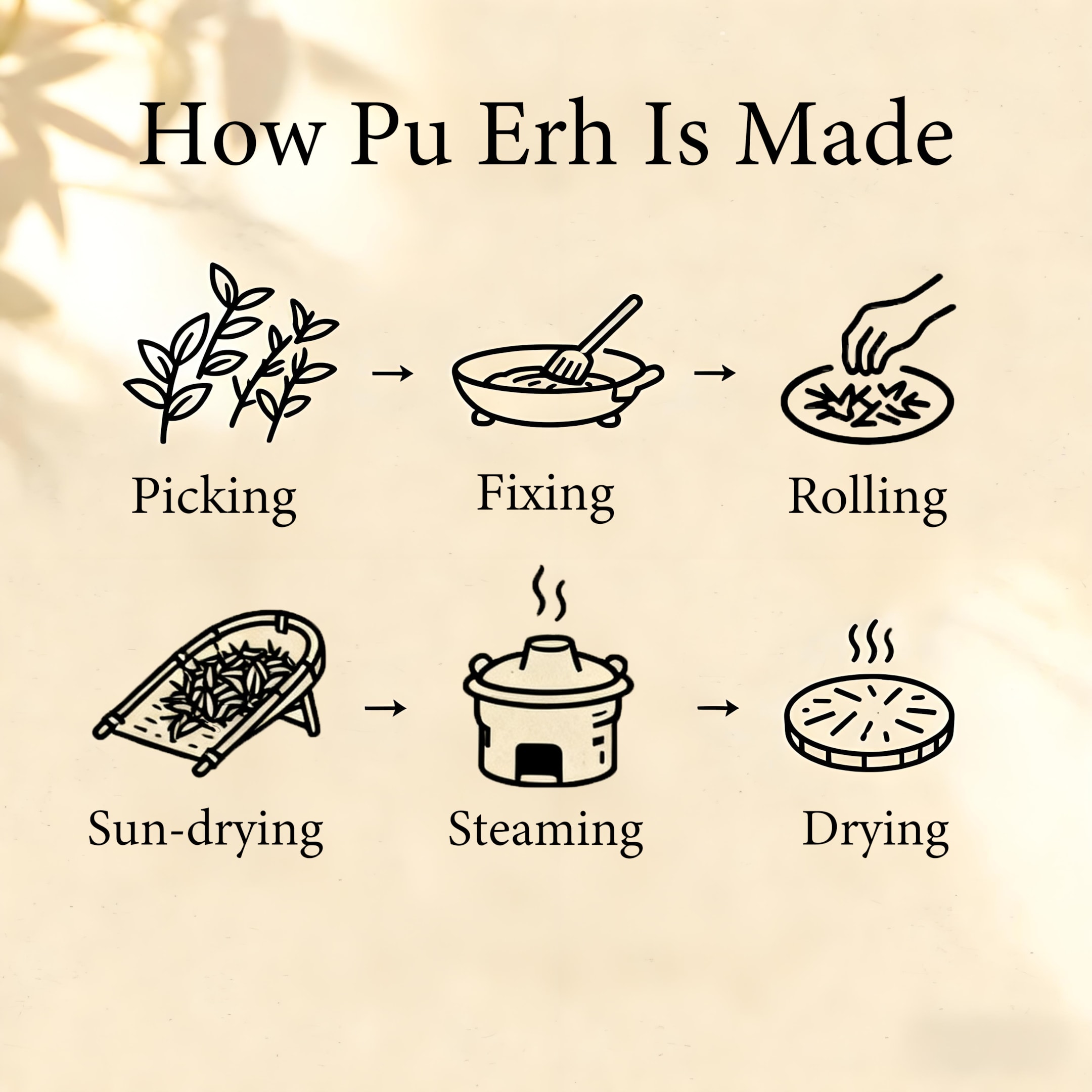
Although methods vary across Yunnan, pu erh production generally follows a clear sequence. Large-leaf tea is harvested from old trees, heated to prevent oxidation, rolled into shape, and sun-dried to preserve its enzymes.
From here, the tea either enters slow natural fermentation (raw pu erh) or accelerated wet-piling (ripe pu erh). Afterward, the leaves are steamed and pressed into cakes.
These steps create a tea that continues to transform over years or decades.
What Pu Erh Tea Tastes Like
Pu erh tea has an earthy, rounded flavor with a smooth finish.
Young raw pu erh can taste bright, floral and slightly astringent. Aged raw pu erh becomes deeper and more complex. Ripe pu erh has a mellow sweetness and a warm, wood-like aroma like wet forest soil after rain.
Taste varies widely depending on age, storage conditions and whether the tea is raw or ripe.
How I Taste Pu Erh Tea
In my own tasting experience, I never judge a pu erh tea from the first sip alone. A good pu erh often reveals itself gradually, so I usually pay attention to how it develops across several infusions.
I mainly look at four things:
- Aroma: whether the fragrance feels clean and continues through the nose and throat.
- Taste: the balance of sweetness, bitterness, freshness, and astringency.
- Texture: whether the liquor feels thin, smooth, full, or thick in the mouth.
- Finish: how long the sweetness, aroma, and throat sensation remain after swallowing.
For me, five or more infusions usually give a much clearer picture than the first cup. The teas I remember most are not simply the strongest ones, but the ones whose texture and aftertaste continue to develop as I drink.
Two Major Types of Pu Erh Tea
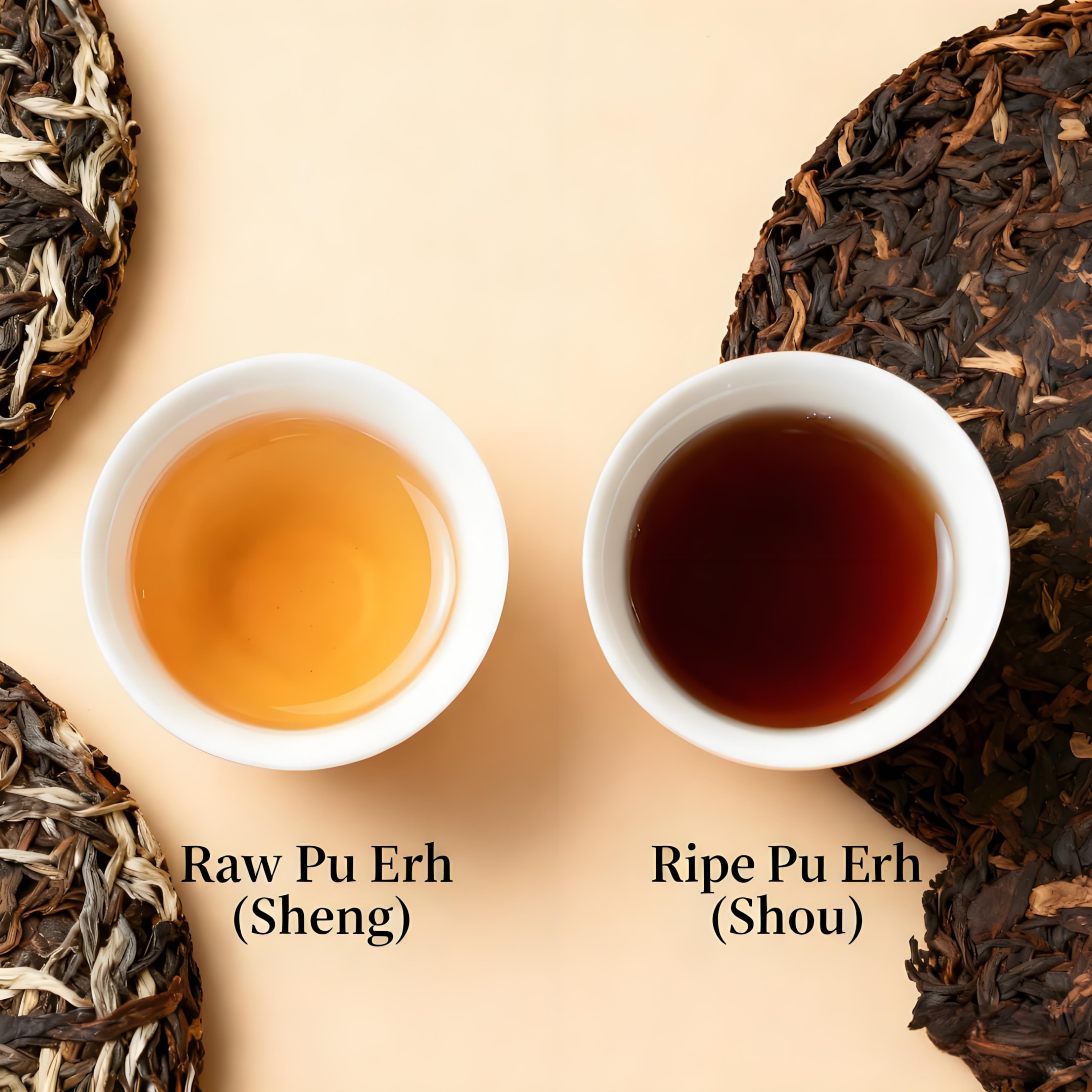
Raw Pu Erh (Sheng Pu)
Raw pu erh is processed traditionally and allowed to ferment slowly, sometimes for years. Younger sheng has a bright, slightly sharp taste. With age it develops fruit-like notes and a smoother body.
Ripe Pu Erh (Shou Pu)
Ripe pu erh is fermented through an accelerated “wet-piling” process. This method creates an earthy, mellow profile with soft sweetness from the very start. Many beginners prefer shou pu because it is gentler and easier to brew.
Science-Backed Benefits of Pu Erh Tea
Pu erh tea contains unique polyphenols, microbial metabolites, and antioxidants created through its special fermentation process. These active compounds are widely celebrated for supporting digestion after meals, promoting metabolic health, and providing balanced energy.
As Healthline says, early studies suggest effects on metabolic markers, antioxidant activity and digestion—but results vary among individuals.
To explore the detailed scientific research and specific wellness advantages of this fermented tea, read our complete guide on the Top Health Benefits of Drinking Pu Erh Tea.
Pu Erh Tea Caffeine
A typical cup contains 30–70 mg of caffeine, depending on:
- raw vs. ripe
- age of leaves
- brewing time
- water temperature
Raw pu erh usually feels brighter; ripe pu erh feels smoother.
How to Brew Pu Erh Tea for Best Flavor
Brewing pu erh is easy and quality leaves can take multiple infusions.
Water Temperature
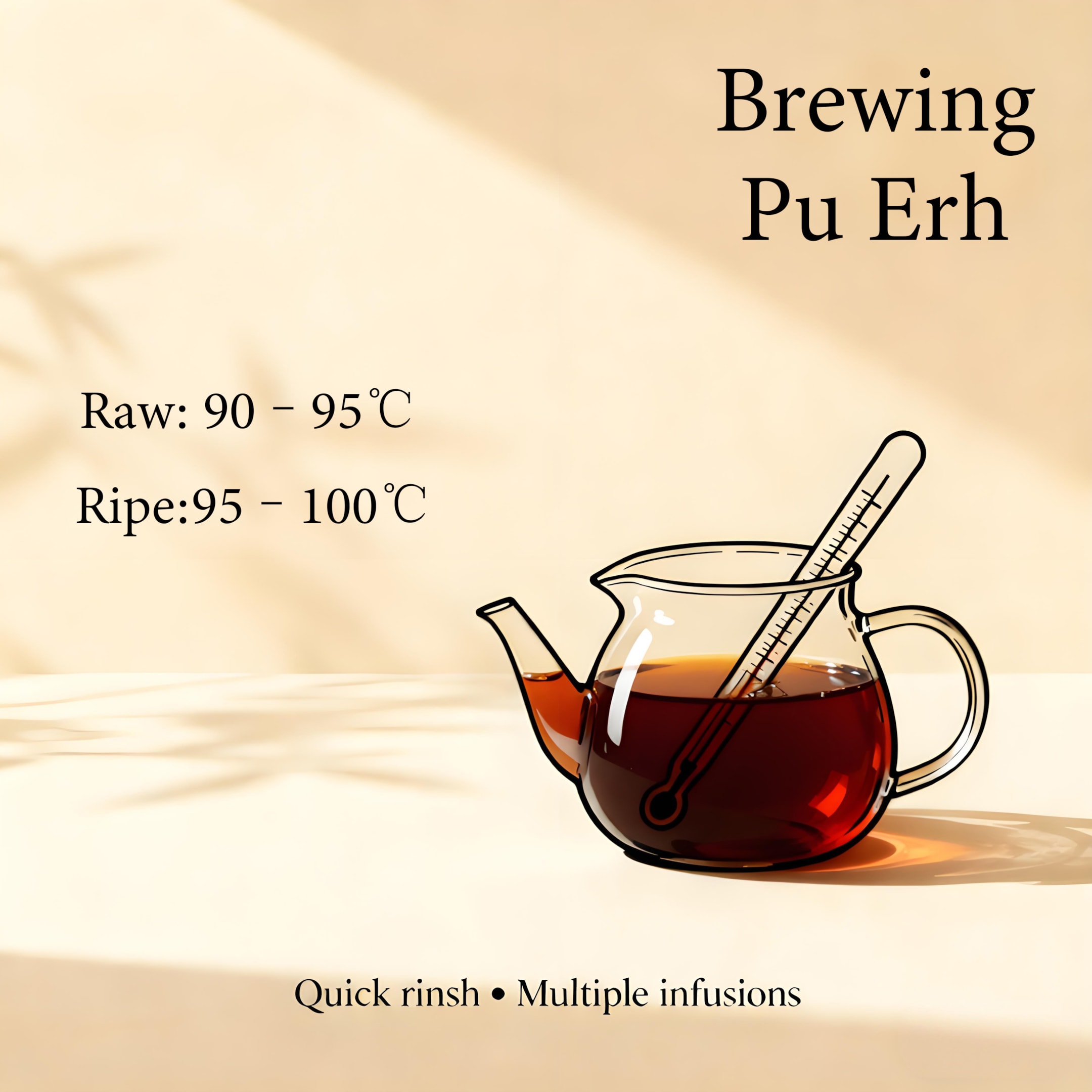
Ripe pu erh is best with near-boiling water (95–100°C) to bring out the depth and sweetness.
Young raw pu erh is better at 90–95°C to avoid bitterness.
Waking the Tea (“Rinsing”)
A quick rinse (2–3 seconds) removes surface dust and wakes up the leaves.This step loosens compressed leaves and allows the aroma to unfurl.
Steeping Time & Multiple Infusions
Pu erh can be infused many times. Early infusions are lighter; later ones are rounder and warmer. Adjust steeping to taste—shorter infusions for a brighter cup, longer infusions for more body.
Tea-to-Water Ratio
A good starting point is 5 g of tea for 120–150 ml of water, adjust to taste and age.
How to Store Pu Erh Tea
Pu erh is sensitive to its environment. Good storage means slow and clean aging; bad storage dulls the flavor.
Why Storage Matters More for Pu Erh
Pu erh continues to ferment after production. Temperature, air and humidity shape its flavor development. Good storage keeps it clear and prevents unwanted odors or mold.
Best Storage Conditions
To help pu erh age well:
- Moderate humidity (60–70%)
- Good airflow
- No direct sunlight
- No strong odors
- Stable temperature
Pu erh should never be sealed airtight while aging—it needs air.
How Aging Affects Flavor Over Time
Raw pu erh gets sweeter and smoother with age, ripe pu erh gets rounder and more comforting. The best teas develop notes of wood, dried fruit or earth.
Pu erh can be stored for decades.
FAQ
Can I drink pu erh every day?
Yes. Most people do. Adjust caffeine intake based on sensitivity.
Is pu erh tea good for digestion?
Some research suggests yes, but evidence is limited.
How long can pu erh age?
Well-stored raw pu erh can age 20–30 years or more.
Which is better: raw or ripe pu erh?
Raw is more dynamic; ripe is smoother. Beginners often start with ripe pu erh.
Dofo Tea – Authentic Pu Erh from Yunnan
If you like aged flavor, soft earthiness or the calm energy of fermented tea, check out the Dofo Pu Erh Collection.
Each tea is selected from trusted Yunnan producers, so you can brew pu erh with confidence every day.


