
How Much Caffeine Is in White Tea? Silver Needle, White Peony and Shou Mei Compared
liujiehangAuthor: Xu Jiahua, Nationally Certified Senior Tea Appraiser
White tea is often described as the lightest of all true teas — and for many people, that raises a natural question: how much caffeine does it actually contain? The short answer is yes, white tea does have caffeine. But the amount varies more than most guides suggest. This page breaks down the caffeine content by grade — Silver Needle, White Peony and Shou Mei — so you can make a more informed choice based on how you brew and how sensitive you are to caffeine.
Does White Tea Have Caffeine? The Direct Answer
White tea contains approximately 15–30 mg of caffeine per 250 ml cup — lower than most green teas (20–45 mg) and significantly less than black tea (40–70 mg), though caffeine levels vary by grade and brewing method.
Yes, white tea does contain some caffeine...but its lower caffeine profile is one reason why many drinkers find it softer and gentler on the stomach than other true teas. The actual amount of caffeine in your cup will depend on a whole bunch of factors.
According to tea caffeine content USDA FoodData, brewed tea naturally contains varying amounts of caffeine depending on processing and preparation methods.
How Much Caffeine in White Tea? A Grade-by-Grade Breakdown
Not all white tea contains the same amount of caffeine. Different grades use different parts of the tea plant, and bud-heavy teas generally contain more caffeine per gram than mature leaf teas. Brewing temperature, steeping time, and leaf quantity also influence the final caffeine level in the cup.
The caffeine ranges below are based on published tea caffeine data from the USDA FoodData Central database and tea industry observations. Actual caffeine levels vary depending on harvest season, leaf grade, and brewing method.
At Dofo Tea, we often notice that Silver Needle feels lighter than its caffeine content suggests. This may be because the tea is commonly brewed at lower temperatures and with shorter infusion times than black tea or coffee.
Silver Needle Caffeine Content
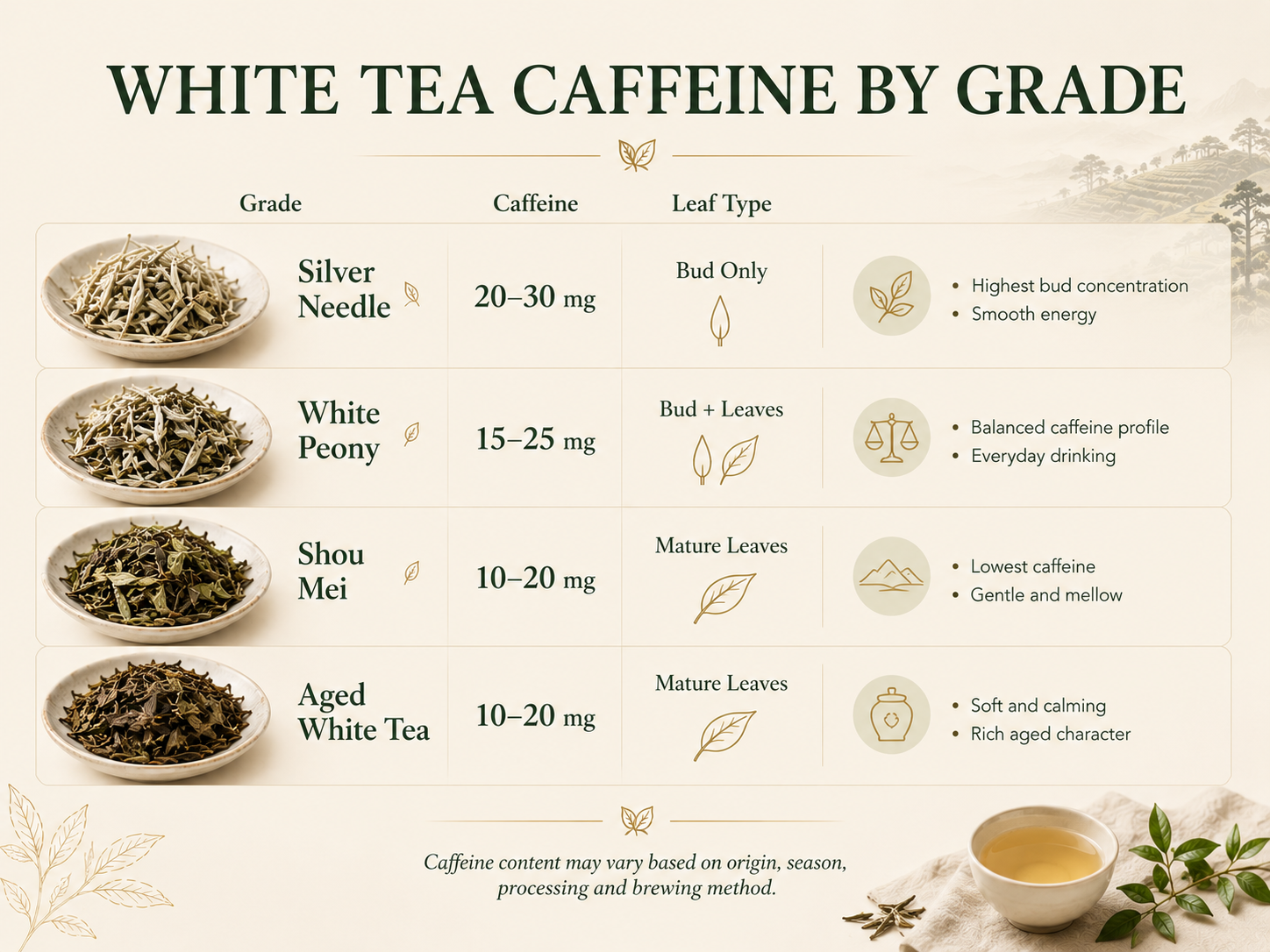
Silver Needle, made only from buds, typically contains more caffeine per gram than White Peony or Shou Mei — because young buds naturally concentrate more caffeine than mature leaves. Brewed, however, Silver Needle still falls at the lower end of the true tea caffeine spectrum.
A typical 250ml cup brewed at 85°C (185°F) for 2-3 minutes will have around 20-30mg of caffeine in it. Despite the higher bud concentration, most people who drink it say it's a smooth and gentle caffeine rather than a sharp one.
White Peony Caffeine Content
White Peony (Bai Mu Dan) combines one bud with some young leaves, which creates a more balanced caffeine profile. Most cups will have around 15-25mg of caffeine in them, depending on how you like to brew it. This makes White Peony a pretty popular everyday white tea for people who want a bit of energy without too much stimulation.
Shou Mei Caffeine Content
Shou Mei, on the other hand, uses more mature leaves and fewer buds - which generally results in lower caffeine levels. A standard 250ml cup will usually have around 10-20mg of caffeine in it. Many aged Shou Mei teas also seem to get softer and calmer over time.
Grade-by-Grade White Tea Caffeine Comparison
|
Grade |
Approx. Caffeine per 250 ml |
Notes |
|
Silver Needle (Bai Hao Yin Zhen) |
20–30 mg |
Bud-only; highest caffeine concentration |
|
White Peony (Bai Mu Dan) |
15–25 mg |
Balanced bud-and-leaf profile |
|
Shou Mei |
10–20 mg |
Mature leaves; lower caffeine |
|
Aged White Tea |
10–20 mg |
Softer, mellow character over time |
White Tea Caffeine vs Green Tea, Black Tea and Oolong: Full Comparison
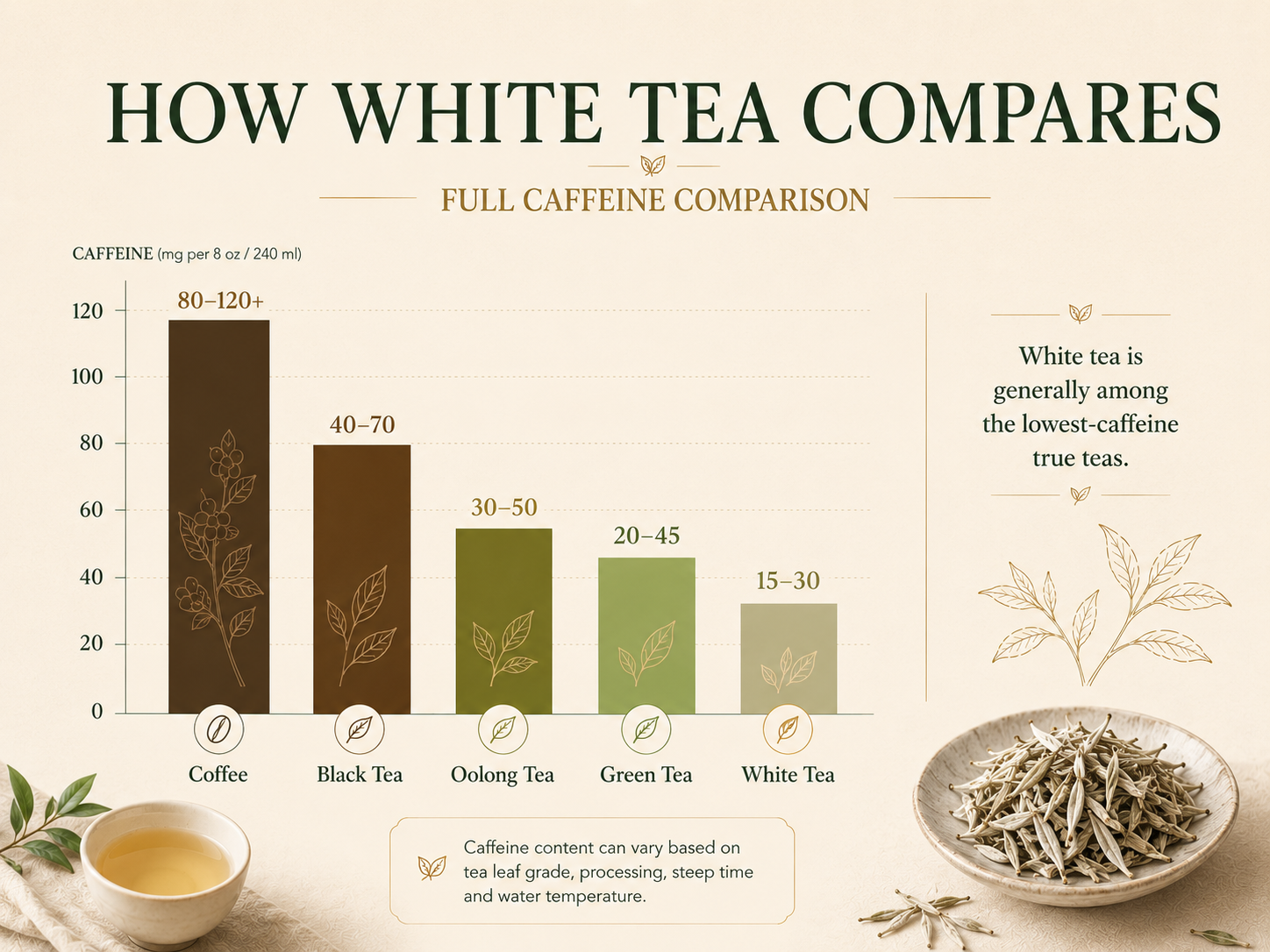
White tea usually has less caffeine than black tea and slightly less than many green teas - which makes it one of the gentler true tea options for daily drinking. While caffeine levels vary depending on brewing style and leaf grade, the average caffeine content per 250ml cup is generally lower than oolong tea, black tea and coffee.
Approximate caffeine levels per 250 ml cup:
- White tea: 15–30 mg
- Green tea: 20–45 mg
- Oolong tea: 30–50 mg
- Black tea: 40–70 mg
- Coffee: 80–120+ mg
There is still overlap between categories, because water temperature, steeping time, and leaf quantity can significantly affect extraction. A strongly brewed white tea may sometimes contain more caffeine than a lightly brewed green tea, but overall, white tea vs green tea caffeine comparisons usually place white tea on the lower end.
If you want a deeper comparison of flavor, processing, and caffeine differences, See the full white tea vs green tea comparison.
What Affects Caffeine Levels in White Tea?
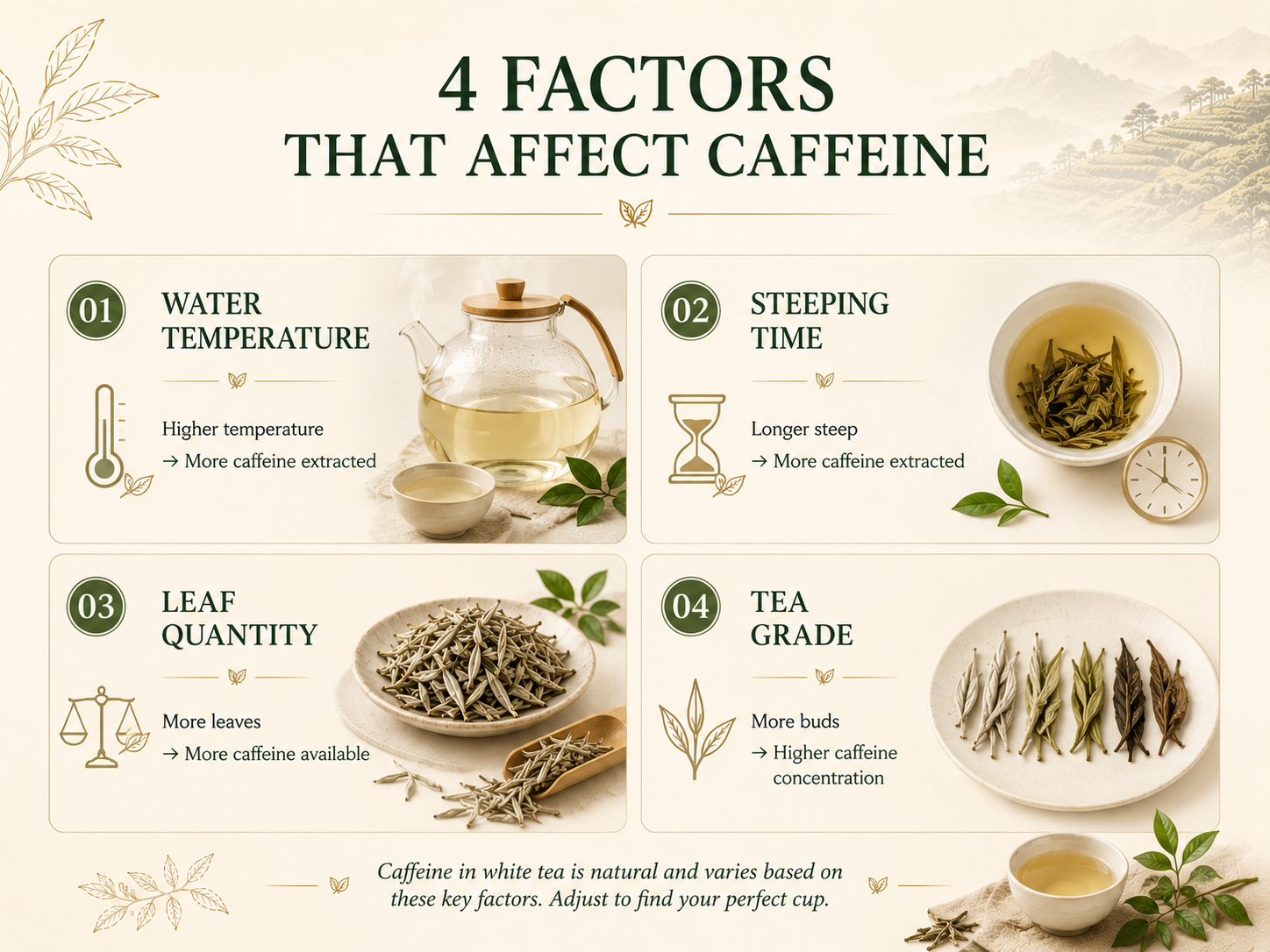
People often ask if white tea has less caffeine, and the answer might surprise you - it all comes down to how you brew it. White tea - in general - has less caffeine than black tea or coffee, but things like steeping time, water temperature, and the quality of the leaves all play a role in determining the final caffeine level in your cup.
Key factors that influence white tea caffeine levels include:
- Longer steeping extracts more caffeine because the compounds have more time to dissolve into the water.
- Higher temperatures increase caffeine extraction rates.
- Using more tea leaves raises the total caffeine available in the cup.
- Bud-heavy grades naturally contain more caffeine per gram than mature leaves.
- Later infusions often contain less caffeine because much of the caffeine is released during earlier steeps.
Silver Needle, for example, contains more buds and therefore naturally carries more caffeine per gram than leaf-heavy grades like Shou Mei.
Does brewing temperature affect caffeine? Read our white tea brewing guide for the full approach.
Is White Tea a Good Choice for Caffeine-Sensitive People?
For people who are monitoring their caffeine intake, white tea is probably the safest bet - you can brew it at lower temperatures and with shorter steep times which will help keep the caffeine content low. And, if you re-steep the same leaves, you'll find that the amount of caffeine extracted in the later infusions is significantly reduced.
However, white tea is not caffeine-free, and bud-heavy grades such as Silver Needle naturally contain more caffeine per gram than mature leaf teas. For general health guidance on caffeine intake, see caffeine daily intake guidelines NHS WHO.
White tea is not caffeine-free, but its naturally low caffeine content and ability to be brewed at lower temperatures make it one of the gentlest true teas for those monitoring their caffeine intake.
FAQ: White Tea Caffeine Questions Answered
Does white tea have caffeine?
Yes, white tea does contain caffeine. A typical 250 ml cup of white tea contains approximately 15–30 mg of caffeine, depending on the grade, brewing temperature and steep time. This makes white tea one of the lowest-caffeine true teas, but not caffeine-free.
How much caffeine is in white tea compared to green tea?
White tea typically contains 15–30 mg of caffeine per 250 ml, compared to 20–45 mg in green tea. The overlap exists because caffeine levels depend heavily on brewing variables. On average, white tea is slightly lower in caffeine than most Chinese green teas.
Is white tea caffeine free?
No. All true teas — including white, green, oolong and black — contain caffeine because they come from the same plant, Camellia sinensis. White tea is one of the lowest-caffeine options, but it is not caffeine-free. Herbal teas (tisanes) are the caffeine-free alternative.
Does brewing affect white tea's caffeine level?
Yes. Brewing white tea at lower temperatures (80–85°C) and for shorter times (2–3 minutes) results in less caffeine being extracted. Using more leaf increases caffeine. Re-steeping the same leaves significantly reduces caffeine in subsequent brews.
Which white tea grade has the least caffeine?
Shou Mei, made from mature leaves, generally contains less caffeine per gram than Silver Needle, which uses only young buds that are caffeine-rich. However, because Silver Needle is often brewed with less leaf and shorter steeps, the difference in the cup is often minimal.
If you want a complete overview of white tea types, brewing, flavor, and health research, read our pillar guide: The Complete Guide to White Tea
Looking for a low-caffeine white tea? Browse our selection
Explore Dofo Tea's white tea range — naturally lower in caffeine, sourced from Fuding and Yunnan.