

Aged White Tea Explained: Why White Tea Gets Better the Longer You Keep It
Author: Xu Jiahua, Nationally Certified Senior Tea Appraiser
Most teas are best enjoyed right away, but white tea is the exception.
Store it properly, give it time, and something quietly remarkable happens. The delicate floral sweetness of a young white tea slowly transforms — year by year — into layers of honey, dried fruit, and earthy warmth that no fresh tea can replicate.
This is a guide to all things aged white tea - what it is, how it develops over time, why it has become increasingly popular among tea collectors and drinkers interested in aged tea.
What Is Aged White Tea? How It Differs from Fresh White Tea
Aged white tea, known in Chinese as lao baicha, is white tea that has been stored over time under suitable conditions. During storage, slow oxidation and other chemical changes can gradually alter its aroma, color, body, and flavor.
What Happens to White Tea as It Ages: A Year-by-Year Flavour Development
The stages below describe common sensory trends rather than a fixed aging schedule. Actual development depends on white tea grade, cultivar, processing, compression, packaging, climate, and storage conditions.
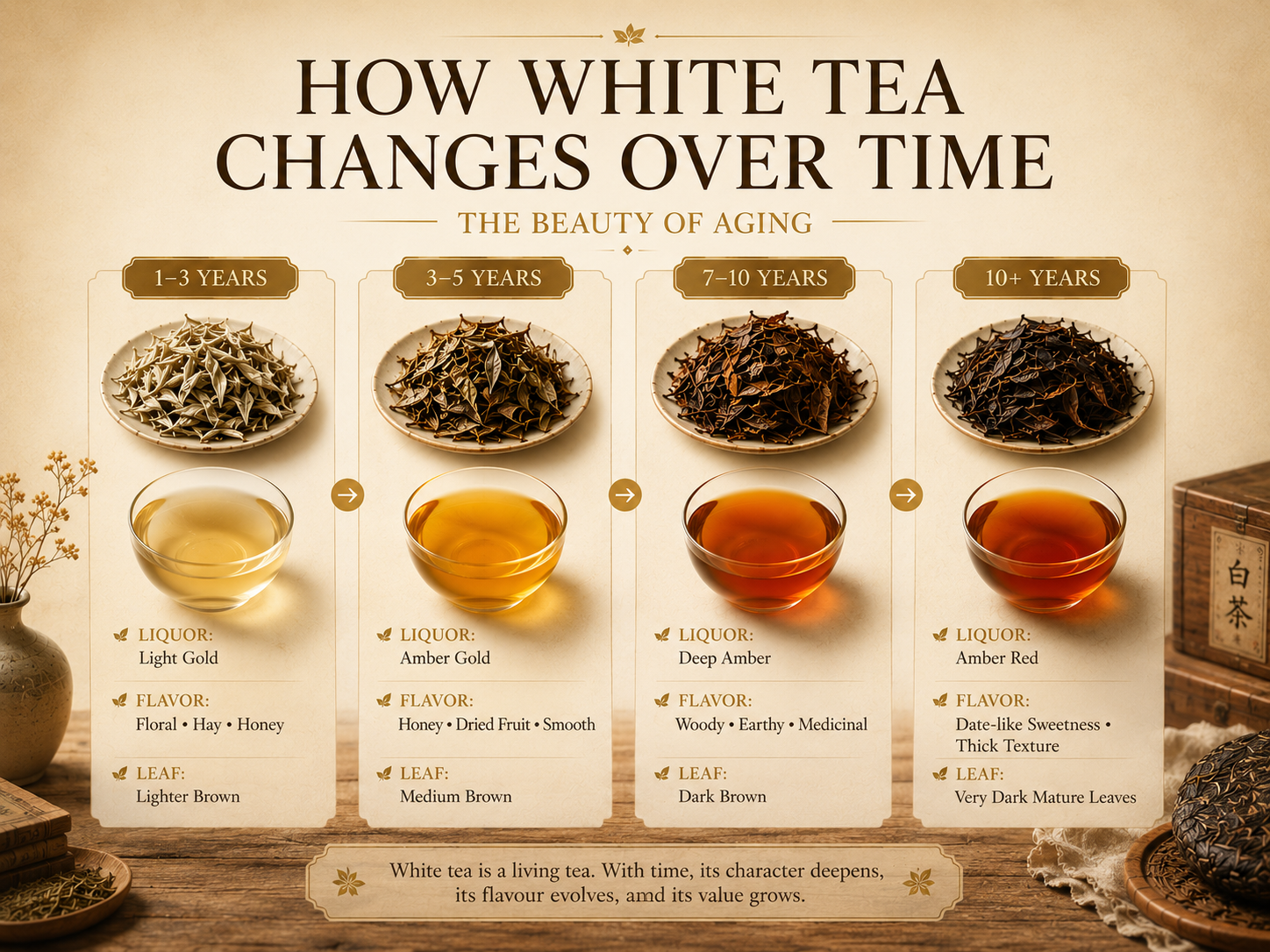
1–3 Years: Fresh Floral to Light Honey
In the first one to three years, aged white tea still retains much of its original fresh character. During the first one to three years, many white teas retain their fresh floral, hay-like, and lightly sweet character. Depending on the grade and storage conditions, the liquor may gradually become rounder and more honeyed while remaining pale and clean.
Depending on storage and grade, the liquor may gradually become rounder and more honeyed.
3–5 Years: Honey and Dried Fruit Complexity
Between 3 and 5 years, aged white tea Some drinkers particularly enjoy this stage because the tea may retain part of its fresh sweetness while beginning to show dried-fruit, honeyed, and lightly woody characteristics.
The liquor darkens into a richer amber tone, and the tea develops noticeably smoother texture across multiple infusions. At Dofo Tea, we typically observe that carefully stored Fuding white tea in this range offers the clearest balance between freshness and mature complexity.
7–10 Years: Earthy, Woody and Medicinal Notes
At seven to ten years, well-stored white tea may show a deeper amber liquor, fuller body, and more pronounced woody, herbal, or dried-fruit notes. Some teas also develop a smoother texture and warmer sweetness, although the exact profile depends on the tea grade, processing, compression, and storage environment.
Many drinkers compare this stage with lightly aged raw pu-erh, but aged white tea often remains softer and less intense. At Dofo Tea, aged batches are evaluated for clean aroma, leaf condition, liquor clarity, sweetness, and overall balance.
10+ Years: Deep, Aged-Tea Character
Beyond ten years, some white teas develop a distinctly mature profile with deeper woody aromas, thicker texture, and longer-lasting sweetness. The liquor may become darker and smoother, with notes that can suggest dried dates, herbs, honey, or aged wood.
However, age alone does not guarantee quality. Raw material, processing, authenticity of the age claim, and long-term storage conditions remain essential when evaluating older white tea.
Which Types of White Tea Age Best?
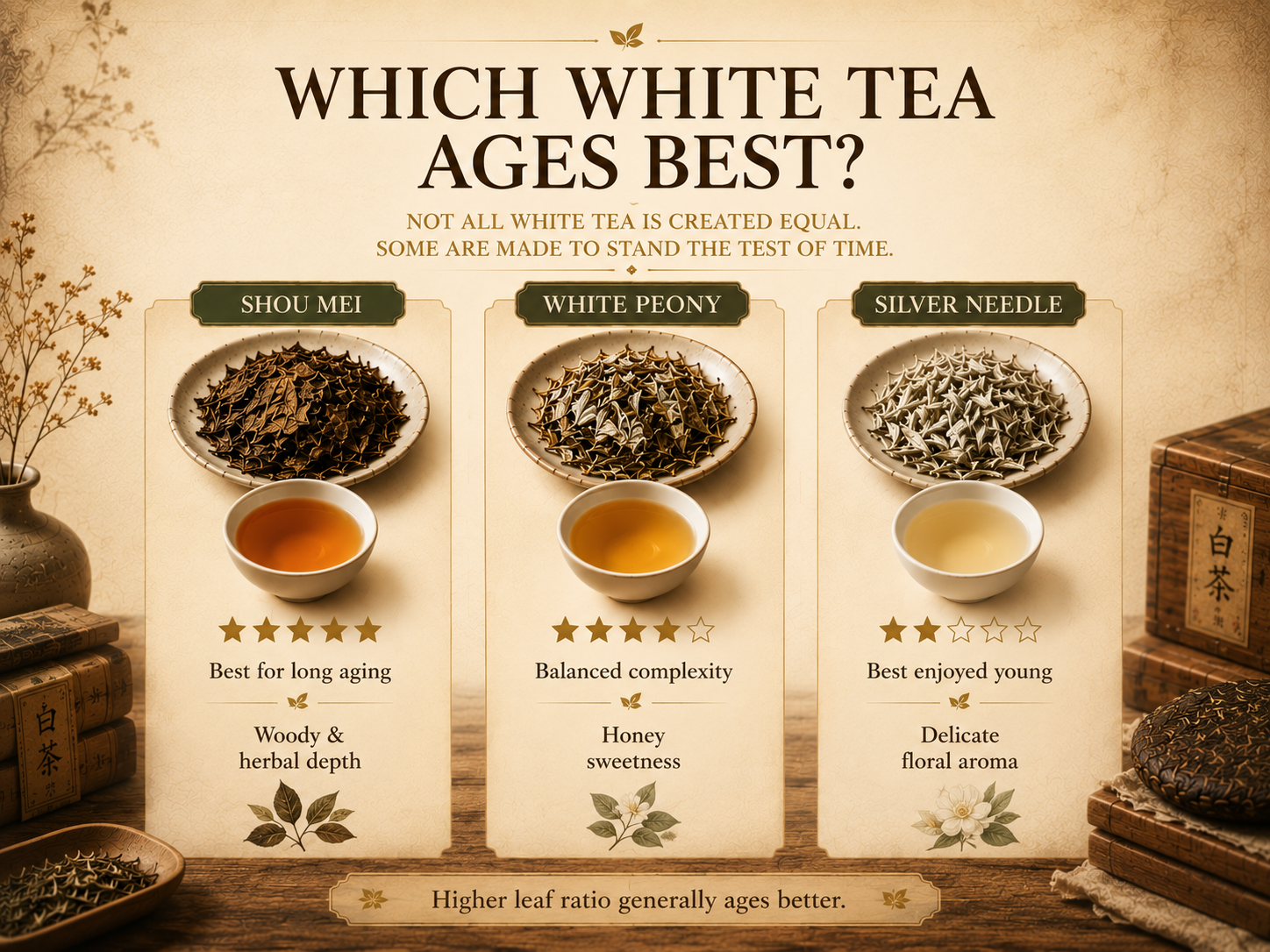
Shou Mei is one of the most commonly aged white tea grades because its mature leaves and fuller body can develop pronounced woody, herbal, and dried-fruit characteristics over time.
White Peony can also age well, often retaining some floral sweetness while developing a rounder honeyed profile. Silver Needle may be aged, but many drinkers prefer it younger because its delicate bud aroma can become softer with time.
If you want a broader introduction to these grades, read our guide to Types of White Tea
How Should Aged White Tea Be Stored?
White tea intended for aging should be protected from moisture, strong odors, direct light, contamination, and large temperature fluctuations. Storage needs vary according to climate, packaging, tea format, and whether the tea is intended for short-term drinking or long-term aging.
Read How to Store White Tea for detailed storage methods and common mistakes.
Aged White Tea vs Pu-erh Tea: What's the Difference?
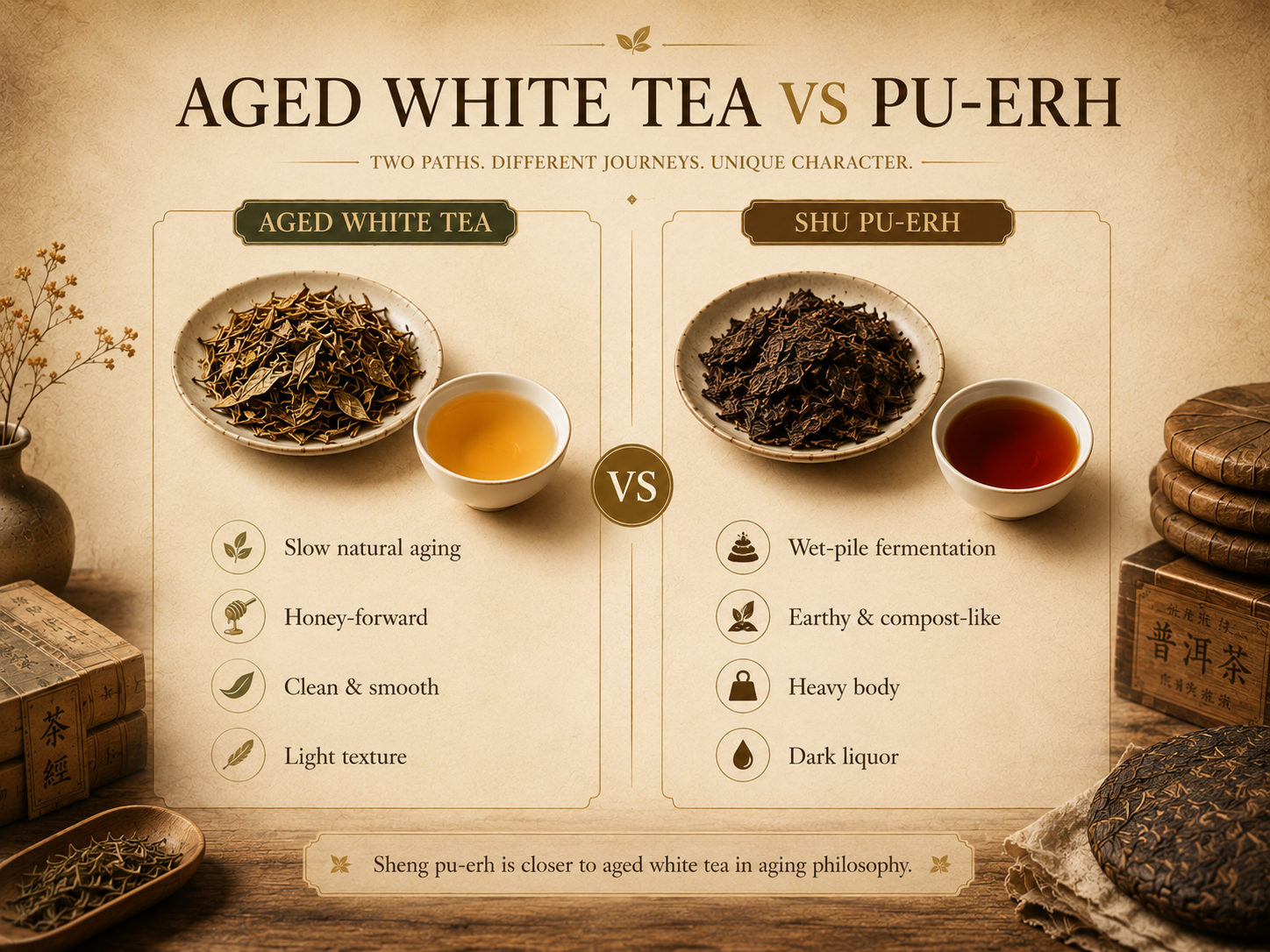
Aged white tea and pu-erh tea are both known for improving with time, but the way they age is fundamentally different. Aged white tea develops gradually through slow natural oxidation and gentle post-fermentation, while ripe shou pu-erh undergoes an accelerated wet-pile fermentation process that creates deeper earthy and compost-like notes much more quickly.
Raw sheng pu-erh is closer to aged white tea in aging philosophy because both transform slowly over many years, although sheng pu-erh usually develops stronger bitterness, mineral character, and heavier body. By comparison, aged white tea tends to produce a cleaner, softer, and more honey-forward profile that many drinkers find easier to approach as an introduction to aged teas.
My Practical Checklist for Choosing Aged White Tea
When I evaluate aged Shou Mei, I focus on three things: leaf appearance, aroma, and mouthfeel. Comparing younger and older Shou Mei helps me understand whether a tea has developed naturally or shows signs of poor storage.
In my tasting experience, well-stored aged Shou Mei usually retains recognizable leaf colors, although they become slightly darker over time. Its fresh floral notes may gradually develop into deeper herbal and woody aromas, sometimes with a pleasant dried-date sweetness. The liquor also tends to become rounder and fuller, with a smoother finish.
I pay particular attention to unwanted changes. A musty or sour smell, unusually damp-feeling leaves, or a flat, muddy taste makes me question the storage conditions. For me, clean aroma, balanced sweetness, and a satisfying texture matter more than the age printed on the package.
Where to Buy Aged White Tea
When buying aged white tea, look for clear information about origin, grade, production year or age claim, storage history, product format, and current condition. Age alone does not guarantee authenticity or quality.
Read How to Buy Authentic Aged White Tea for a complete evaluation checklist.
Explore Dofo Tea’s Aged Fuding White Tea.
FAQ: Aged White Tea Questions
What is aged white tea?
Aged white tea is white tea that has been stored over time to allow its aroma, body, color, and flavor to develop. Some sellers use three years as a practical starting point, but labeling conventions can vary.
Does white tea really get better with age?
It can, but age alone does not guarantee improvement. Well-made tea stored under suitable conditions may develop deeper sweetness, body, and complexity, while poorly stored tea may become stale, musty, or damaged.
How do you know if aged white tea is authentic?
Check the origin, grade, age claim, storage history, leaf condition, aroma, and seller transparency. See the buying guide above.
How is aged white tea different from pu-erh?
Both can change during storage, but they begin with different processing methods. Aged white tea starts as minimally processed white tea, while ripe pu-erh undergoes wet-pile fermentation and raw pu-erh follows its own long-term aging path.
Does aged white tea have health benefits?
Aged white tea contains naturally occurring tea compounds and caffeine, but aging does not automatically make it clinically healthier than fresh white tea. Research on the health effects of drinking aged white tea in humans remains limited, so it should be enjoyed primarily as a beverage rather than used to treat or prevent a medical condition.
If you want a complete overview of white tea types, flavor, caffeine, and health benefits, read our pillar guide: The Complete Guide to White Tea


