

White Tea: The Complete Guide to Types, Taste, Benefits and How to Brew It
Author: Xu Jiahua, Nationally Certified Senior Tea Appraiser
White tea is known for its gentle flavor, minimal processing, and long history in Chinese tea culture. Many tea drinkers appreciate it for its light sweetness, delicate aroma, and naturally smooth character. This guide provides a concise overview of white tea’s origin, main types, flavor, health-related research, caffeine, brewing, and regional styles, with links to detailed guides for each topic.
What Is White Tea? Origin, Processing and Why It's the Least Oxidised Tea
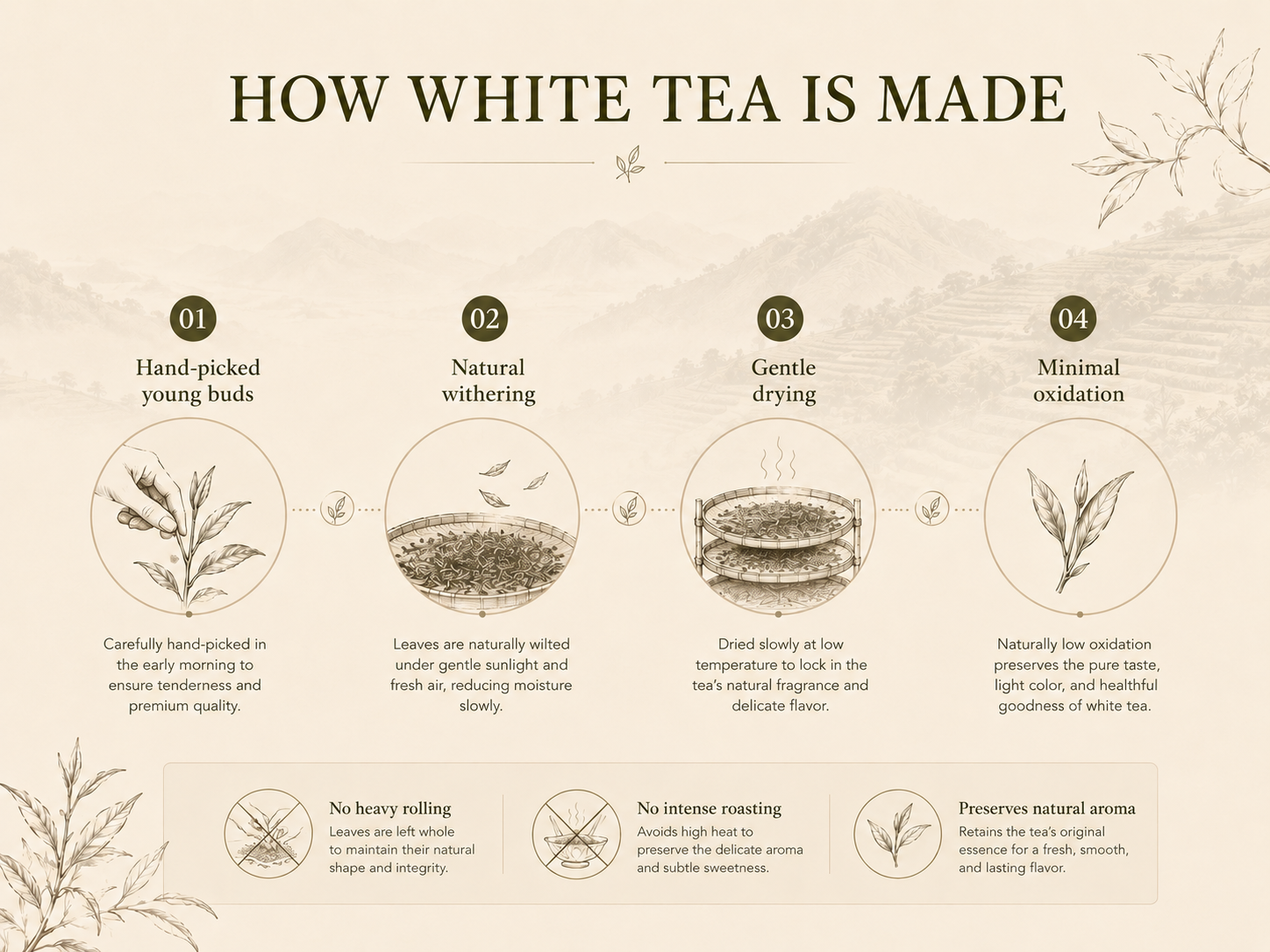 White tea is made from the buds and leaves of the Camellia sinensis plant and is traditionally associated with Fujian, China. Its processing generally centers on withering and drying, with little deliberate rolling or controlled oxidation. This relatively simple production method helps preserve the leaf’s natural appearance and delicate character.
For a deeper explanation of its definition, processing, and historical origins, read What Is White Tea? Definition and Origin.
The Main Types of White Tea: From Silver Needle to Shou Mei
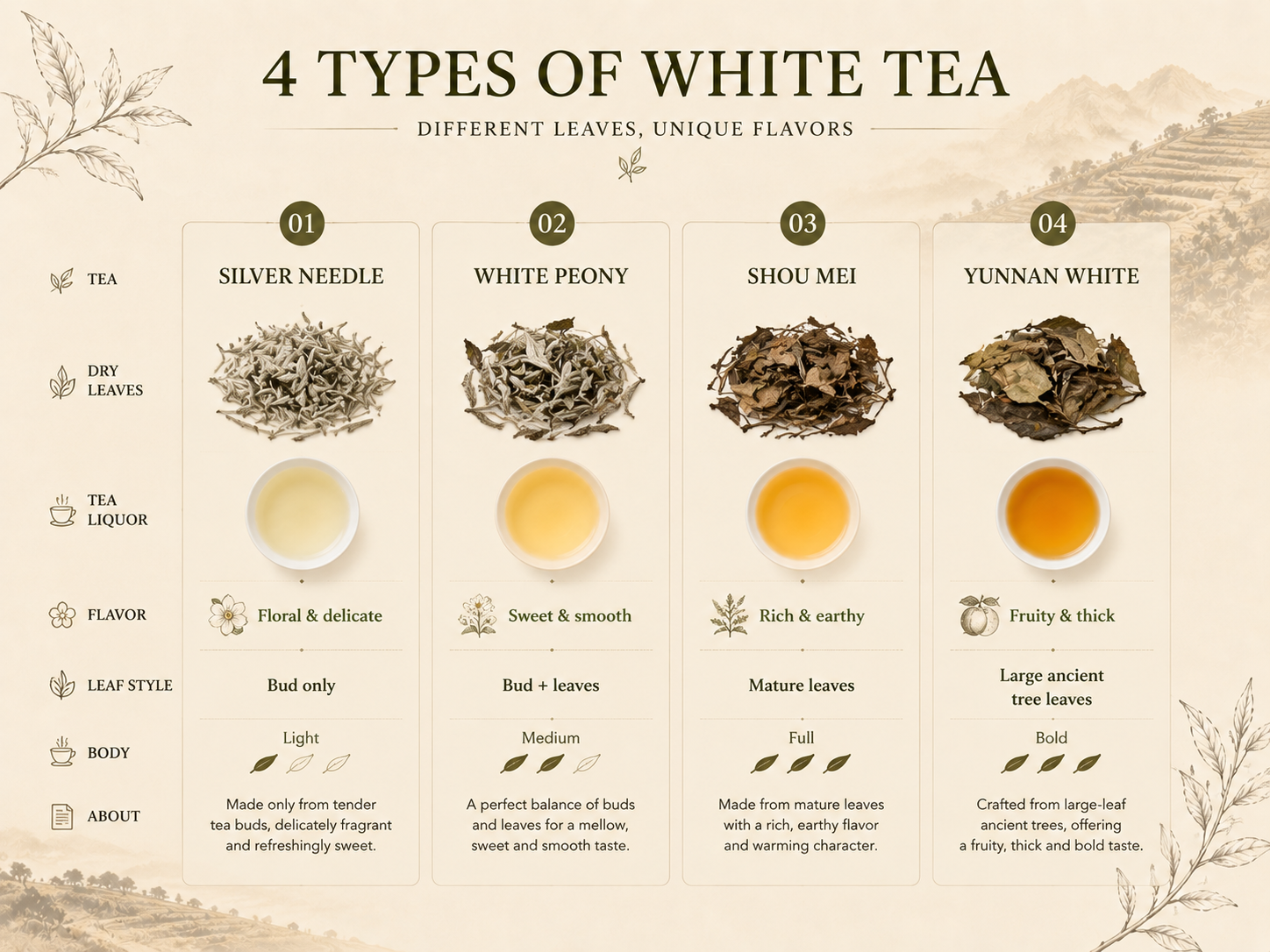
White tea includes delicate bud teas such as Silver Needle, fuller leaf-and-bud styles such as White Peony, and more mature leaf teas such as Gong Mei and Shou Mei. Regional production and leaf material also create differences between Fujian and Yunnan white teas.
Compare their appearance, grade, flavor, and suitability in our complete guide to Types of White Tea.
To see how a mature white tea can develop through aging, explore our Fuding Aged White Tea.
My Recommended White Tea Tasting Path for Beginners
| Stage | Tea to Try | Why I Recommend It |
|---|---|---|
| First step | Shou Mei | It has a fuller body, clear sweetness, and high brewing tolerance. It helps beginners understand the mellow side of white tea. |
| Second step | White Peony | It balances floral aroma, sweetness, and body. It is the best bridge between Shou Mei and Silver Needle. |
| Next step | Gong Mei | It helps you notice how different leaf material and cultivars can change aroma and texture. |
| Final step | Silver Needle | It is delicate, elegant, and subtle. It is easier to appreciate after your palate understands sweetness, body, and floral aroma. |
I also recommend tasting fresh white tea before buying aged white tea. Fresh white tea shows clear floral, grassy, and sweet notes, which helps you build a basic standard. After that, it becomes easier to judge whether an aged white tea tastes clean, smooth, and naturally transformed.
For beginners, my simple advice is: start with Shou Mei or White Peony, buy small samples first, and avoid chasing very old or expensive aged white tea too early.
What Does White Tea Taste Like? Flavour Notes Across the Grades
White tea is generally smooth, lightly sweet, and less astringent than many other true teas. Its exact aroma, body, and finish vary according to grade, origin, age, cultivar, and processing.
Read What Does White Tea Taste Like? for a detailed breakdown of floral, honeyed, fruity, aged, and regional flavor profiles.
White Tea Health Benefits: Key Findings at a Glance
White tea contains naturally occurring polyphenols and other tea compounds that have been studied for antioxidant activity and general wellness. Research is still developing, and white tea should be viewed as a beverage rather than a treatment for any health condition.
Read our evidence-based guide to White Tea Health Benefits for the research, limitations, and practical context.
See the referenced white tea polyphenol research for additional scientific background.
White Tea Caffeine: How Much Does It Contain Compared to Other Teas?
White tea naturally contains caffeine, but the amount can vary according to the grade, leaf maturity, brewing temperature, leaf quantity, and steeping time.
See our complete White Tea Caffeine Guide for estimated ranges by grade and comparisons with green tea, black tea, and coffee.
Official brewed-tea caffeine references are also available through the USDA tea caffeine data.
How to Brew White Tea: Quick-Start Temperature and Steep Time Guide
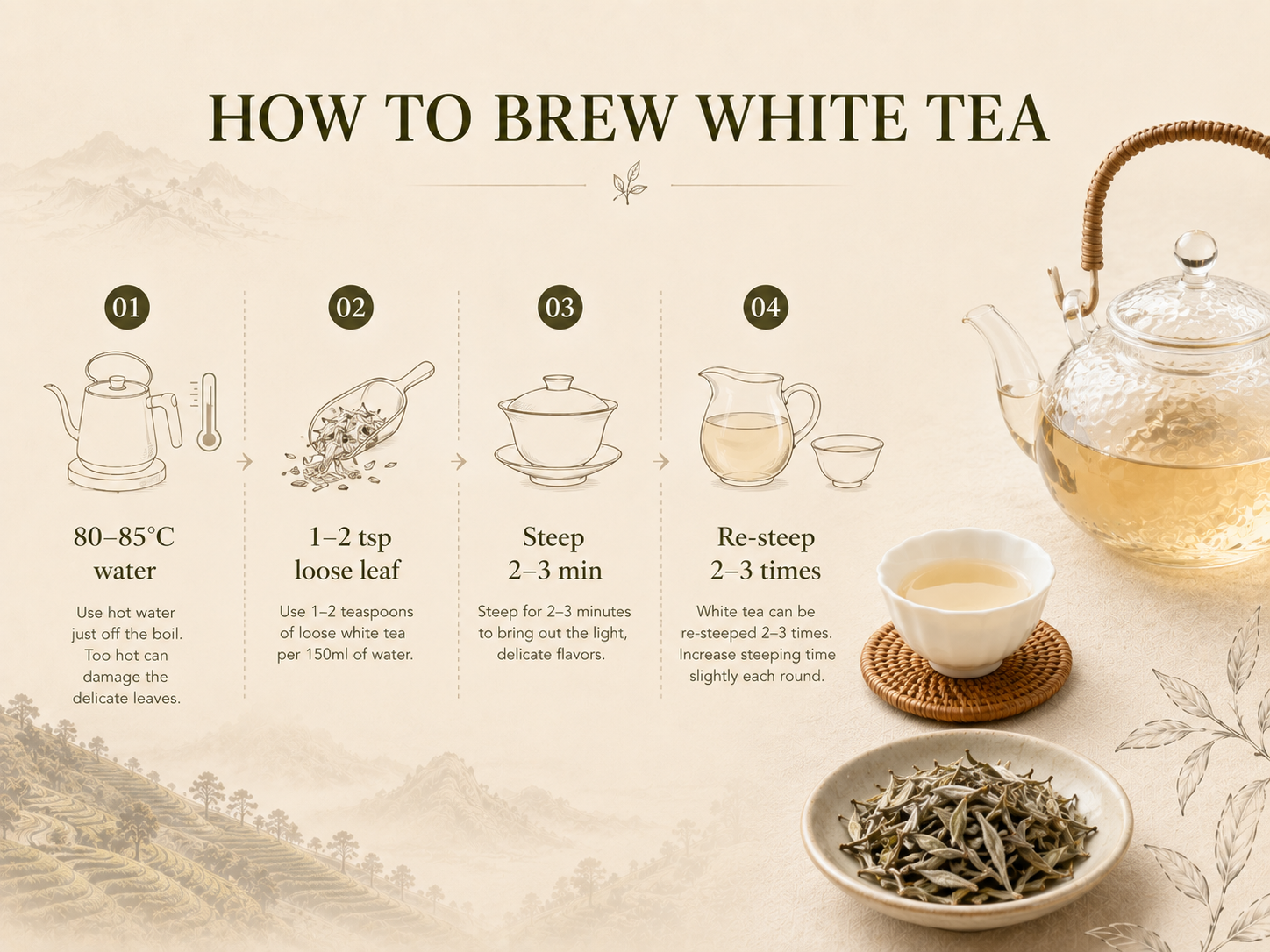
White tea generally benefits from gentle brewing, but the best water temperature, leaf ratio, and steeping time depend on the grade, brewing vessel, and desired flavor. Silver Needle, White Peony, Shou Mei, and aged white tea may each require slightly different adjustments.
Read How to Brew White Tea for complete Western-style and Gongfu brewing instructions.
Why Chinese White Tea Is Different: Fuding and Yunnan Compared
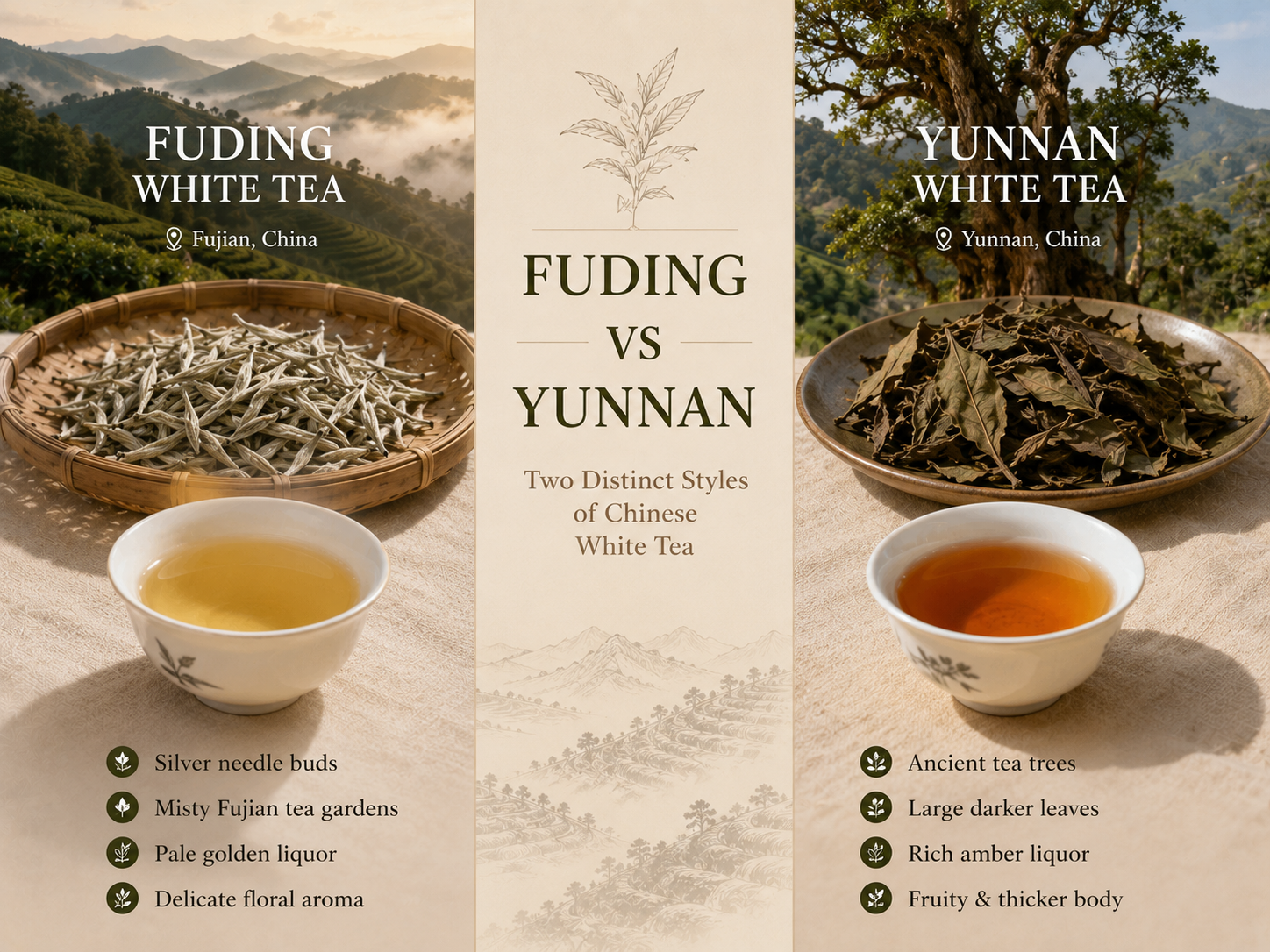
Fuding and Yunnan white teas can differ in cultivar, growing conditions, leaf material, body, and aroma. Fuding is closely associated with traditional Fujian white tea production, while Yunnan styles often offer a different regional expression.
Read Fuding White Tea vs Yunnan White Tea for a complete comparison of origin, processing, appearance, and flavor.
For background on Fuding’s tea heritage, see the Fuding white tea geographical indication.
Looking for the best Chinese white tea to try first? Explore Dofo Tea's Chinese white tea collection — sourced directly from Fuding and Yunnan.
FAQ: White Tea Questions Answered
What is white tea made from?
White tea is made from the buds and leaves of Camellia sinensis and is processed mainly through withering and drying. Read What Is White Tea? for its complete definition and origin.
Does white tea have caffeine?
Yes. White tea naturally contains caffeine, although the amount varies by grade and brewing method. See our White Tea Caffeine Guide for detailed estimates.
What does white tea taste like?
White tea is generally smooth, lightly sweet, and delicately aromatic, although the flavor varies by grade, origin, and age. Read What Does White Tea Taste Like?
Where does white tea come from?
Chinese white tea is traditionally associated with Fujian, while Yunnan also produces distinctive regional styles. Learn more in Fuding White Tea vs Yunnan White Tea
What are the main types of white tea?
The main grades include Silver Needle, White Peony, Gong Mei, and Shou Mei. Compare them in our Types of White Tea guide.
Is white tea good for you?
White tea contains tea polyphenols and other compounds studied for antioxidant activity. Read White Tea Health Benefits for the evidence and research limitations.
How do you brew white tea correctly?
Brewing recommendations vary by grade and method. See How to Brew White Tea for water temperature, leaf ratio, steeping time, and teaware guidance.


