

White Tea vs Green Tea: What's the Difference in Taste, Caffeine and Benefits?
Author: Xu Jiahua, Chinese Certified Senior Tea Appraiser
White tea and green tea both come from Camellia sinensis, but differences in harvesting, processing, and brewing create noticeably different flavors and drinking experiences. This guide compares their processing, taste, caffeine, and research-backed health context to help you choose between them.
White Tea vs Green Tea: The Key Differences at a Glance
The key difference between white tea and green tea lies in processing: white tea is only withered and dried, while green tea is also heat-treated (steamed or pan-fired) to prevent oxidation — a step that alters both flavour and some nutrient compounds.
White tea is generally withered and dried with relatively limited processing.
Green tea is heated soon after harvest to limit enzymatic oxidation, helping preserve its green color and characteristic vegetal aroma.
These foundational differences directly shape each tea's ultimate flavor, caffeine level, and market value.
White Tea vs. Green Tea: Quick Comparison
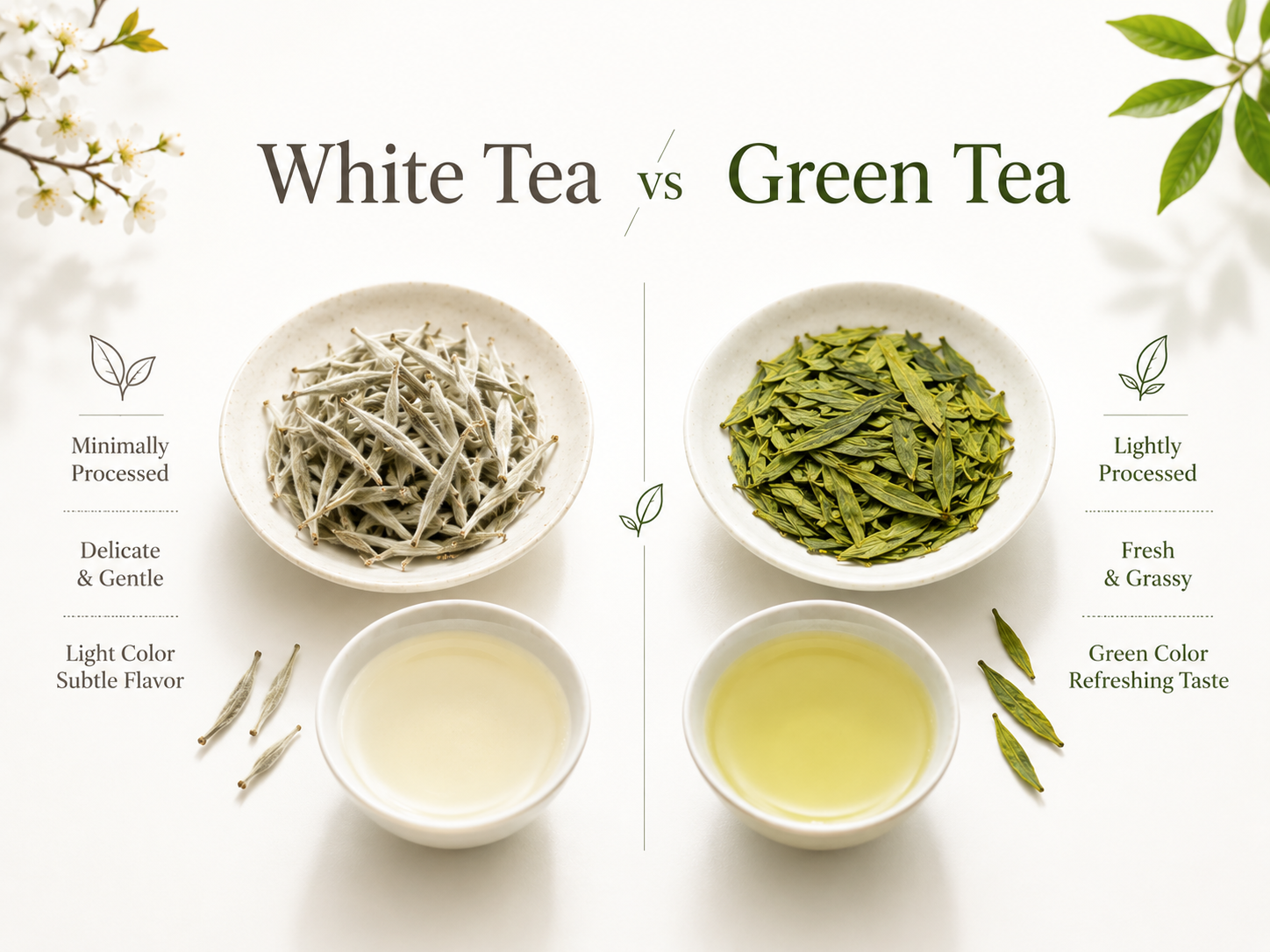
Choosing between the two comes down to your personal routine. Compare their key characteristics at a glance:
|
Dimension |
White Tea |
Green Tea |
|
Processing |
Withered and air-dried only |
Steamed or pan-fired |
|
Caffeine |
Approximately 15–30mg per 250ml |
Approximately 20–45mg per 250ml |
|
Flavour |
Delicate, sweet, floral |
Grassy, vegetal, nutty |
|
Best For |
Drinkers who prefer lighter, sweeter flavors |
Drinkers who prefer fresh, vegetal, or roasted flavors |
|
Price |
Higher (rare, hand-picked buds) |
Accessible to premium |
These ranges overlap, and actual caffeine content varies according to cultivar, leaf grade, leaf quantity, water temperature, and steeping time.
Note: Based on USDA Food Data Central averages, actual levels vary by harvest, grade, and brewing. At Dofo Tea, we monitor these traits to source both premium white and green teas, believing each offers a uniquely exceptional experience.
White Tea vs Green Tea Taste: Floral Sweetness or Vegetal Freshness?
Personal Tasting Notes: White Tea vs. Green Tea Flavor Profiles
Years ago, when white tea was new to many, friends often asked: "Why does it taste just like green tea?" I would smile, remembering my own early confusion over their shared fresh sweetness.
In time, the nuances emerged. Green tea is a fleeting, pure breeze; white tea is a slow story, unfolding into deep floral complexity and lingering honeyed sweetness.
I am a long-time tea drinker who has sampled various types of both white and green tea; in terms of flavor, these two varieties offer vastly different sensory experiences:
- White tea: Generally light, smooth, and gently sweet, with floral, hay-like, melon, or honeyed notes. Bitterness is usually mild when brewed appropriately.
- Green tea: Often fresher and more vegetal, with notes that may suggest grass, steamed greens, chestnut, beans, or roasted nuts depending on origin and processing.
Ultimately, it comes down to a choice between mellow sweetness and a vibrant, crisp herbal bite.
For a deeper comparison of Silver Needle, White Peony, Shou Mei, and Yunnan styles, read What Does White Tea Taste Like?
Caffeine Comparison: Which Has Less Caffeine?
White tea typically contains 15–45 mg of caffeine per 240 ml cup, while green tea usually falls in the 20–50 mg range — making white tea the lower-caffeine choice in most comparisons.
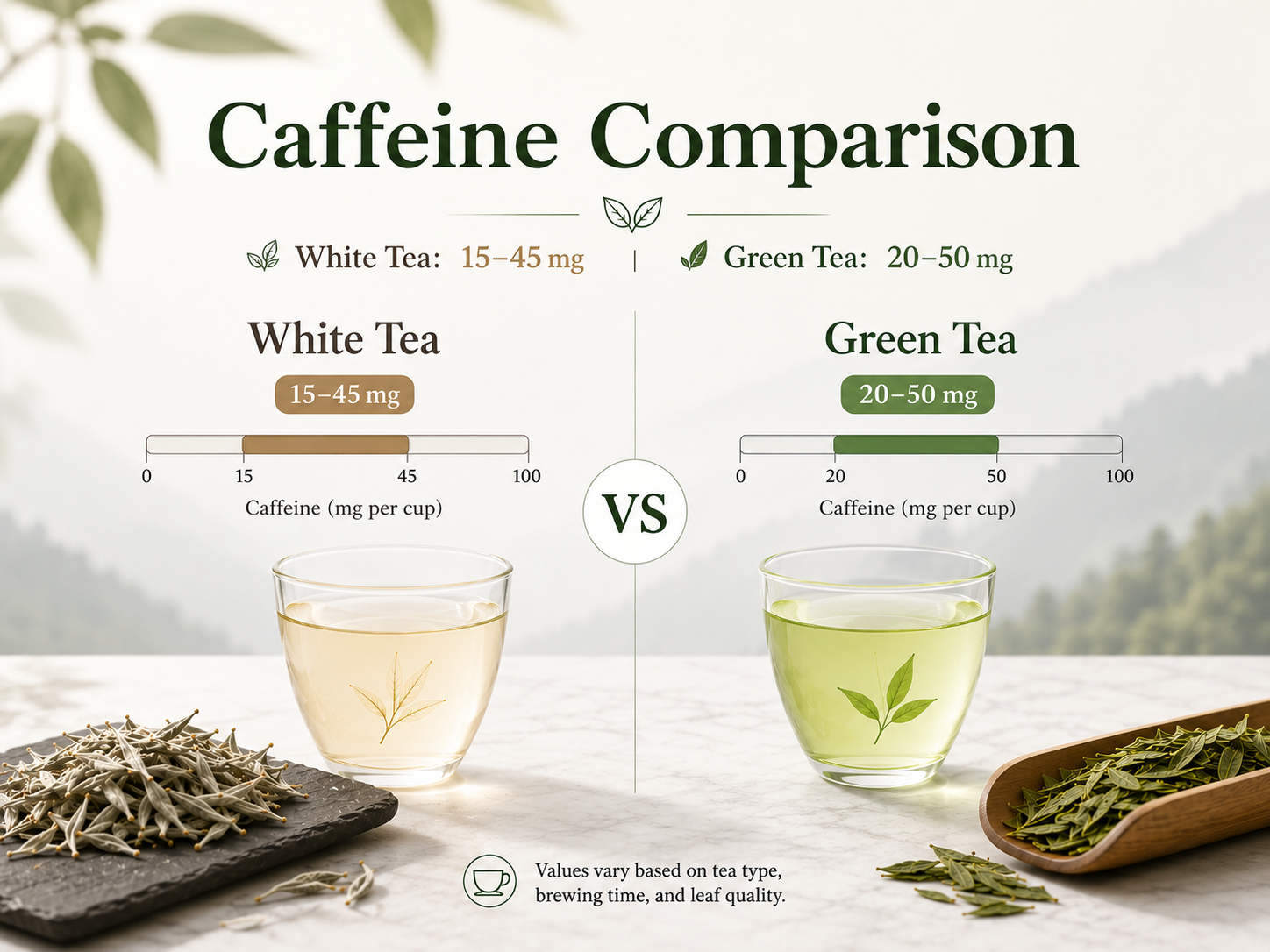
Actual caffeine levels vary by leaf tenderness, harvest season, water temperature, and steep time. Typical content per 8 oz cup:
| Tea Category | Approximate Caffeine per 250ml |
|---|---|
| White Tea | 15–30mg |
| Green Tea | 20–45mg |
Bud-heavy teas such as Silver Needle may contain more caffeine per gram than mature-leaf white teas, while brewing conditions can create substantial overlap between categories.
Read our White Tea Caffeine Guide for a grade-by-grade breakdown.
Health Research: Is White Tea or Green Tea Better?
Multiple studies in PubMed (National Library of Medicine) show that both green and white teas, rich in antioxidant polyphenols like EGCG, Research has examined tea polyphenols in relation to antioxidant activity, metabolism, and cardiovascular markers.
White tea and green tea both contain naturally occurring polyphenols, including catechins. These compounds have been studied for antioxidant activity and their possible relationship with cardiovascular and metabolic health.
However, the amount and type of evidence vary. Green tea has been studied more extensively in humans, while many white tea findings come from laboratory, animal, or compositional research. Neither tea should be treated as a medical treatment.
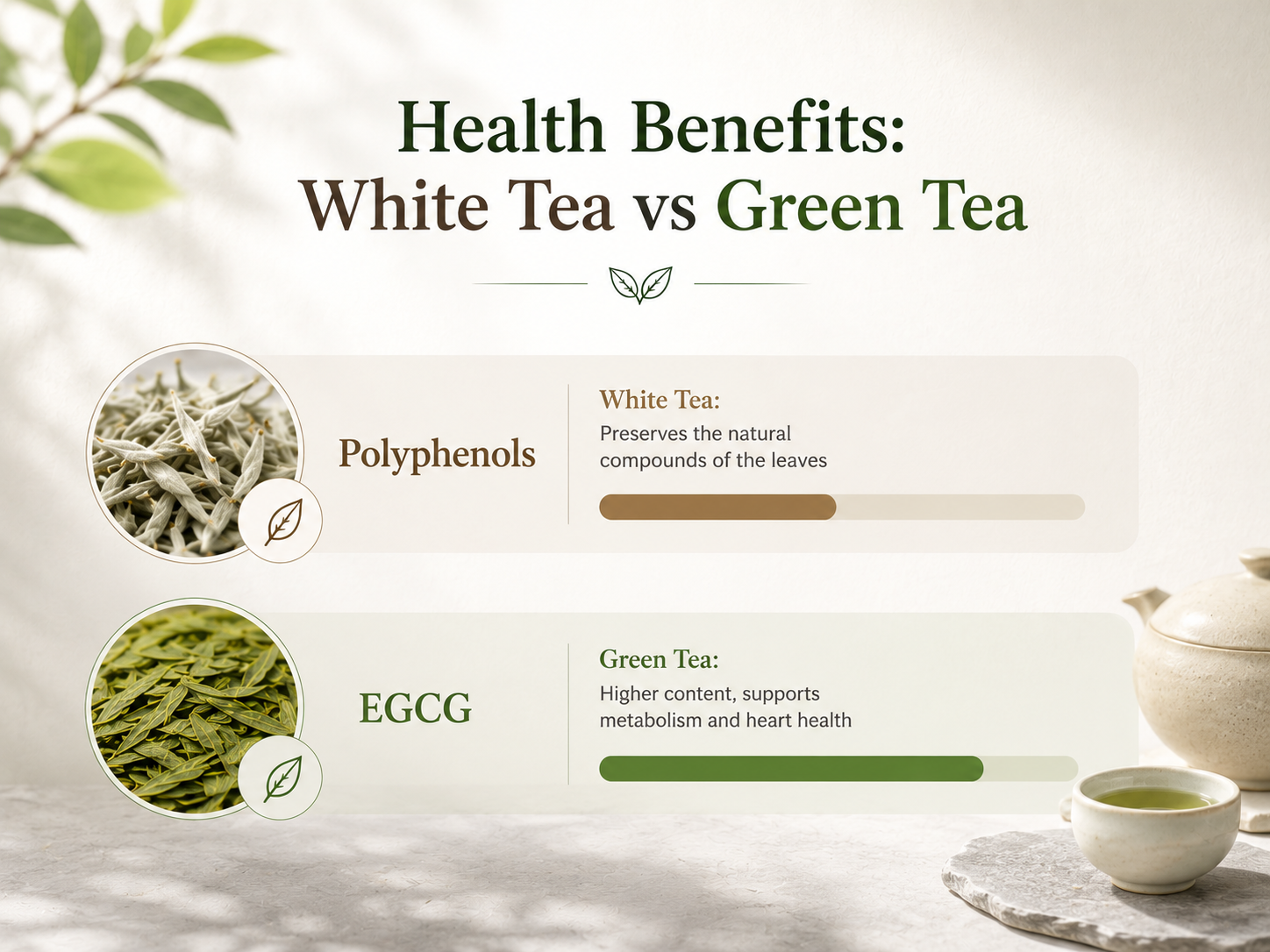
Polyphenol Profile
Both teas contain polyphenols, but their measured levels vary by cultivar, leaf grade, processing, storage, and laboratory method. Minimal processing does not automatically mean every white tea contains more total polyphenols than every green tea.
EGCG
Green tea is widely studied as a source of EGCG, but white tea can also contain catechins and related compounds. Direct comparisons should be interpreted according to the specific teas and methods used in each study.
For a focused review of white tea research, read White Tea Health Benefits.
Which Should You Choose? A Simple Decision Guide
Is white tea better than green tea? Not necessarily.For drinkers who prefer a lighter, naturally sweeter taste with less caffeine, white tea is the better choice; those who enjoy a more grassy, vegetal character and a larger selection of regional styles will find green tea more varied.
The best choice simply comes down to your personal preferences and daily routine:
- Generally lower caffeine: White tea often falls toward the lower end, but the ranges overlap. Caffeine-sensitive drinkers should also consider grade and brewing method.
- Budget: Choose green tea for affordable everyday varieties, as bud-heavy white teas tend to be more of an investment.
-
Taste Preference: Choose white tea for delicate, sweet, and floral notes; choose green tea for crisp, grassy, and vibrant flavors.
FAQ: White Tea vs Green Tea Questions Answered
Which is healthier — white tea or green tea?
Neither tea is universally healthier. Both contain tea polyphenols, while green tea currently has a larger body of human research. The practical choice depends on your taste, caffeine tolerance, overall diet, and drinking habits.
Does white tea have less caffeine than green tea?
White tea commonly contains approximately 15–30mg per 250ml, while green tea often contains around 20–45mg. These ranges overlap, so a strongly brewed white tea may contain more caffeine than a lightly brewed green tea.
Do white tea and green tea taste similar?
Usually not. Green tea has a grassy, vegetal, sometimes astringent flavour. White tea is lighter, sweeter and more delicate — often described as having floral and honeydew notes with very low bitterness. If you find green tea too sharp, white tea is likely a better match.
Can I substitute white tea for green tea?
Yes, but adjust brewing according to the specific tea. Delicate white teas and green teas often benefit from water below boiling, while mature white tea grades may tolerate somewhat higher temperatures. Read the product instructions or our How to Brew White Tea guide.
For a broader introduction to white tea, return to our White Tea Complete Guide.
Explore the Dofo Tea White Tea Collection to compare current white tea options.


