

Best Tea for Anxiety: A Gentle, Practical Guide to Calming Tea
liujiehangAuthor: Xu Jiahua, Nationally Certified Senior Tea Appraiser
Anxiety often creeps in during quiet moments or when daily stress piles up. Many people reach for a warm cup of tea as a simple way to slow down. This guide explores the best tea for anxiety and how gentle teas can become part of a calming daily routine.
What Is Anxiety and How Daily Habits Influence It
Anxiety is a natural stress response, but for many people it becomes a frequent part of daily life. Sleep patterns, caffeine intake, meal timing, and screen use can all influence how often anxious feelings appear and how intense they feel.
Small, repeatable habits tend to matter more than dramatic changes. This is where gentle rituals, like preparing tea, often find their place.
How Tea Can Help with Anxiety
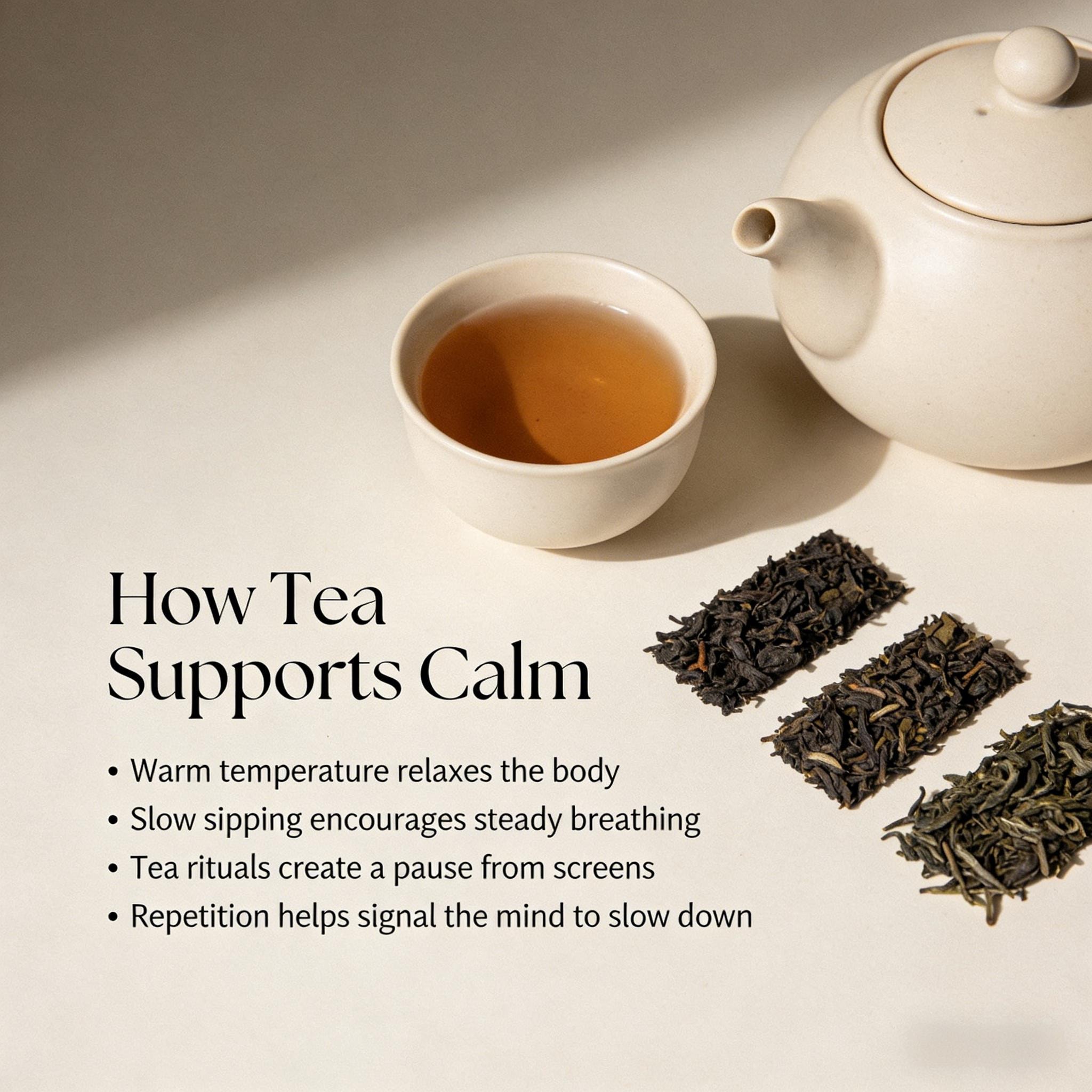
Tea doesn’t work as a treatment for anxiety, but the experience of drinking it can support relaxation in several practical ways.
- warm temperature provides physical comfort and helps ease muscle tension
- slow sipping encourages calmer, more controlled breathing
- tea-making ritual creates a pause from screens and mental noise
- repeated routine signals the body and mind to slow down over time
What Makes a Tea Calming or Anxiety-Friendly
Not all teas feel calming. The experience depends on several practical factors.
Caffeine Level and Nervous System Sensitivity
Caffeine affects people differently. Even small amounts can feel overstimulating for those with anxiety. Teas with lower caffeine, or naturally caffeine-free options, are often easier to tolerate.
Natural Compounds Often Linked to Calmness
Some teas contain naturally occurring compounds that are commonly discussed in research on relaxation and stress response. For example, research from the National Institutes of Health (NIH) shows that green tea contains polyphenols, which may contribute to stress modulation
Flavor Profile and Sensory Comfort
Sharp bitterness or strong astringency can feel unpleasant when someone is already tense. Softer, smoother flavors tend to be more comforting and easier to sip slowly.
Best Tea for Anxiety: Gentle Options Many People Prefer
Below are tea types that many people choose when they want a calmer, low-pressure tea experience.
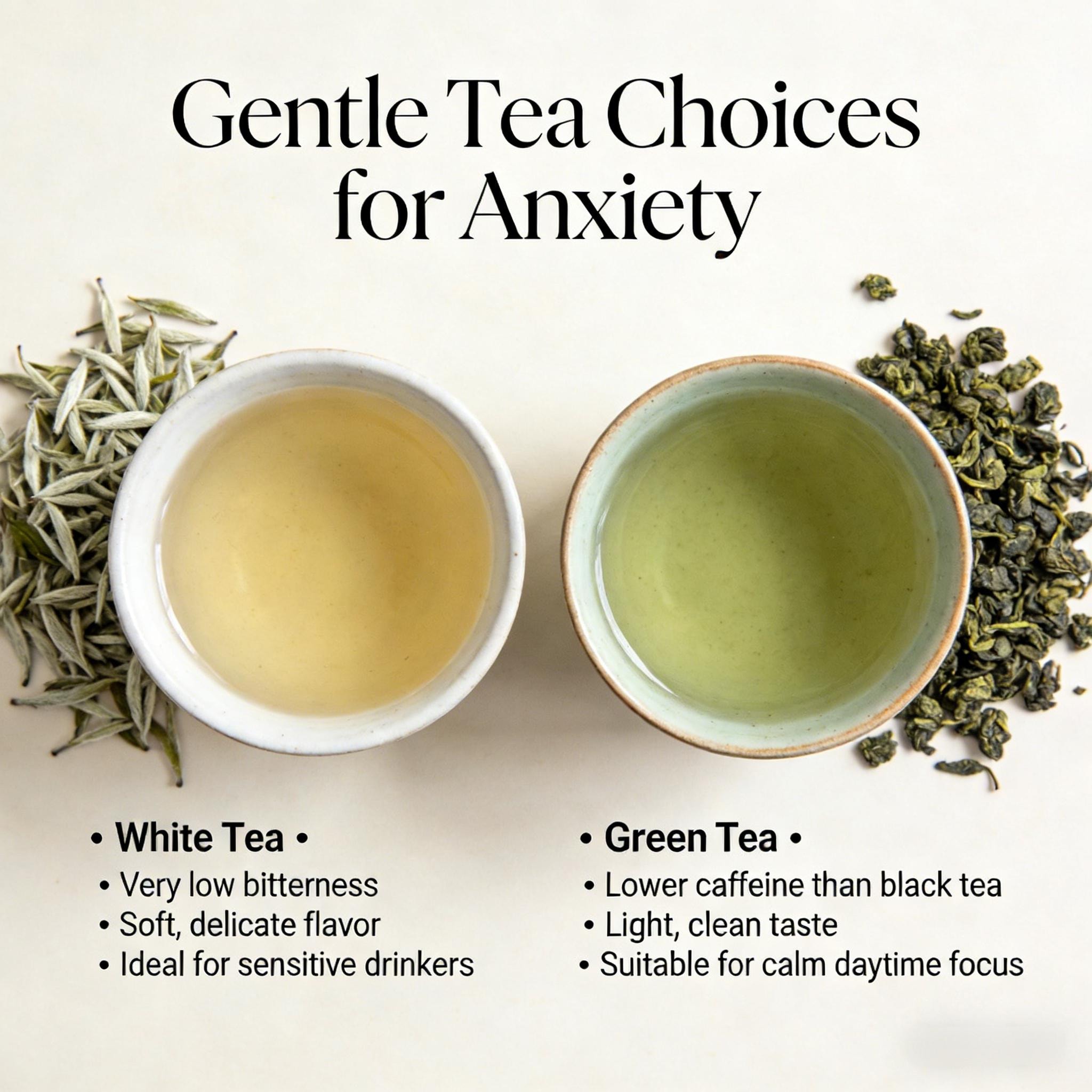
White Tea — Low-Impact Tea for Sensitive Drinkers
White tea is lightly processed and naturally delicate. Its soft flavor and low bitterness make it a popular choice for those who feel easily overstimulated. When brewed gently, it offers a quiet, unobtrusive cup that fits well into slower moments.
Explore Dofo white tea selections for a gentle, easy-drinking experience.
Green Tea — Calm Focus with Lower Stimulation
Green tea contains less caffeine than black tea and is often associated with a cleaner, lighter taste. Many people appreciate green tea for daytime calm focus, especially when brewed at lower temperatures to keep the flavor smooth.
Discover Dofo green teas designed for balanced energy and everyday calm.
Peppermint Tea — Light and Physically Soothing
Peppermint tea is naturally caffeine-free and known for its refreshing aroma. Some people find it especially helpful when anxiety comes with physical tension or digestive discomfort. Its clarity can feel grounding without being heavy.
Lavender Tea — Aroma-Driven Relaxation
Lavender tea focuses more on scent than strength. Its calming aroma plays a large role in the experience, making it appealing for people who respond strongly to sensory cues like smell and atmosphere.
Chamomile Tea — A Classic Bedtime Choice
Chamomile is widely associated with evening relaxation. Its mild floral taste and lack of caffeine make it a common choice before bed, especially for those looking to wind down without stimulation.
How to Brew Tea for Anxiety Relief Without Overstimulation
|
Brewing Factor |
Calmer Choice |
Why It Helps |
|
Water temperature |
Slightly lower |
Reduces bitterness and sharpness |
|
Steeping time |
Shorter |
Creates a lighter, gentler cup |
|
Ingredients |
Simple, unflavored |
Avoids unnecessary sensory stimulation |
These small adjustments help ensure your tea feels gentle, soothing, and easy to enjoy when anxiety is present.
Who Should Be More Mindful When Using Tea for Anxiety
Tea is generally safe for most people, but certain situations call for extra attention.
- Medication Interactions:Some herbal teas may interact with medications. When in doubt, checking with a healthcare professional is the safest option.
- Pregnancy and Herbal Teas:Not all herbs are recommended during pregnancy. Choosing well-known, lightly brewed teas and avoiding unfamiliar herbal blends is often advised.
- Anxiety with Digestive Sensitivity:For those whose anxiety is closely tied to digestion, strong or acidic teas may feel uncomfortable. Mild teas and herbal options are often easier to tolerate.
FAQ: Tea for Anxiety
Which tea is best for anxiety?
There is no single best option. Many people prefer low-caffeine or caffeine-free teas with smooth, gentle flavors.
Is green tea good or bad for anxiety?
Green tea can feel calming for some when brewed lightly, but sensitivity to caffeine varies from person to person.
Can tea replace anxiety medication?
Tea is not a replacement for medication or professional care. It is best viewed as a supportive habit rather than a treatment.
How long does it take for calming tea to work?
Tea doesn’t work on a fixed timeline. Any sense of calm often comes from warmth, routine, and sensory comfort rather than immediate effects.
Discover Dofo Tea’s Calm-Friendly Tea Selection
At Dofo Tea, calm begins with simplicity. Clean, single-origin teas and careful processing help preserve natural flavor without excess intensity. Whether it’s white tea in the morning or gentle green tea in the afternoon, mindful choices can become a quiet anchor—reminding you to slow down, sip, and breathe.


