

White Tea Health Benefits: What the Research Actually Says
Author: Xu Jiahua, Nationally Certified Senior Tea Appraiser
White tea has been part of Chinese tea culture for centuries. Today, it is drawing attention from researchers and health-conscious drinkers alike. If you are wondering what the benefits of white tea are — and whether the science holds up — this guide walks through the evidence clearly and honestly.
What Makes White Tea So Rich in Health-Promoting Compounds?
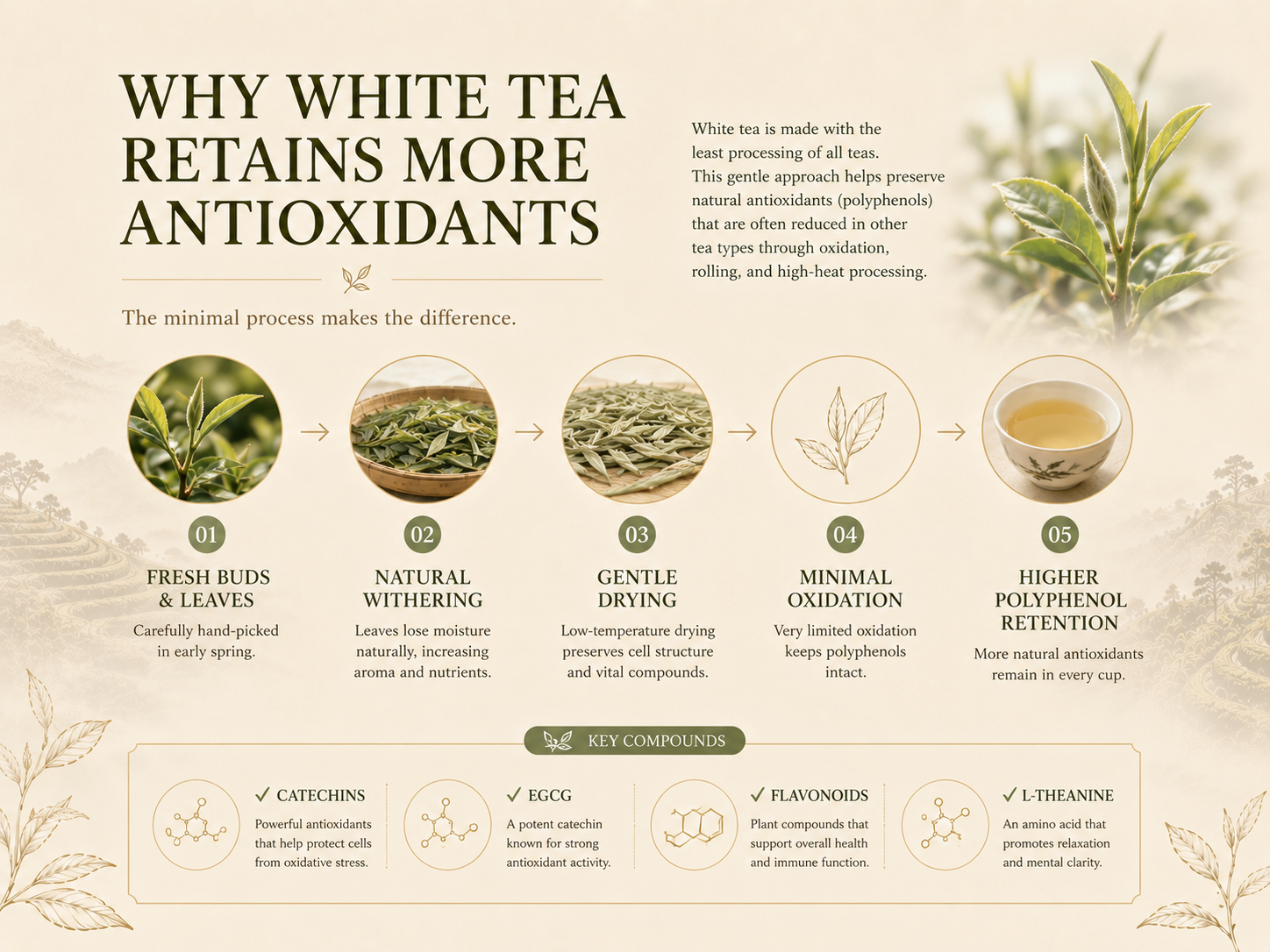
White tea is exceptionally rich in polyphenols — plant-based antioxidants including catechins and EGCG — which are preserved in higher concentrations due to white tea's minimal processing compared to green, oolong or black tea.
This gentle handling — simply withering and drying after harvest — prevents full oxidation and high-temperature exposure, helping maintain these beneficial compounds.
Because of this careful processing, the leaves retain higher concentrations of antioxidants linked to white tea health benefits. Key compounds include catechins, EGCG (epigallocatechin gallate), flavonoids, and L-theanine.
These substances are often studied for their potential effects on oxidative stress, cardiovascular support, and inflammation. Different harvest times and leaf grades can influence the polyphenol content.
→ Different grades have different polyphenol profiles — see types explained.
7 Evidence-Based Health Benefits of White Tea
The health benefits of white tea are closely linked to its naturally occurring polyphenols, catechins, and antioxidant compounds. Current research mainly comes from laboratory, animal, and observational studies, so these findings should be viewed as research-supported associations rather than medical claims. White tea is not a medicine, and individual results may vary depending on diet, lifestyle, and overall health habits.
Rich in Antioxidants That Protect Cells
White tea is rich in catechins and EGCG, antioxidants commonly studied for their role in reducing oxidative stress at the cellular level. Because white tea undergoes minimal oxidation and heat exposure, it may retain higher concentrations of these compounds compared to more heavily processed teas. Research discussed in white tea polyphenols antioxidant study highlights the antioxidant activity associated with tea polyphenols.
May Support Heart Health
Several observational studies have linked regular tea consumption with markers associated with cardiovascular health. Researchers have studied catechins for their potential role in supporting healthy circulation and reducing LDL oxidation. More research context can be found in white tea cardiovascular polyphenols
Linked to Improved Oral Health
White tea naturally contains fluoride, tannins, and antibacterial catechins that may help support oral hygiene. Laboratory studies suggest tea polyphenols may inhibit bacteria associated with plaque formation and tooth decay. Research background is available through tea polyphenols oral health antibacterial.
May Help with Weight Management
Catechins and caffeine have been studied in relation to energy expenditure and fat metabolism, but much of this research involves green tea extracts or concentrated supplements rather than brewed white tea. There is not enough direct evidence to describe white tea as an effective weight-loss product.
Antibacterial Properties
Laboratory research has shown that tea polyphenols may have antibacterial activity against several strains of bacteria. Because white tea is minimally processed, its catechin content remains relatively well preserved compared to fully oxidised teas. Most of these findings come from in vitro studies rather than long-term human trials.
May Support Bone Density
Some epidemiological studies have observed that regular tea drinkers tend to show higher bone mineral density compared to non-tea drinkers. Researchers believe tea polyphenols may help support bone-forming cell activity while reducing oxidative stress linked to bone aging. White tea specifically requires further study, but its polyphenol profile makes it relevant in this area of research.
Low Caffeine Makes It Gentler on the Body
White tea typically contains around 15–30 mg of caffeine per cup, which is lower than many green or black teas. This lower caffeine level makes it a gentler option for people who are caffeine-sensitive or prefer lighter daily tea consumption. Curious about caffeine sensitivity? Read our guide to white tea caffeine.
What I Notice When Drinking White Tea Regularly
I do not see white tea as a quick health fix. In my own experience, its value is more practical: it feels gentle, clean, and easy to drink every day. I often choose it after a heavier meal, during quiet work time, or when I want something lighter than coffee.
What I usually notice is simple:
- It feels clean and refreshing after rich or oily food.
- It gives a softer lift than coffee without feeling too intense.
- It is easy to keep drinking because the flavor is smooth and not overwhelming.
For me, the key is moderation. I usually prefer one or two light cups a day and avoid drinking strong tea on an empty stomach. White tea feels best as part of a balanced daily routine, not as a quick medical or beauty solution.
How White Tea's Minimal Processing Preserves More Polyphenols
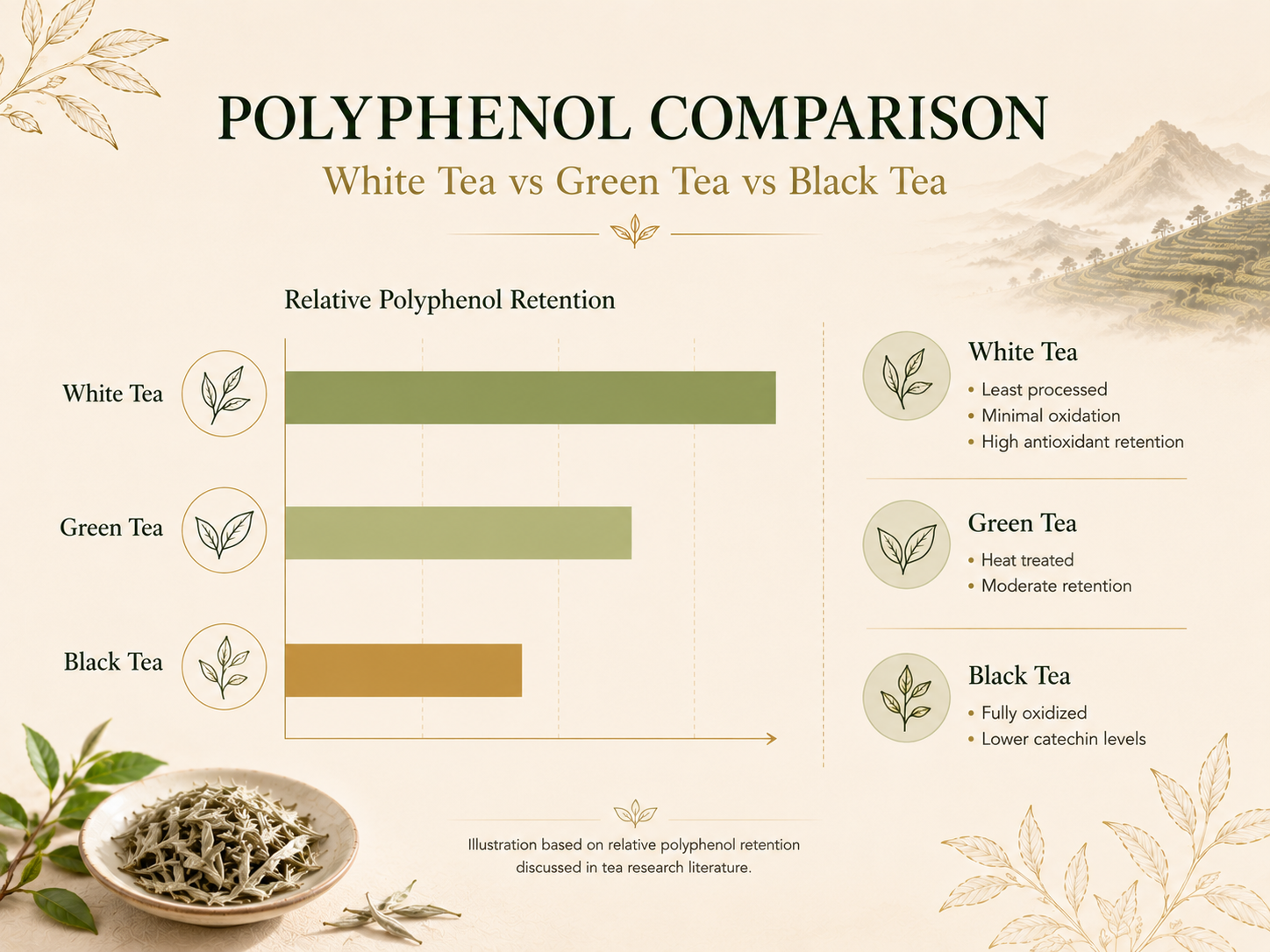
White tea undergoes very limited processing, which helps preserve naturally occurring polyphenols such as catechins and EGCG. Unlike green tea, which is heat-treated to stop oxidation, white tea is typically only withered and dried after harvest, while oolong tea is partially oxidised and black tea is fully oxidised.
Each processing method changes the chemical composition of the tea leaf and may affect antioxidant retention. This is one reason why white tea vs green tea comparisons are common in discussions about tea polyphenols, caffeine, and potential health benefits.
If you want a deeper comparison of flavour, processing, and caffeine differences, read our full guide to white tea vs green tea.
Who Should Be Careful with White Tea? Side Effects and Precautions
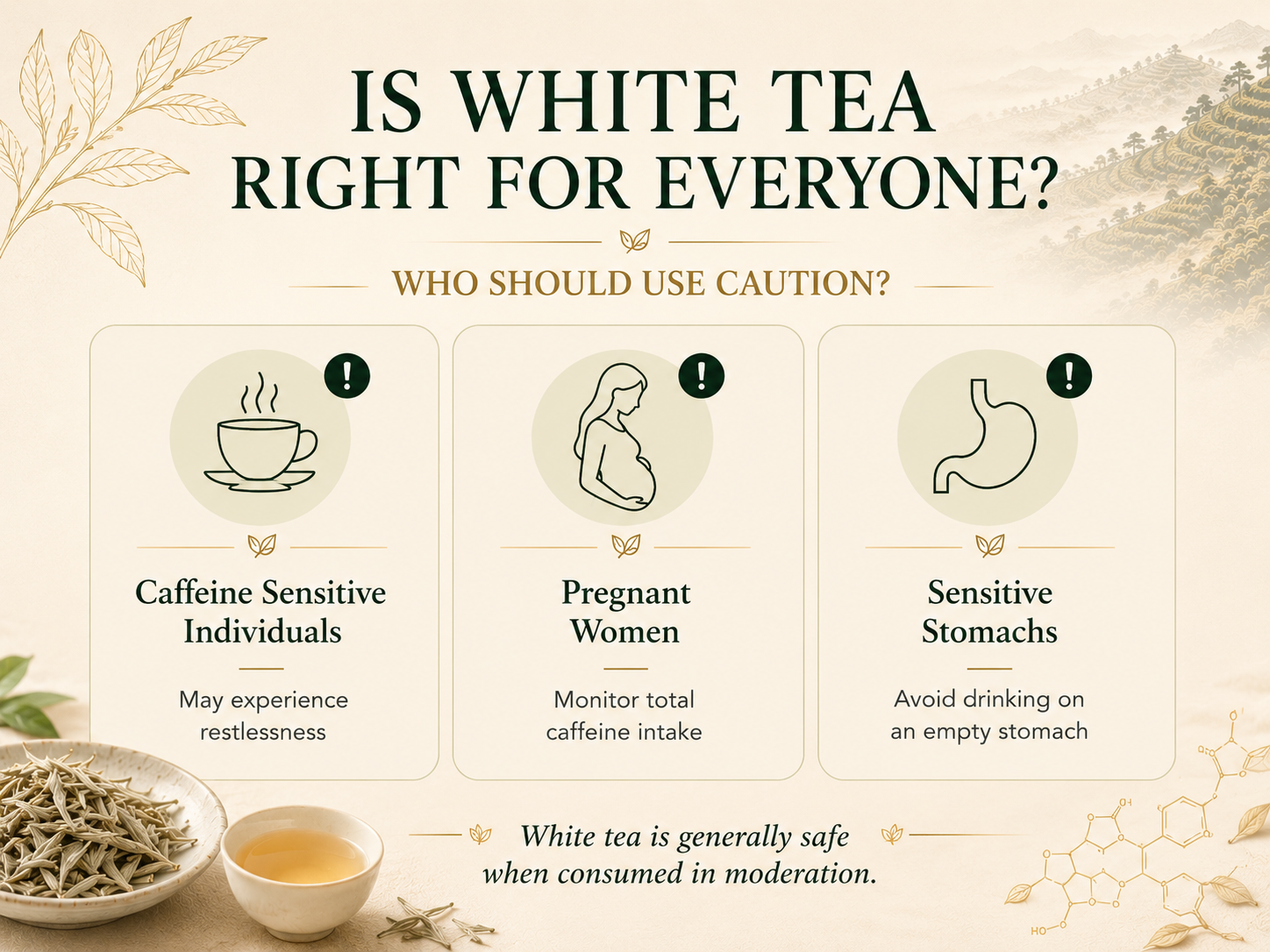
White tea is generally considered safe for most adults when consumed in moderate amounts, but some people may still need to monitor caffeine intake and brewing strength. Because white tea is not caffeine-free, individuals who are highly sensitive to caffeine may experience mild restlessness or sleep disruption if consumed in large amounts.
People who may need extra caution include:
- Individuals sensitive to caffeine
- Pregnant women monitoring caffeine intake
- People prone to stomach discomfort when drinking tea on an empty stomach
White tea is not a medicine and cannot cure disease, but regular consumption as part of a balanced diet is supported by emerging research for several health markers including cardiovascular and oral health
FAQ: White Tea Health and Wellness Questions
Is white tea good for you?
Yes — white tea is rich in polyphenols and catechins, which act as antioxidants in the body. Research links regular tea consumption with reduced risk of heart disease, improved oral health and lower oxidative stress. As with any food, moderation and variety are key.
What are the main health benefits of white tea?
The most researched benefits include antioxidant activity, cardiovascular support, oral health (antibacterial properties against Streptococcus mutans), and potential anti-inflammatory effects. White tea is also one of the lowest-caffeine true teas, making it gentler for daily drinking.
Is white tea better than green tea for health?
Both contain significant antioxidants. White tea may retain more heat-sensitive catechins as it is not steamed or pan-fired. However, green tea has a larger body of human research. For most people, the difference is marginal — the best tea for health is the one you enjoy regularly.
Is white tea safe during pregnancy?
White tea contains caffeine (approximately 15–30 mg per cup), so pregnant women should count it toward their daily caffeine limit (usually 200 mg or less, per NHS and WHO guidelines). In moderate amounts, white tea is generally considered safe — but always consult your doctor.
Does white tea stain teeth?
White tea stains teeth less than black or green tea due to its lighter colour and lower tannin content. Laboratory studies show white tea has antibacterial properties that may actually help reduce plaque formation, making it one of the more tooth-friendly true teas.
If you want a complete overview of white tea types, taste, caffeine, and brewing, read our pillar guide: The Complete Guide to White Tea
Discover Dofo Tea's range of fresh Chinese white tea — minimally processed, directly sourced.


