
How to Brew White Tea: Water Temperature, Steep Time and Ratio for Every Grade
liujiehangAuthor: Xu Jiahua, Nationally Certified Senior Tea Appraiser
White tea is a real delicate thing to brew - but it's actually pretty easy to mess up too. The key to getting it right is getting the water temperature just so - if it's too hot, even the best Silver Needle will end up tasting pretty flat. But when you do get it right, the results are a real treat: a soft, floral taste that finishes sweet and clean.
This guide covers everything you need: water temperature, steep time, leaf ratio, and brewing parameters for every grade of white tea.
What You Need to Brew White Tea: Equipment and Preparation
The good news with brewing white tea is that you don't need to break the bank - a few simple bits of kit can make all the difference to the flavour. The thing that's key to white tea is to get the temperature right before you even start brewing. This helps preserve that lovely smooth texture and floral aroma.
What you need:
- A teapot, gaiwan, or mug with a lid
- A thermometer or temperature-controlled kettle
- Loose leaf white tea
- Filtered or spring water
- A timer
Most white teas brew best at 80–85°C (175–185°F), which is lower than the temperature commonly used for black tea. For additional brewing recommendations, see white tea brewing temperature guide.
How to Brew White Tea Step by Step
White tea should be brewed at 80–85°C (175–185°F) for 2–3 minutes using approximately 2 grams (1 teaspoon) of loose leaf per 250 ml of water — lower temperatures than most teas to protect its delicate compounds.
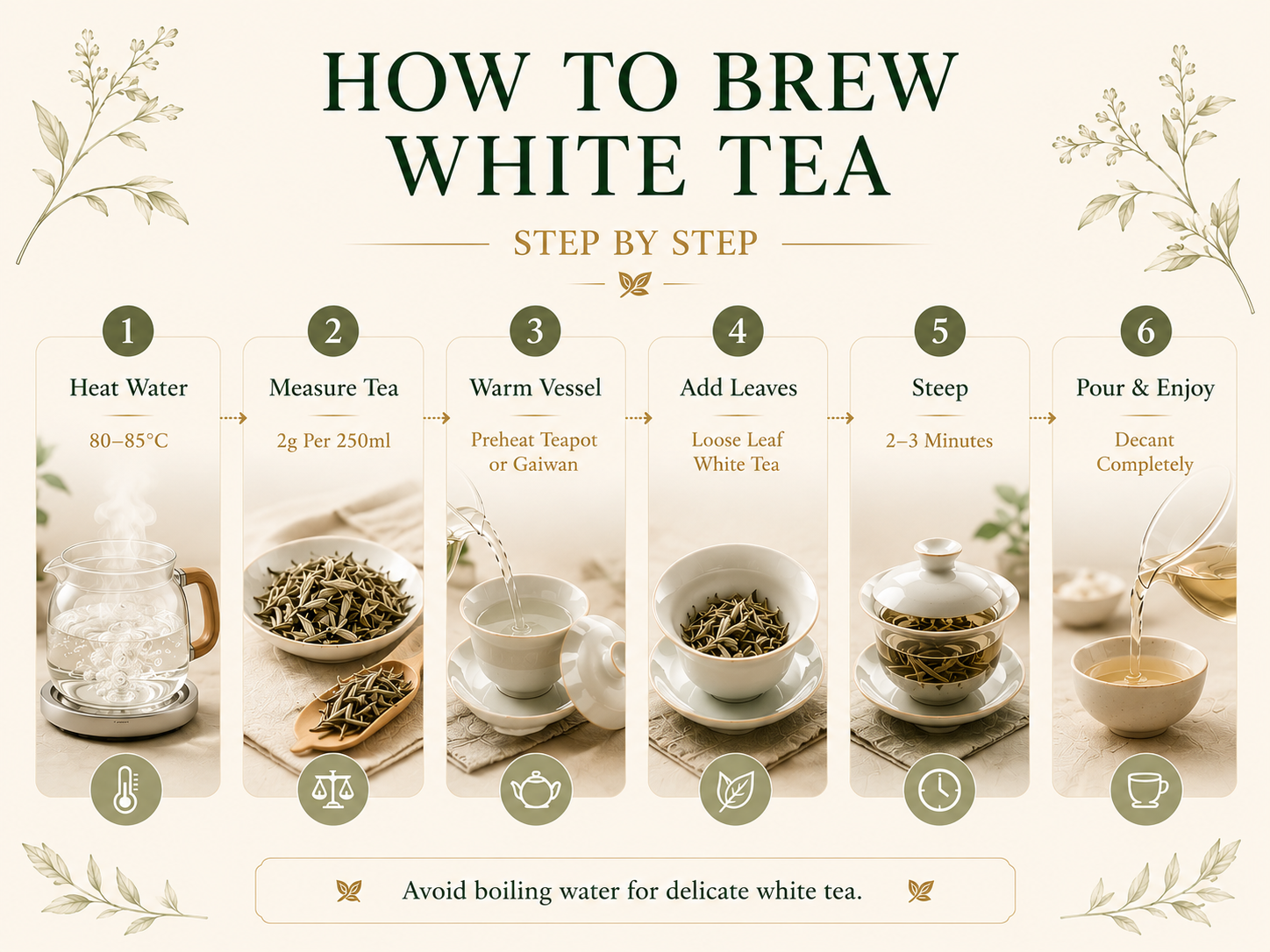
Follow these steps for a consistent, well-balanced cup:
- Heat your water to 80–85°C. If you do not have a temperature-controlled kettle, boil the water and let it rest for 5–8 minutes before pouring.
- Measure your tea. Use 2 grams of loose leaf white tea — roughly 1 teaspoon — per 250 ml of water. White tea leaves are light and fluffy, so this may look like a generous amount.
- Warm your vessel. Pour a small amount of hot water into your teapot or mug, swirl, and discard. This keeps the brewing temperature stable.
- Add the tea leaves. Place the measured leaves into your pot, gaiwan, or infuser.
- Pour the water gently. Avoid pouring directly onto the leaves if possible. A slow, steady pour helps the leaves open evenly.
- Steep for 2–3 minutes. Set a timer. White tea is forgiving — an extra minute rarely causes bitterness, but beyond 4–5 minutes the flavour can become dull.
- Pour and enjoy. Decant fully to stop the infusion. Do not leave the leaves sitting in water.
Curious how brewing affects caffeine? Read our caffeine guide.
White Tea Brewing Parameters by Grade
Different grades of white tea respond differently to heat, steep time, and brewing vessel.
The brewing parameters below combine general white tea brewing standards with Dofo Tea’s own observations across multiple Fuding white tea batches. Small adjustments in temperature and leaf ratio can noticeably change sweetness, body, and caffeine extraction.
Silver Needle Brewing Guide
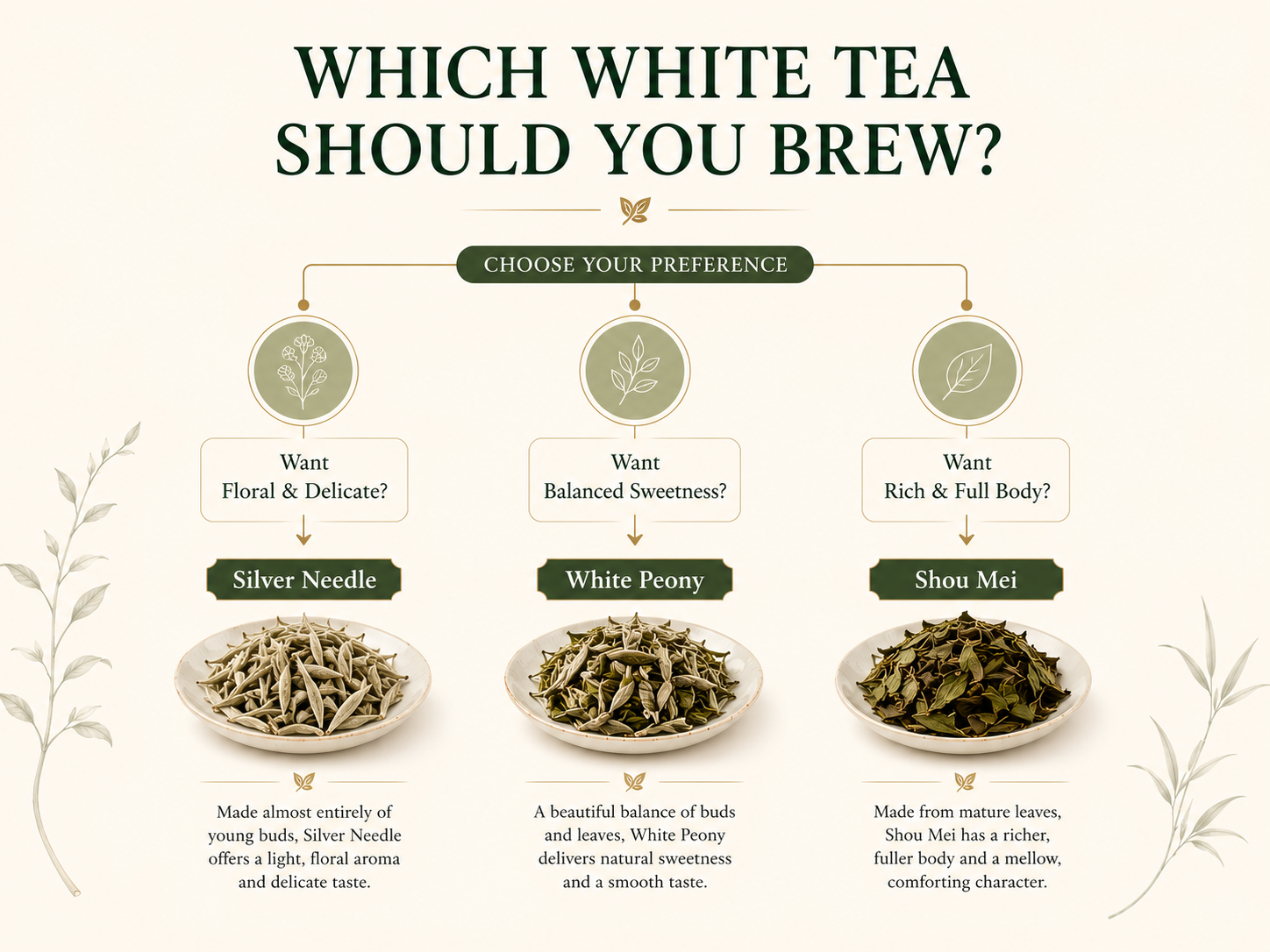
Silver Needle (Bai Hao Yinzhen) is made entirely from young buds. It is the most delicate grade and the most sensitive to temperature.
- Water temperature: 75–80°C (167–176°F)
- Steep time: 2–3 minutes (Western), 20–30 seconds (gongfu)
- Leaf ratio: 2 g per 250 ml
- Re-steeps: up to 4 times
Brew Silver Needle at the lower end of the temperature range. The buds release flavour slowly — patience rewards you with a naturally sweet, almost honeyed cup.
White Peony Brewing Guide
Now White Peony is a bit more robust than Silver Needle. It's made from a mix of buds and young leaves - making it a great introduction to white tea for those of you new to it.
- Water temperature: 80–85°C (176–185°F)
- Steep time: 2–3 minutes (Western), 25–35 seconds (gongfu)
- Leaf ratio: 2–2.5 g per 250 ml
- Re-steeps: 2–3 times
White Peony balances floral and grassy notes. It holds up well to a slightly longer steep and works in both Western and gongfu styles. If you want to explore this grade further, take a look at the White Peony Tea Cake from Fuding — a pressed version that ages beautifully.
Shou Mei Brewing Guide
And then there's Shou Mei - the most forgiving of the lot. Made from more mature leaves and its got a richer, earthier flavour to it.
- Water temperature: 85–90°C (185–194°F)
- Steep time: 3–4 minutes (Western), 30–45 seconds (gongfu)
- Leaf ratio: 2–3 g per 250 ml
- Re-steeps: 2–3 times
Shou Mei is pretty hard to mess up as it can handle slightly higher temperatures without getting all bitter. Its richer body also means it's got a lot of potential for aging - give it a few years and it'll develop all sorts of interesting, woody notes.
White Tea Brewing Parameters at a Glance
|
Grade |
Water Temp |
Steep Time (Western) |
Leaf Amount |
Re-steeps |
|
Silver Needle |
75–80°C / 167–176°F |
2–3 min |
2 g / 250 ml |
3–4 |
|
White Peony |
80–85°C / 176–185°F |
2–3 min |
2–2.5 g / 250 ml |
2–3 |
|
Shou Mei |
85–90°C / 185–194°F |
3–4 min |
2–3 g / 250 ml |
2–3 |
White tea can be re-steeped 2–4 times. Each subsequent infusion reveals slightly different flavour notes — the second steep is often considered the best for Silver Needle.
Gongfu vs Western Style: Two Ways to Brew White Tea
White tea can be brewed using either Western-style or gongfu-style methods, and each approach produces a different drinking experience.
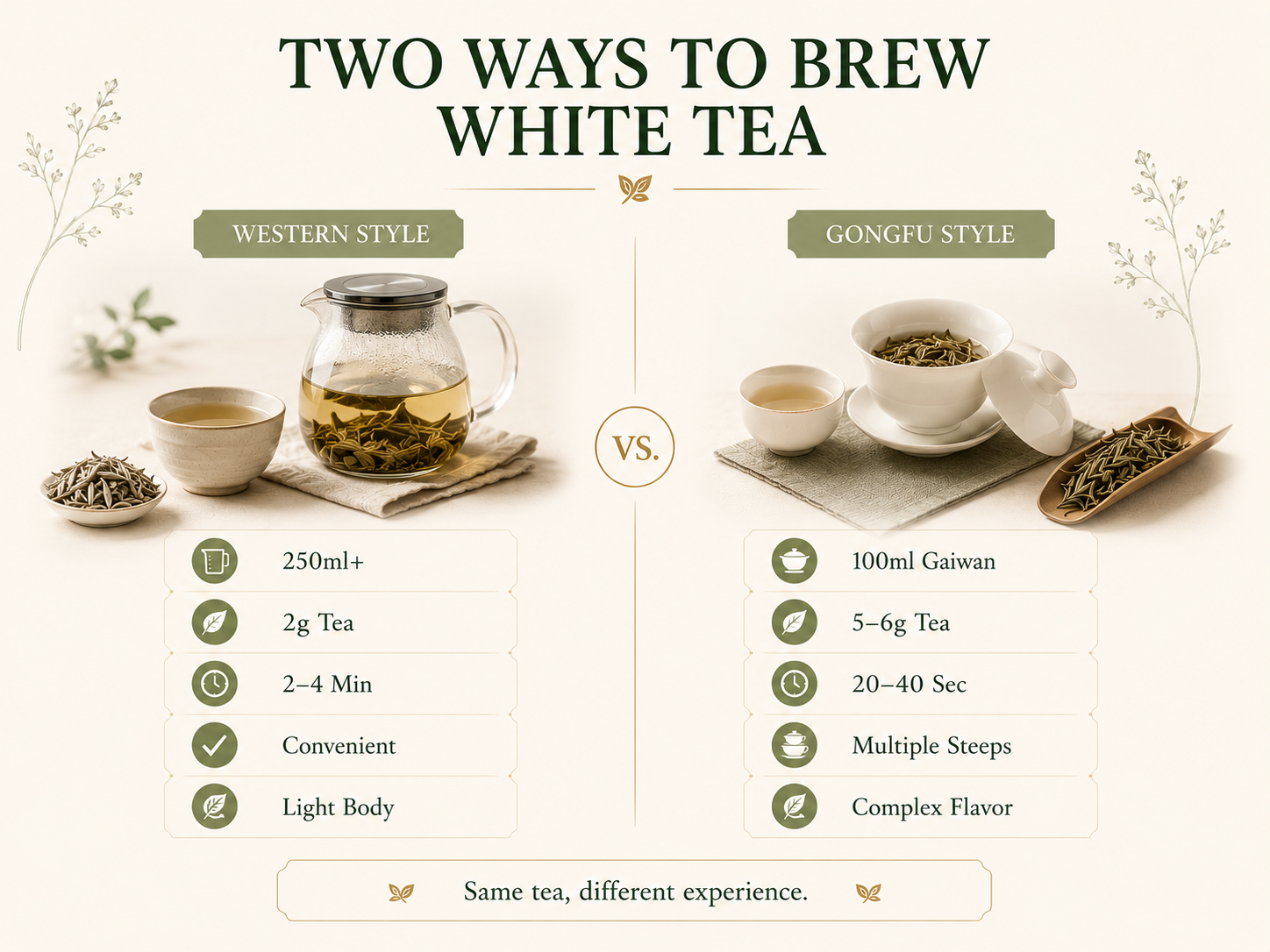
Western brewing typically uses more water, less leaf, and longer steeping times, creating a lighter and more convenient everyday cup. Gongfu brewing uses a smaller vessel with a higher leaf-to-water ratio — often around 5–6 grams of tea in a 100 ml gaiwan — with short infusions lasting 20–40 seconds.This method produces a more concentrated tea and allows the flavor, aroma, and texture to evolve across multiple steeps.
At Dofo Tea, we usually recommend porcelain gaiwans for delicate grades such as Silver Needle and White Peony because porcelain preserves floral aroma and clarity more accurately than clay teaware. Shou Mei, with its fuller body and deeper character, is more forgiving and can perform well in both porcelain gaiwans and small clay teapots.
Common White Tea Brewing Mistakes — and How to Fix Them
The most common mistake when brewing white tea is using boiling water — water above 90°C will make even the finest Silver Needle taste flat and slightly bitter.
A few other things to watch for:
- Water too hot. Let boiled water cool for 5–8 minutes, or use a temperature-controlled kettle. Target 80–85°C as your default.
- Steeping too long. White tea is forgiving, but leaving it past 5 minutes pushes flavour toward dull and watery. Set a timer.
- Too little leaf. Because white tea leaves are light and bulky, 1 teaspoon can look like a lot — but it is only around 2 grams. Use a scale when you are learning.
- Poor water quality. Heavily chlorinated tap water competes with white tea's subtle flavour. Filtered or spring water makes a noticeable difference.
- Not warming the vessel. A cold teapot drops the temperature quickly. A quick pre-warm keeps the infusion stable throughout the steep.
FAQ: White Tea Brewing Questions
What temperature should I brew white tea at?
Brew white tea at 80–85°C (175–185°F). Do not use boiling water (100°C) — it will damage the delicate flavour compounds and may make the tea taste flat or slightly bitter. If you don't have a thermometer, let boiled water sit for 5–8 minutes before pouring.
How long should I steep white tea?
Steep white tea for 2–3 minutes for a standard Western-style brew. Silver Needle and White Peony are more forgiving than many teas — a minute or two extra rarely causes bitterness. For gongfu-style brewing, use shorter steeps of 20–40 seconds with more leaf.
How much loose leaf white tea should I use?
Use approximately 2 grams (about 1 teaspoon) of loose leaf white tea per 250 ml of water. Because white tea leaves are light and fluffy, this can look like a generous amount by volume. Adjust to taste — more leaf gives a richer flavour, not necessarily more bitterness.
Can you re-steep white tea?
Yes — white tea re-steeps well, typically 2–4 times. For Silver Needle, the second infusion is often considered the best. Each steep reveals different flavour notes. Extend steep time slightly with each infusion (e.g., 2 min, 3 min, 4 min).
If you want a complete overview of white tea types, flavor, caffeine, and health benefits, read our pillar guide: The Complete Guide to White Tea
After brewing, learn how to store the rest correctly
Looking for white tea to brew? Shop Dofo Tea's collection
Ready to brew? Shop Dofo Tea's white tea — all orders include brewing instructions on pack.