

Authentic Chinese Matcha: Is It as Good as Japanese?
Author: Xu Jiahua, Nationally Certified Senior Tea Appraiser
Many tea drinkers know matcha as a Japanese specialty, but more consumers are now discovering Chinese matcha. This raises a common question: Is Chinese matcha authentic, and how does it compare with Japanese matcha?Modern matcha is often associated with Japan today, and Encyclopaedia Britannica matcha provides a simple definition of matcha as powdered green tea.
The answer starts with history, but it does not end there. The powdered tea tradition behind matcha began in China before being preserved and refined in Japan. Today, matcha quality depends on cultivar, cultivation, harvest timing, processing standards, freshness, and safety transparency.
When produced in reliable regions under strict standards, Chinese matcha can be an authentic continuation of the original powdered tea tradition.
Is Chinese Matcha Authentic?
Chinese matcha comes from the same tradition that first produced powdered tea in China.
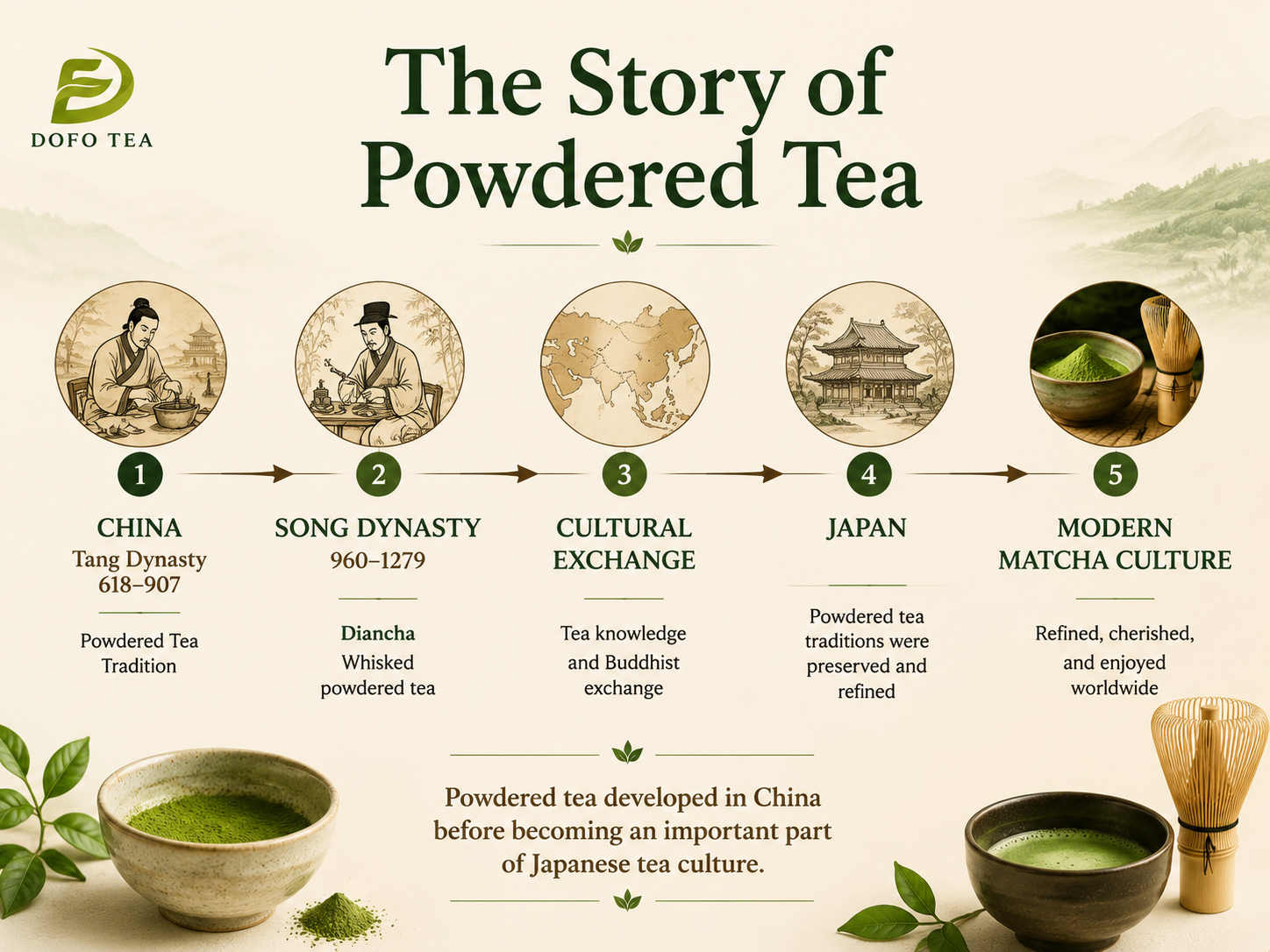
Its authenticity should not be judged only by whether it comes from China or Japan, but by its history, cultivation methods, processing quality, and production standards.
During the Tang and Song dynasties, Chinese tea makers developed methods of grinding processed tea leaves into fine powder and whisking them with hot water. The traditional practice of diancha, or whisked powdered tea, became an important part of Chinese tea culture before later influencing Japanese tea practices. For historical background, powdered tea China history provides more context on this early powdered tea tradition.
Through all the Buddhist and cultural exchange between China and Japan, these powdered tea methods ended up making their way to Japan where they were tweaked and perfected into what we know as the modern matcha tea ceremony today. Meanwhile Chinese matcha is carrying on this bigger East Asian tea tradition in places like Zhejiang and Guizhou.
At DOFO Tea, we believe authentic matcha is defined by clean sourcing, careful processing, and respect for tea heritage. Origin is only the starting point — cultivation, harvest, processing, and quality standards determine the final cup.
If you want to get the full story on powdered tea then check out our guide to Where Does Matcha Come From
Chinese vs Japanese Matcha: What Actually Differs
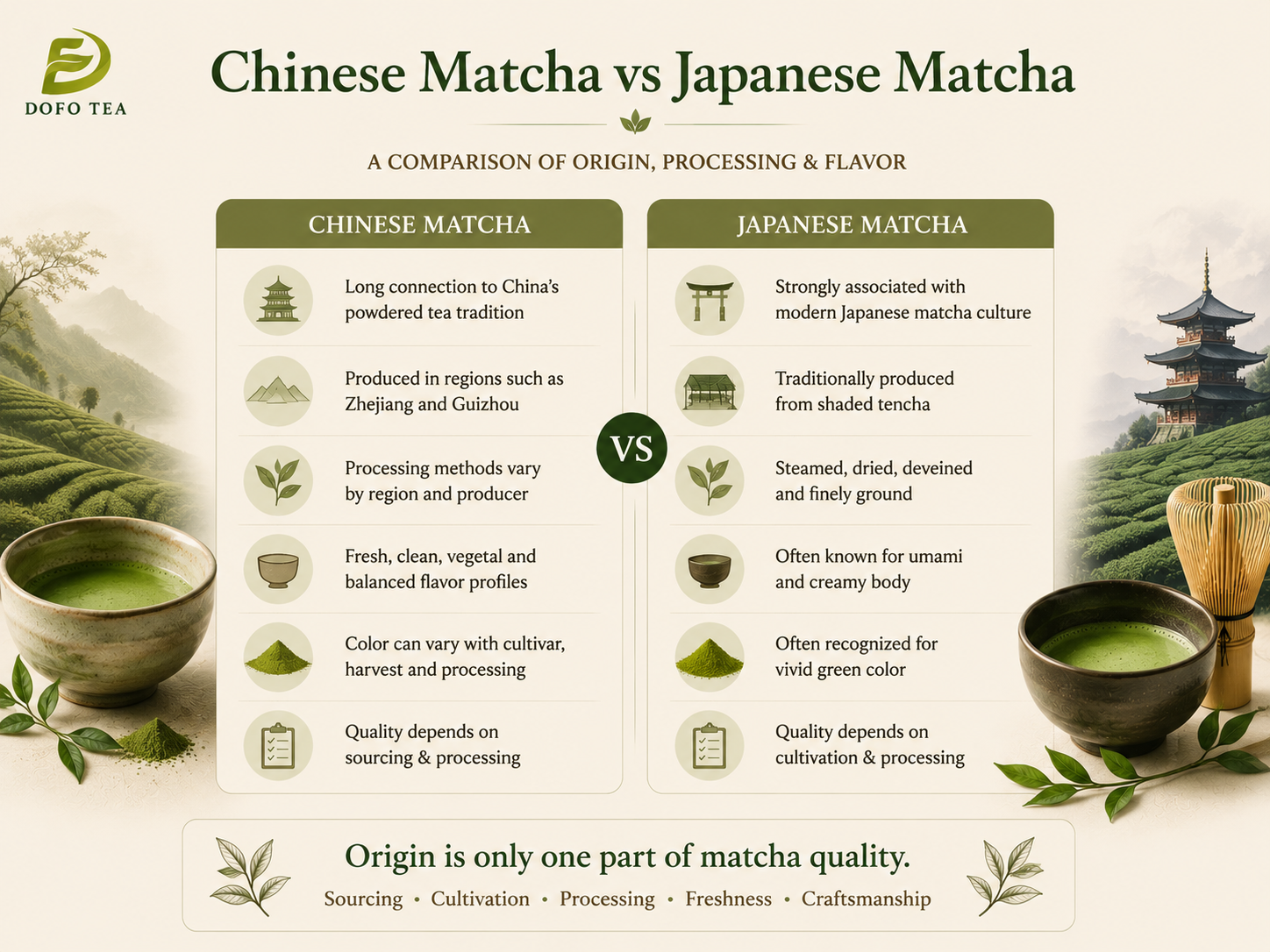
The debate over chinese vs japanese matcha is often reduced to a pretty simplistic "Japan = good, China = bad" stance, but the truth is that both countries have their own unique strengths when it comes to matcha. This is because their respective traditions have evolved from different historical & production contexts.
Chinese matcha is closely connected to the older powdered tea tradition and modern green tea production regions such as Zhejiang and Guizhou. Japanese matcha is strongly associated with shaded tencha processing, vivid green color, umami flavor, and tea ceremony culture.
The real difference is not only the country of origin. Cultivar, growing method, harvest timing, grinding quality, freshness, and safety transparency all affect the final cup.
A well-produced Chinese matcha can taste clean, smooth, and balanced. A poorly made matcha from any country can taste dull, bitter, or stale.
Origin does not decide quality — cultivation, harvest, and testing do.
Processing Differences
Chinese matcha production combines modern processing techniques with China’s long experience in green tea cultivation. Production methods can vary depending on region, cultivar, and producer standards. Japanese matcha is traditionally made from shaded tencha leaves, which are steamed, dried, deveined, and stone-ground into fine powder.
This difference can affect texture, aroma, and color. Japanese ceremonial matcha is often more standardized, while Chinese matcha quality can vary more depending on region, processing level, and producer standards.
Flavor Differences
Chinese matcha can go from bright fresh to smooth and balanced - it really all depends on the taste. Japanese matcha is known for being pretty rich and umami, and when you get it right the body is creamy and the bitterness is pretty soft.
It's not necessarily one style is better than the other - Japanese matcha is going to appeal to people who like their matcha strong and umami rich, while Chinese matcha is probably going to appeal to people who like their matcha cleaner and lighter.
Color Differences
Japanese matcha is often recognized for its vivid green color, especially when made from carefully shaded, high-grade tencha. Chinese matcha can also show a bright green color, but the shade may vary depending on cultivar, harvest season, and processing method.
Don't get too hung up on colour though - a good matcha should smell fresh and clean, whisk smoothly, taste light and clean and have been made by a producer that is upfront with where the tea comes from and how they check the quality.
If you are comparing different quality levels before buying, our guide to matcha grades explains how grade, harvest timing, color, texture, and use case affect matcha quality.
What I Look for When I Taste Matcha
When I compare Chinese and Japanese matcha, I try not to judge the tea by origin or color alone. I first smell the dry powder, then pay attention to how smoothly it whisks, how the texture feels in the mouth, and whether the finish stays clean after swallowing. In my experience, a very bright green color can look impressive, but it does not automatically mean the matcha will taste better. I would rather choose a matcha with a fresh aroma, smooth texture, balanced bitterness, and a clean aftertaste than one that simply has the brightest color or the most impressive grade label.
Quality & Safety: Addressing the Concerns
Some consumers question Chinese matcha because of concerns about pesticide residues, heavy metals, and agricultural standards, but food safety should be judged by measurable testing rather than assumptions based only on origin. For broader food safety context, the FDA’s FDA import safety tea resources explain how imported food products may be monitored, inspected, or placed under import alerts when safety concerns arise.
For Dofo Tea, quality evaluation focuses on transparent sourcing, Jingshan tea-region background, responsible production practices, and third-party testing where available. A trustworthy matcha supplier should clearly explain where the tea comes from, how it is processed, and what quality-control steps are used before the product reaches consumers. For Dofo Tea, safe matcha means clean sourcing, traceable production, and testable quality, not vague origin claims.
Jingshan Provenance
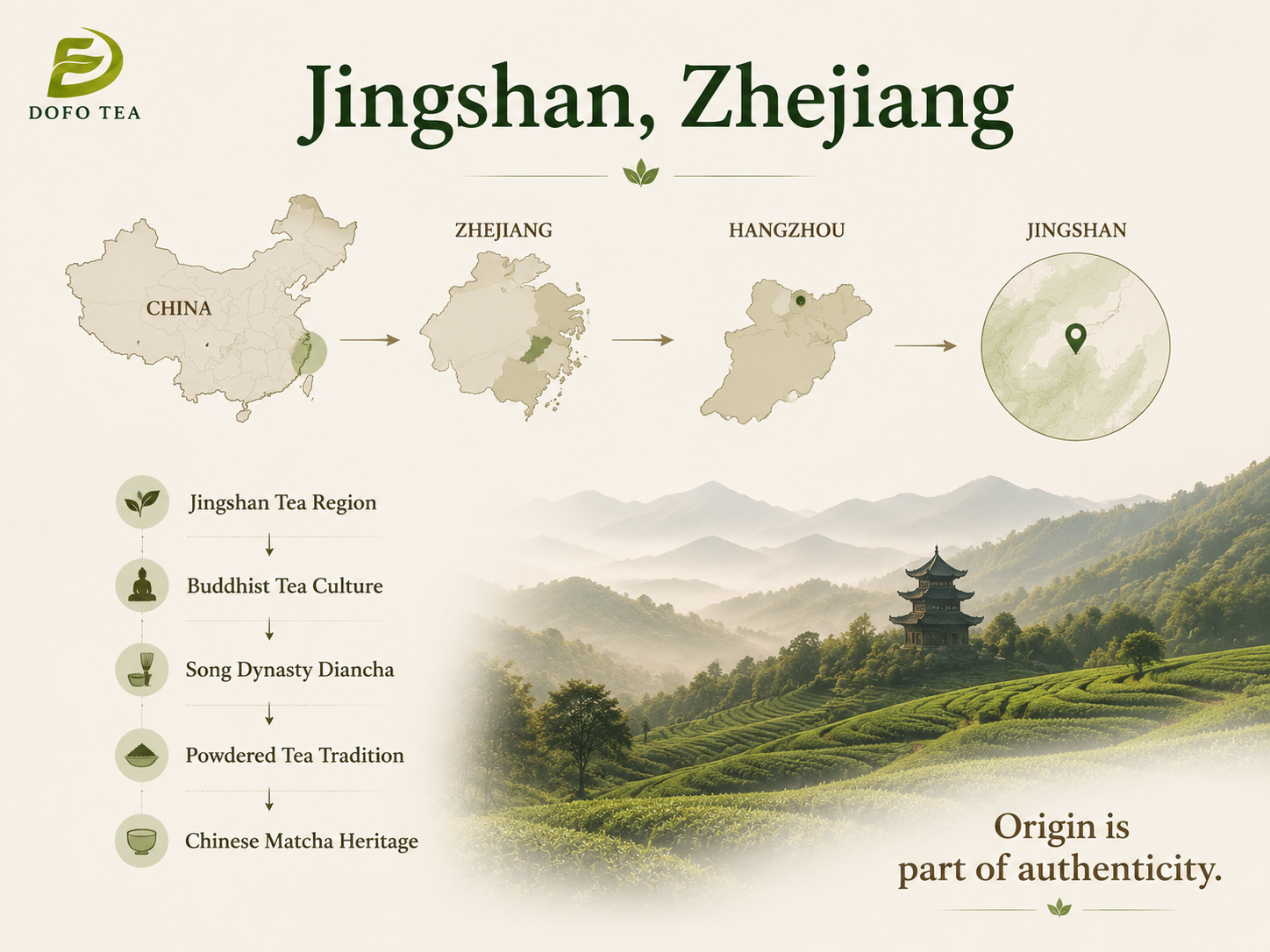
Jingshan in Zhejiang province is an important cultural reference point for understanding Chinese matcha. The region is closely connected with Chinese Buddhist tea culture and Song Dynasty diancha, the whisked powdered tea method that shares clear similarities with modern matcha preparation.
For Chinese matcha, Jingshan provides more than a geographic label. It connects today’s powdered tea production with centuries of Chinese tea craftsmanship, Buddhist tea rituals, and regional tea history.
DOFO Tea believes authentic matcha should not be defined by a national label alone. True matcha quality comes from origin, cultivation, processing, freshness, and transparent quality standards.
Why DOFO’s Chinese Matcha
DOFO’s Chinese matcha is designed for tea drinkers who want to understand matcha through origin, craftsmanship, and everyday use, rather than only as a modern drink trend.
It is suitable for people who enjoy pure matcha, want to compare Chinese matcha with Japanese matcha, or prefer a clean tea base for simple lattes and daily preparation. Our Premium Grade Matcha focuses on clear tea character, smooth texture, and sourcing transparency, so readers can better understand what they are drinking.
For beginners, it can be a practical starting point for exploring authentic Chinese matcha without making the category feel complicated. To learn more about the product background and suitable uses, see DOFO Tea’s Premium Grade Matcha.
FAQ
Is Chinese matcha authentic or good?
Yes. Chinese matcha can be authentic because powdered tea traditions began in China before later being refined in Japan. Quality still depends on cultivation, harvest timing, processing, freshness, and safety transparency.
What’s the difference between Chinese and Japanese matcha?
Chinese matcha is more closely connected with the historical origin of powdered tea, while Japanese matcha is shaped by tea ceremony culture and refined tencha processing. Japanese matcha is often known for vivid color and umami, while Chinese matcha may offer a cleaner, lighter, or more refreshing green tea profile.
Is Chinese matcha safe from pesticides and heavy metals?
Chinese matcha should be judged by sourcing transparency and testable quality standards, not by assumptions about origin alone. Since matcha is consumed as whole powdered tea leaf, pesticide residue and heavy metal testing are important quality signals. If third-party reports are available, consumers should review them before buying.


