

Where Does Matcha Come From? The Chinese Origin Story
Author: Xu Jiahua, Nationally Certified Senior Tea Appraiser
Many people associate matcha with Japanese tea ceremonies, but its history began much earlier in China. Matcha comes from an ancient Chinese powdered tea tradition that developed during the Tang Dynasty (618–907) and flourished during the Song Dynasty (960–1279). Japanese tea culture later preserved and refined this method after Buddhist monks brought tea knowledge from China.
Today, matcha is produced in both Japan and China, with modern Chinese matcha connected to historical tea regions such as Jingshan in Zhejiang province. Its origin reveals a deeper story of tea cultivation, cultural exchange, and centuries of craftsmanship.
Where Does Matcha Come From? (The Short Answer)
Matcha originated in China, where powdered tea was prepared and enjoyed during the Tang and Song dynasties.
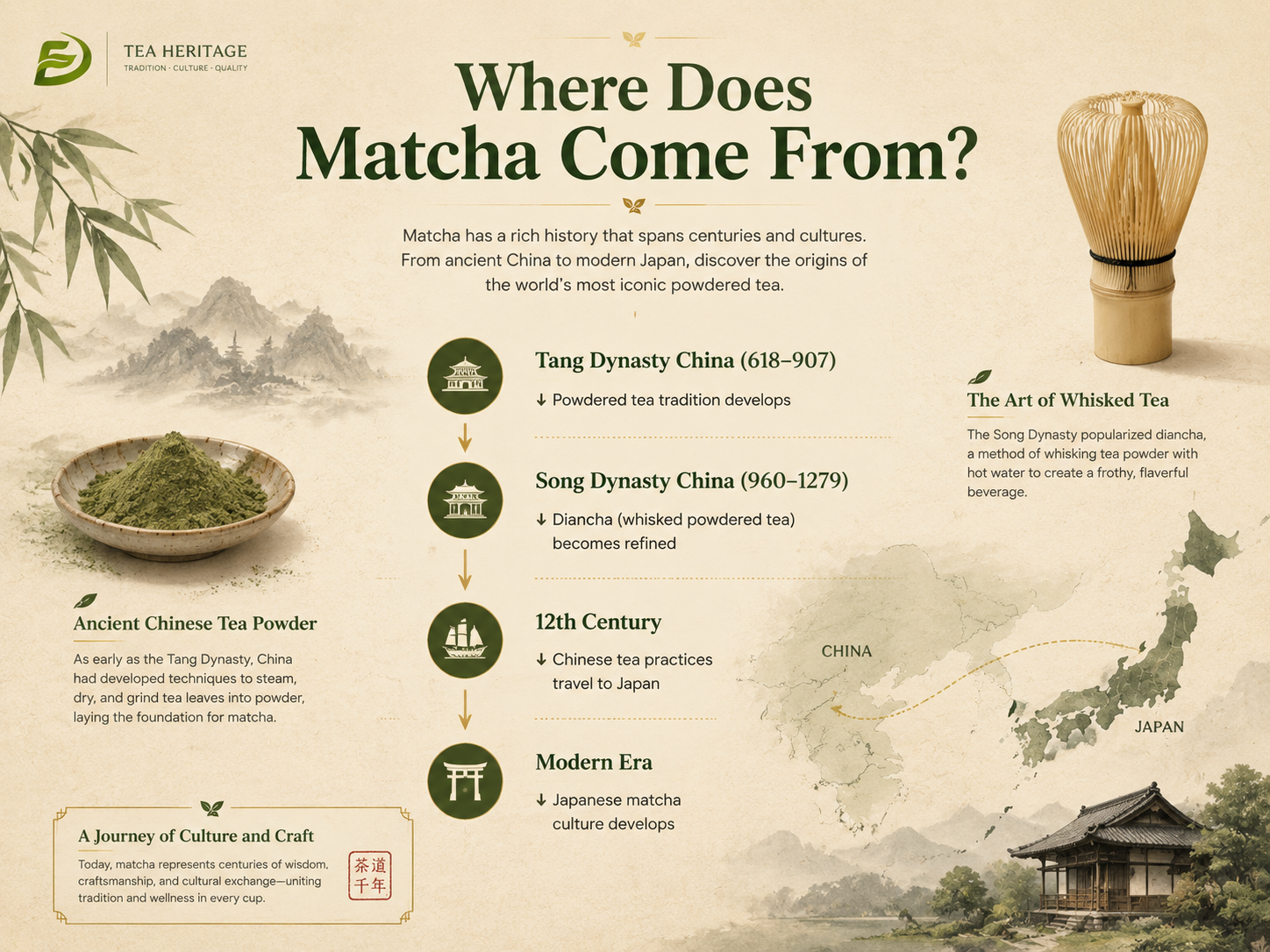
During the Tang Dynasty, tea leaves were often compressed and later ground for preparation, which helped shape the early tradition of powdered tea. By the Song Dynasty, powdered tea culture became more refined, and people whisked tea powder with hot water in a style that closely resembles matcha preparation today. Buddhist monks later carried this tea practice from China to Japan, where it gradually developed into Japanese matcha. In Japan, matcha became deeply connected with Zen practice and tea ceremony culture, a tradition also discussed in Encyclopaedia Britannica matcha. This is why modern matcha is often associated with Japan, even though its earliest powdered tea roots began in China. At Dofo Tea, we see matcha not only as a Japanese tea style, but also as part of a broader East Asian tea tradition that began with Chinese powdered tea culture.
If you are new to this tea category, start with our full guide to what matcha is before exploring its Chinese origin story in more depth.
The Tang & Song Dynasty Roots of Powdered Tea
The history of matcha begins with Chinese powdered tea traditions that developed during the Tang Dynasty. During this period, tea leaves were often steamed, compressed into cakes, dried, and later ground into powder before drinking. This early preparation style is closely connected with the tea culture recorded in the Lu Yu Classic of Tea, one of the most important historical works on Chinese tea. Unlike modern loose leaf brewing, powdered tea allowed drinkers to consume the tea leaf more directly. During the Song Dynasty, this practice became more refined and closely associated with scholar culture, formal tea gatherings, and tea competitions. Tea masters used stone mills to grind processed tea into fine powder, then whisked it with hot water to create a smooth, frothy drink. This method shares clear similarities with modern matcha preparation, especially in the use of powdered tea and whisking. Although modern matcha later became strongly associated with Japan, its earliest roots can be traced back to these Chinese Tang and Song Dynasty tea practices.
Jingshan and the Chinese Tea Tradition
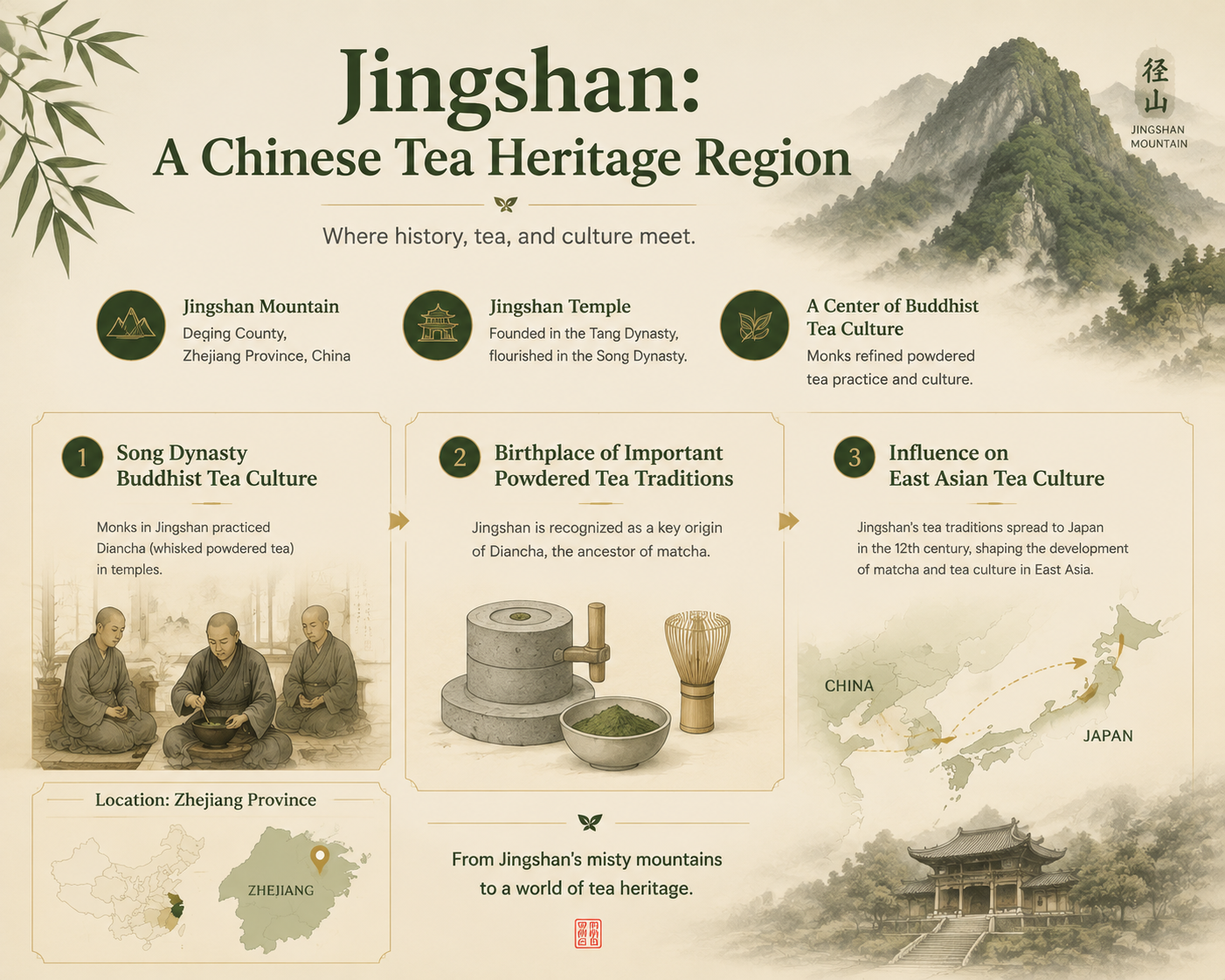
Jingshan in Zhejiang province is an important cultural reference point for understanding matcha through Chinese tea history. During the Song Dynasty, Jingshan Temple was closely associated with Buddhist tea practices and refined powdered tea preparation, including traditions connected with diancha.
These practices later influenced Japanese tea culture through Buddhist exchanges between China and Japan, which gives Jingshan a meaningful place in the wider history of powdered tea. For Dofo Tea, Jingshan is an important origin reference for understanding matcha beyond its modern Japanese identity.
How Matcha Spread to Japan
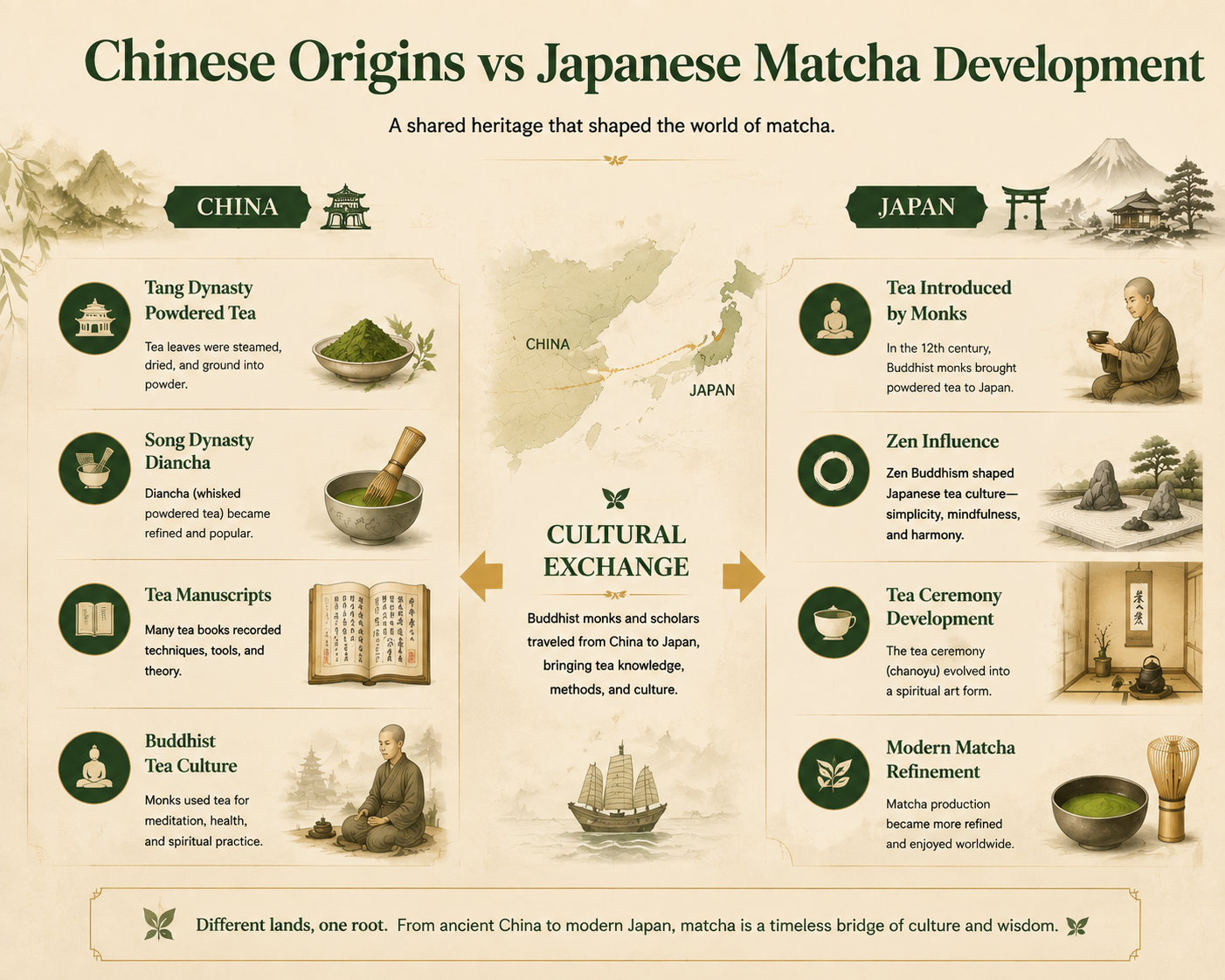
The spread of powdered tea from China to Japan was closely connected with Buddhist cultural exchange. During the 12th century, Japanese monks traveled to China to study Buddhism, and they also brought back Chinese tea practices. Powdered tea reached Japan around 1191 CE via the monk Eisai after his studies in China. In Japan, this powdered tea method became closely linked with Zen Buddhist communities and later developed into a more formal tea culture. At Dofo Tea, we see matcha as a tea tradition shaped by both Chinese origins and Japanese refinement, rather than a practice that belongs to only one country.
Where Matcha Is Grown Today
Today, matcha is grown and produced in both China and Japan, reflecting a long history of tea culture and exchange across East Asia. In China, modern matcha production is found in green tea regions such as Zhejiang and Guizhou, while Japan is especially known for regions such as Uji in Kyoto and Nishio in Aichi.
Understanding where matcha is grown today requires looking at both Chinese tea heritage and Japan’s highly developed modern matcha industry. To explore the modern Chinese side of this tea tradition, read our guide to Authentic Chinese Matcha.
If you want to understand how powdered tea differs from regular steeped green tea, read our guide to Matcha vs Green Tea.
My Notes on How Matcha Is Made
From what I have seen, good matcha is not simply green tea ground into powder. Before grinding, the tea leaves usually go through shading, steaming, cooling, drying, sorting, and careful milling.
The shading stage matters most to me. It helps the leaves become greener, softer, and more savory, which gives matcha its smooth umami taste and lower bitterness. After harvest, the leaves are quickly steamed to preserve their fresh green color, then dried and sorted to remove stems and coarse material.
Only after these steps does the tea become tencha, the base tea used for matcha. When tencha is ground into fine powder under controlled conditions, the final matcha should taste fresh, smooth, and clean, with a natural green aroma rather than a harsh grassy bitterness.
FAQ
Where does matcha come from originally?
Matcha comes from Chinese powdered tea traditions developed during the Tang and Song dynasties. It is made from Camellia sinensis, the same tea plant used for green tea, black tea, white tea, and oolong tea.
Did matcha originate in China or Japan?
The powdered tea method behind matcha originated in China, especially through Tang Dynasty tea culture, Lu Yu’s The Classic of Tea, and Song Dynasty diancha practices. Japan later preserved and refined this tradition after the monk Eisai brought Chinese tea knowledge to Japan.
Is matcha grown in China today?
Yes, matcha is grown and produced in China today, especially in regions such as Zhejiang and Guizhou. Modern large-scale Chinese matcha production expanded strongly after 2017, when Guizhou’s Tongren matcha industry began developing into a major production base.


