

Ceremonial Grade vs Culinary Matcha: Which Grade Should You Choose?
Author: Xu Jiahua, Nationally Certified Senior Tea Appraiser
Choosing between ceremonial-style and culinary matcha mainly depends on how you plan to use it. Ceremonial-style matcha is usually selected for drinking with water, while culinary matcha is better suited to lattes, baking, smoothies, and desserts.
However, grade labels do not tell the whole story. “Ceremonial grade” does not have one universally regulated definition, so origin, harvest, cultivation, processing, freshness, flavor, and testing are more useful indicators of matcha quality.
Ceremonial Grade Matcha vs Culinary Grade Matcha
Ceremonial matcha is for drinking straight; culinary matcha is made for lattes and baking.
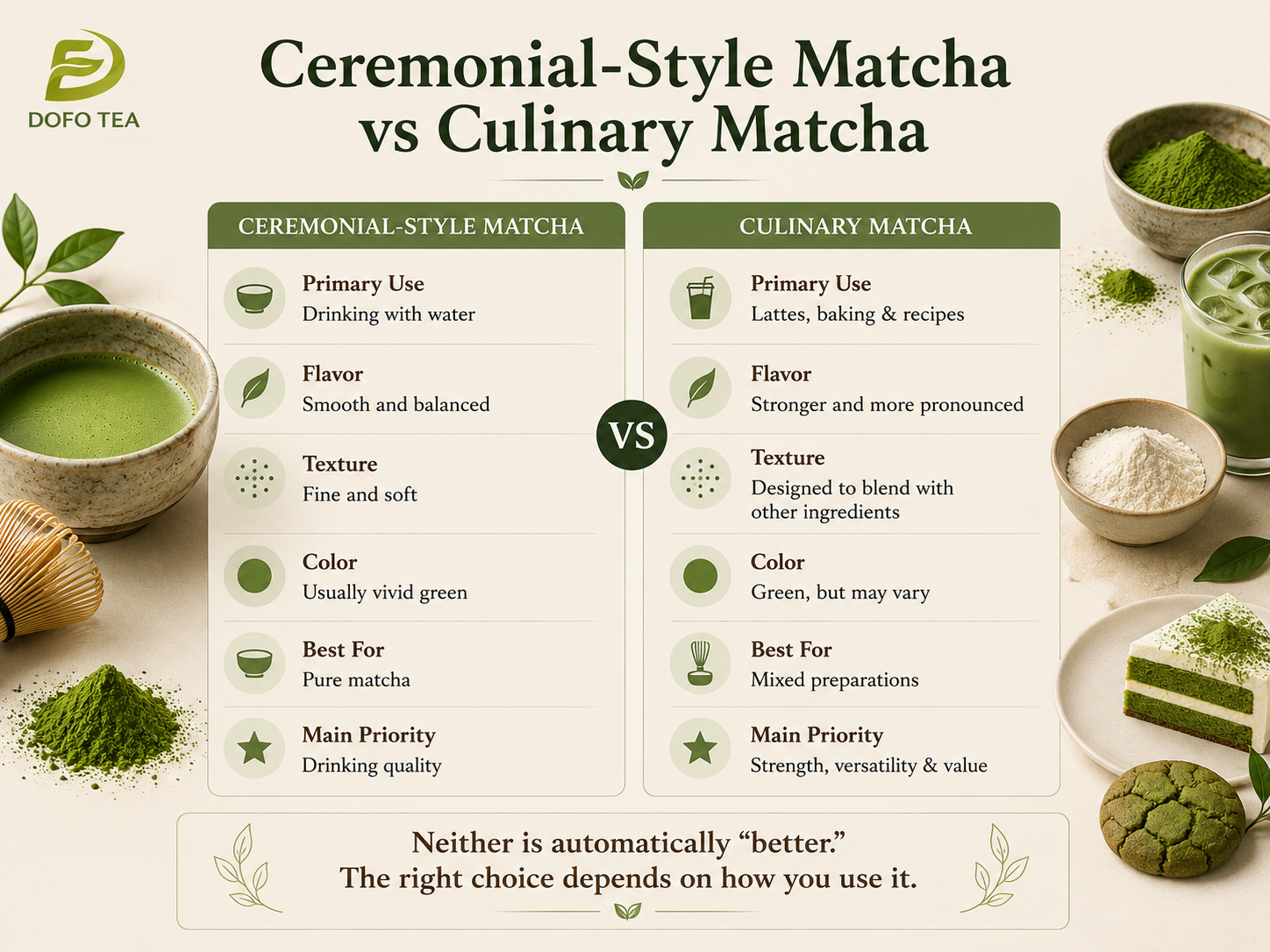
The biggest difference between the two is their intended use. Ceremonial-style matcha is usually selected for a clean, balanced flavor that can be appreciated without milk, sugar, or other ingredients. Culinary matcha is generally chosen for applications where the tea needs to remain noticeable after being mixed with milk, fruit, flour, sugar, or other ingredients.
The term “ceremonial grade” is widely used in the international matcha market, but it is not a single official grading standard that applies everywhere. A product labeled ceremonial therefore does not automatically have a specific quality level.
Buyers should look at the actual characteristics of the tea instead of relying only on the grade name. Leaf quality, cultivation, harvest timing, processing, color, aroma, flavor, and safety testing provide more useful information.
For pure drinking, a higher-quality matcha with a smooth and balanced flavor usually makes more sense. For baking or cooking, culinary grade matcha can provide a practical balance between flavor, color, and cost.
Matcha Grade Comparison
|
Factor |
Ceremonial-Style Matcha |
Culinary Grade Matcha |
|
Primary use |
Drinking straight |
Lattes, baking, desserts, recipes |
|
Flavor |
Smooth, balanced, less aggressive |
Stronger, more pronounced tea flavor |
|
Color |
Usually vivid green |
Green, but may be less vivid |
|
Leaf selection |
Often younger, carefully selected leaves |
Can include a broader range of leaf material |
|
Bitterness |
Usually lower when well produced |
Can have more bitterness or astringency |
|
Best preparation |
Pure matcha |
Mixed with other ingredients |
|
Main buying priority |
Flavor and drinking quality |
Strength, color, versatility, value |
|
Typical price |
Higher |
More affordable |
The table shows why “better” is not always the right question. The more useful question is whether the matcha is appropriate for your intended use.
When to Use Each Grade
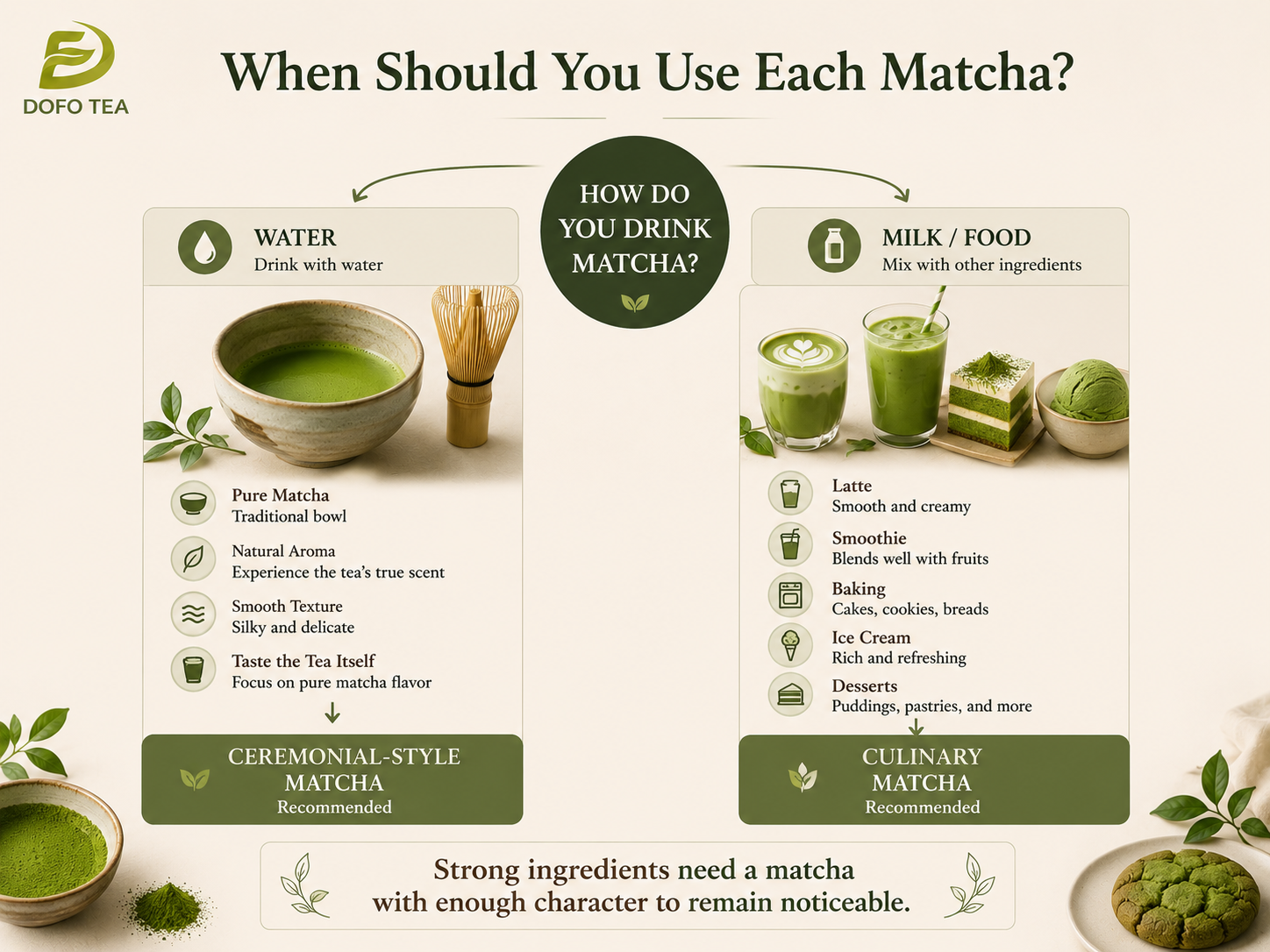
Your matcha grade should match how you plan to prepare and enjoy it.
- Choose ceremonial-style matcha when you plan to whisk it with water and want to taste the tea’s natural sweetness, umami, and smooth texture.
- Choose ceremonial-style matcha when origin, harvest quality, and subtle flavor differences are important to your drinking experience.
- Choose culinary grade matcha for lattes, smoothies, baking, ice cream, and other recipes where matcha is combined with milk, sweeteners, or stronger ingredients.
- Choose culinary grade matcha when you want a stronger tea flavor that can remain noticeable after other ingredients are added.
- Culinary grade does not necessarily mean poor-quality matcha. It is usually selected for stronger flavor, versatility, and better value when combined with other ingredients.
If you mainly plan to make milk-based drinks or desserts, explore our Matcha Latte & Recipes guide for more ideas on choosing the right matcha for different recipes.
What I Notice When Comparing Matcha Grades
In my own tasting experience, the difference between matcha grades becomes much clearer when I prepare them in different ways. When I whisk matcha only with water, I pay more attention to smoothness, aroma, sweetness, and whether the bitterness feels balanced. A better drinking-grade matcha usually shows these details more clearly.
When I make a latte, the priorities change. I want the matcha flavor to remain noticeable after adding milk, so a stronger culinary or everyday matcha can actually work better. This is why I rarely choose matcha by the word “ceremonial” alone — I first think about how I am going to drink it.
How Chinese Grade Names Map Over
Chinese matcha producers may classify products by harvest timing, leaf material, processing quality, or intended use, so Chinese grade names do not always map directly to Western labels such as “ceremonial” and “culinary.” For this reason, we recommend comparing the actual origin, harvest, flavor, texture, processing, and intended use rather than relying on translated grade names alone.
If origin and production standards are important to your decision, read our guide to Authentic Chinese Matcha for a closer look at Chinese matcha quality, provenance, and how it compares with Japanese matcha.
How to Judge Quality & Pick the Best Matcha Powder
When choosing a matcha powder, our advice is to not get too caught up in labels like "ceremonial grade" because the term doesn't really have a one-size-fits-all grading standard.
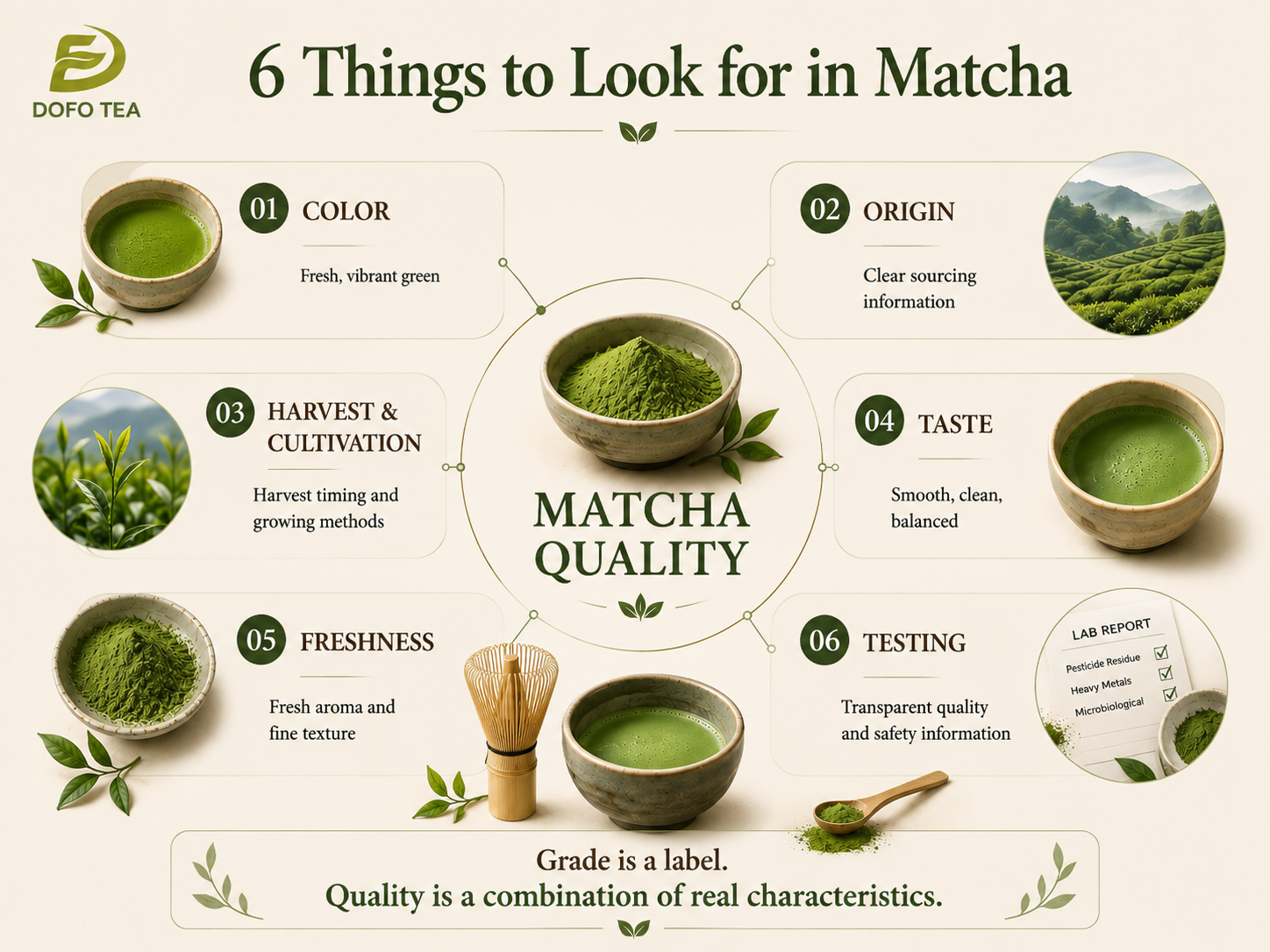
- Color: Look for a fresh, vibrant green rather than a dull yellow-green or brown, but do not use color alone as proof of quality.
- Origin: Clear information about where the tea was grown gives buyers more context about sourcing; if organic certification matters to you, check recognized standards such as USDA organic tea.
- Harvest and cultivation: First-picked and shade-grown leaves are often sweeter, richer, and smoother but don't forget that the cultivar and processing methods also come into play.
- Taste and use: At DOFO Tea, we actually taste how a matcha performs - does it taste balanced on it's own, does it still taste good with milk, or has it got enough character to use in baking or recipes?
- Testing and transparency: Because matcha is consumed as whole powdered tea leaf, clear sourcing and available safety testing are useful quality signals; FDA food import guidance also explains that imported foods must meet applicable U.S. requirements.
Our take on it is pretty simple: "ceremonial grade" is a useful description, but it's not a substitute for real details like origin, harvest, freshness, flavour, processing and where it's meant to be used.
Which DOFO Matcha Fits You?
After looking at color, origin, flavor, processing, and intended use, the next step is choosing the matcha that fits how you actually drink it. If you mainly whisk matcha with water and want its natural aroma and texture to remain at the center of the cup, DOFO Premium Grade Matcha is the most suitable place to start. For everyday bowls, iced matcha, and milk-based drinks, DOFO Classic Daily Matcha offers a more practical everyday option. If you mainly make baked goods, desserts, smoothies, or recipes where matcha is combined with stronger ingredients, DOFO Culinary Grade Matcha is designed for that purpose.
At DOFO Tea, we use these categories to help match the tea to the preparation rather than treating one grade name as proof that a product is automatically superior.
Choose ceremonial to drink, culinary to cook — grade follows use, not prestige.
FAQ
Ceremonial vs culinary matcha — which should I use?
Choose ceremonial-style matcha for drinking straight, where smooth texture and delicate flavor matter most. Culinary matcha is better for lattes, baking, and desserts because its stronger flavor can stand up to milk and other ingredients. Ceremonial-style matcha is usually more expensive because of its leaf selection, harvest timing, and processing.
How do I choose a good matcha powder?
Look for fresh green color, clear origin information, early or first-harvest leaf material, and transparent quality testing. For pure drinking, also pay attention to smooth texture, clean aroma, and balanced flavor rather than judging quality by color alone.
Is ceremonial grade always better?
No. “Ceremonial grade” is not a universally regulated official standard. A higher-grade matcha may be better for drinking straight, while culinary matcha can be more suitable for lattes, baking, and recipes. Choose based on how you plan to use it.


