

White Tea: The Complete Guide to Types, Taste, Benefits and How to Brew It
Author: Xu Jiahua, Nationally Certified Senior Tea Appraiser
White tea is known for its gentle flavor, minimal processing, and long history in Chinese tea culture. Many tea drinkers appreciate it for its light sweetness, delicate aroma, and naturally smooth character. This guide explores the main types of white tea, its flavor profile, health-related research, caffeine content, and the best ways to brew it.
What Is White Tea? Origin, Processing and Why It's the Least Oxidised Tea
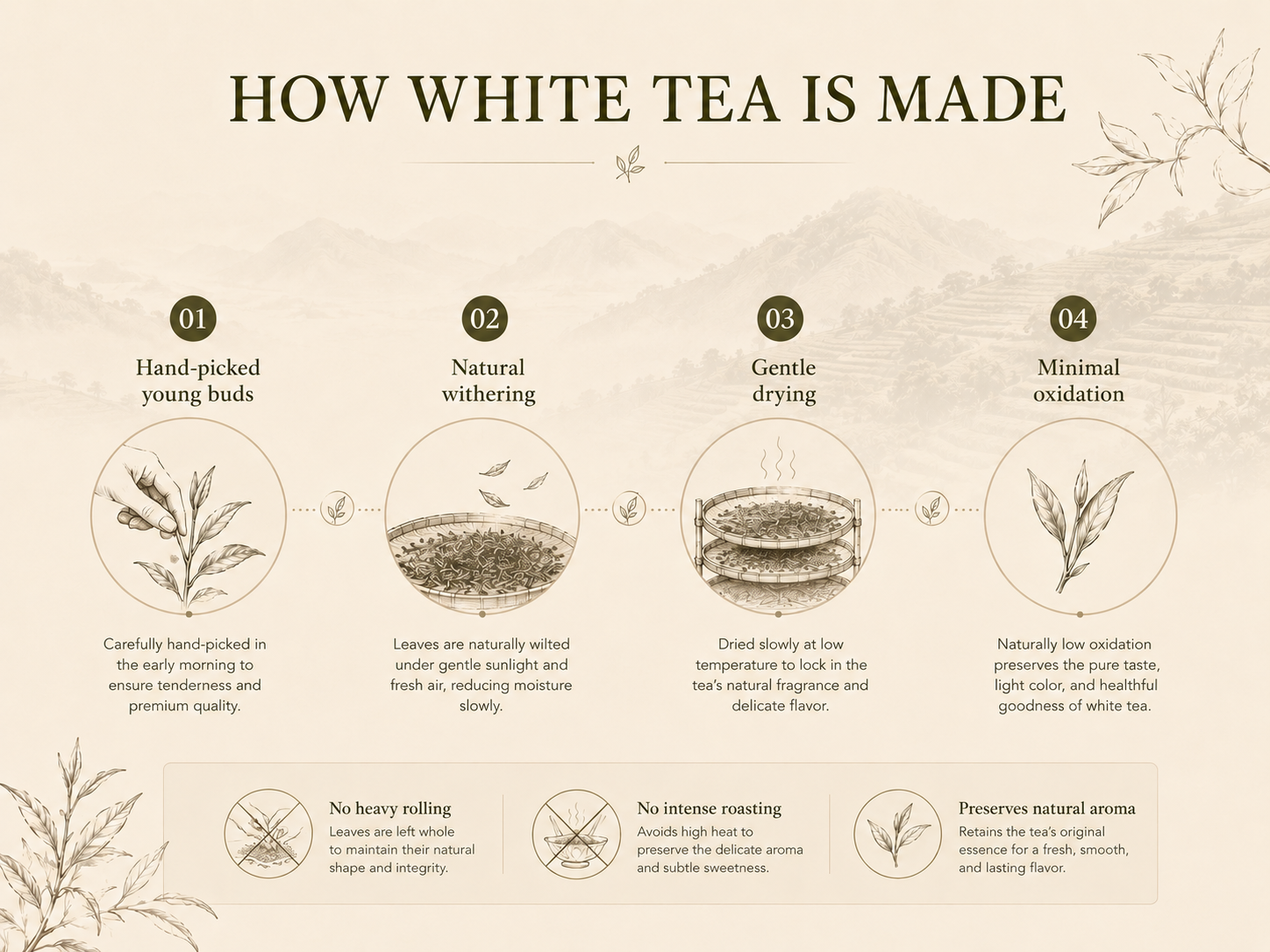
White tea is the least processed true tea, made from the young buds and leaves of the Camellia sinensis plant, primarily grown in Fujian and Yunnan provinces in China.
Unlike Black or Oolong tea, White tea undergoes very little processing after being picked - usually only withering and drying involved. Tea producers typically start by plucking the leaves in early spring, while the buds are still young and have fine silver hairs covering them.
The tea is not heavily rolled or fully oxidised, which helps preserve its natural structure, delicate aroma, and smooth flavour. Fujian province is considered the traditional home of Chinese white tea, especially the Fuding and Zhenghe regions known for producing Silver Needle and White Peony.
Lately, White tea from Yunnan has also been getting attention for its richer body and distinct ancient tree characteristics. Because White tea experiences minimal oxidation and is handled so gently, it retains lots of naturally occurring compounds like polyphenols and catechins that researchers are particularly interested in when studying tea.
The Main Types of White Tea: From Silver Needle to Shou Mei
There are four principal Chinese white teas. They differ by grade, leaf composition, harvest time, and flavour — from exceptionally delicate to naturally robust.
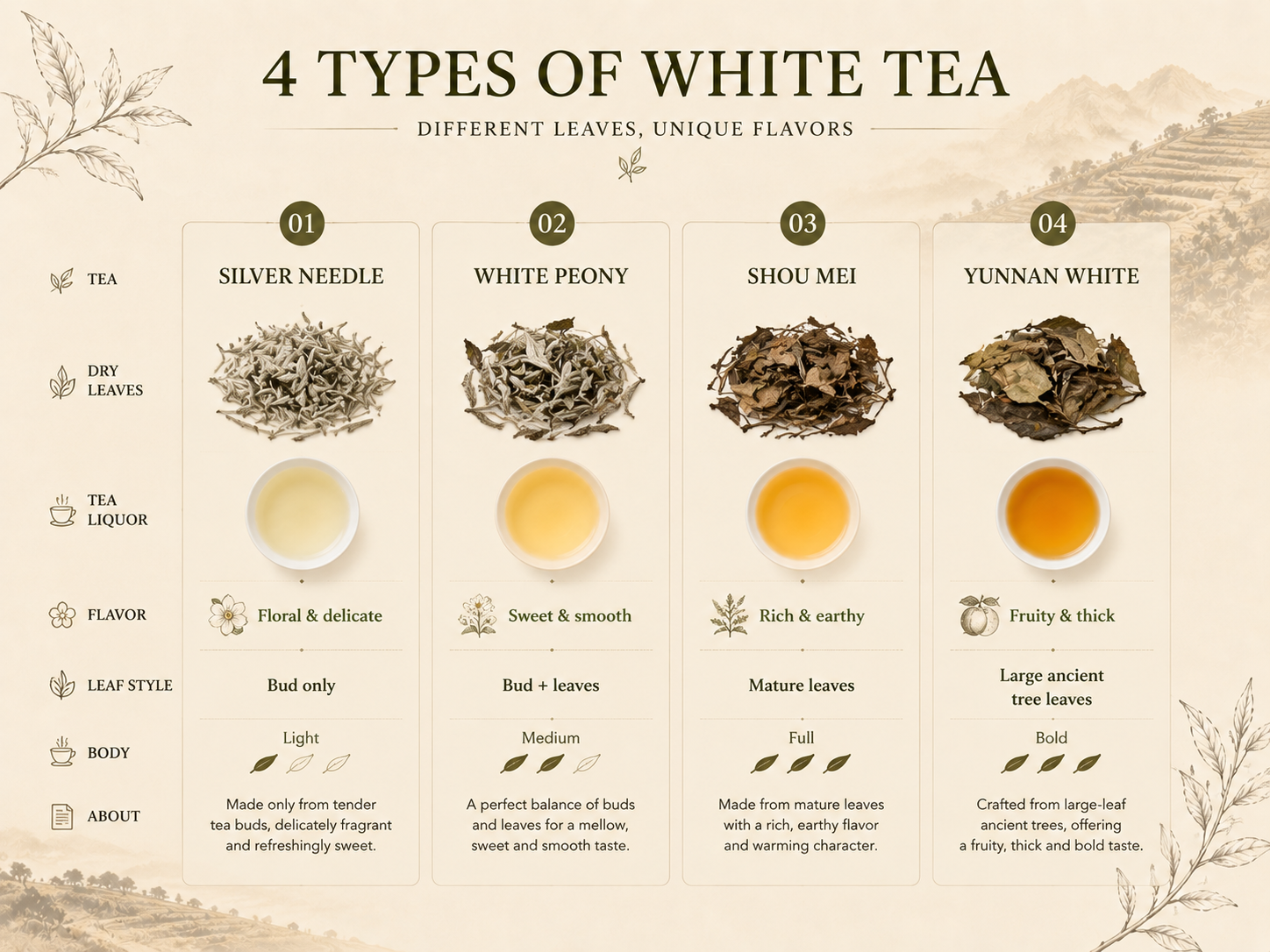
Silver Needle (Bai Hao Yin Zhen) — The Highest Grade
Silver Needle is made using only the unopened buds, each one covered in a fine coat of silver-white hairs. The colour of the liquor is pale gold, the aroma has a light, floral quality and the taste is clean and honeyed. It's only harvested over a few days, early in the spring, which is why it's always in such short supply and really sought-after by white tea enthusiasts.
→ Deep dive: Explore all white tea types in detail
White Peony (Bai Mu Dan) — Body and Sweetness
White Peony uses one bud with two young leaves. It has more body than Silver Needle, with a naturally sweet, lightly floral character and a smooth finish. For anyone new to white tea, White Peony is often the best starting point — balanced, approachable, and consistently good value.
→ Deep dive: Explore all white tea types in detail
Shou Mei — Robust and Full-Flavoured
Shou Mei is made from more mature leaves, harvested later in the season. The liquor is deeper in colour, and the flavour is fuller with a mild earthiness. It ages well when stored correctly and develops a richer, more complex character over time — similar in principle to pu-erh. Our Fuding Aged White Tea is a good example of how Shou Mei evolves with age.
→ Deep dive: Explore all white tea types in detail
Yunnan White Tea — The Ancient Tree Difference
Yunnan white tea comes from a different cultivar that grows at higher altitudes. The leaves are bigger and more robust than those from Fujian, with a naturally sweeter and fruitier taste. And White tea made from ancient tea trees has a really distinctive depth that really sets it apart.
→ Deep dive: Explore all white tea types in detail
What Does White Tea Taste Like? Flavour Notes Across the Grades
White tea usually has a light, naturally sweet taste to it. Some common tasting notes to look out for include floral, honeydew and a bit of subtle fruity hint.
Silver Needle is usually the most delicate and floral, while White Peony offers more body and gentle fruity sweetness. Shou Mei tends to have a fuller and slightly earthy character, whereas Yunnan white tea is often richer, thicker, and more complex in aroma.
If you want a deeper breakdown of aroma, mouthfeel, and regional flavor differences, read our full guide on Read: what does white tea taste like?
White Tea Health Benefits: Key Findings at a Glance
Among all true teas, white tea undergoes the least processing, which preserves the highest levels of naturally occurring antioxidants.
Research discussed in white tea polyphenols research suggests that tea polyphenols may support cardiovascular health, oral hygiene, and protection against oxidative stress.
- Rich in natural antioxidants
- Contains polyphenols and catechins
- Lower caffeine than many teas
- May support healthy circulation
- Gentle energy with L-theanine
If you want a more detailed explanation of the studies and research context behind white tea health benefits, read our full guide to Read our full guide to white tea health benefits.
White Tea Caffeine: How Much Does It Contain Compared to Other Teas?
White tea typically contains 15–30 mg of caffeine per 250 ml cup, making it one of the lowest-caffeine true teas available.
In comparison, green tea usually contains around 20–45 mg of caffeine per cup, while black tea often ranges from 40–70 mg depending on the tea type and brewing method.For official data, see USDA tea caffeine data
If you want a more detailed comparison of caffeine levels across different teas, see our complete See our complete white tea caffeine breakdown.
How to Brew White Tea: Quick-Start Temperature and Steep Time Guide
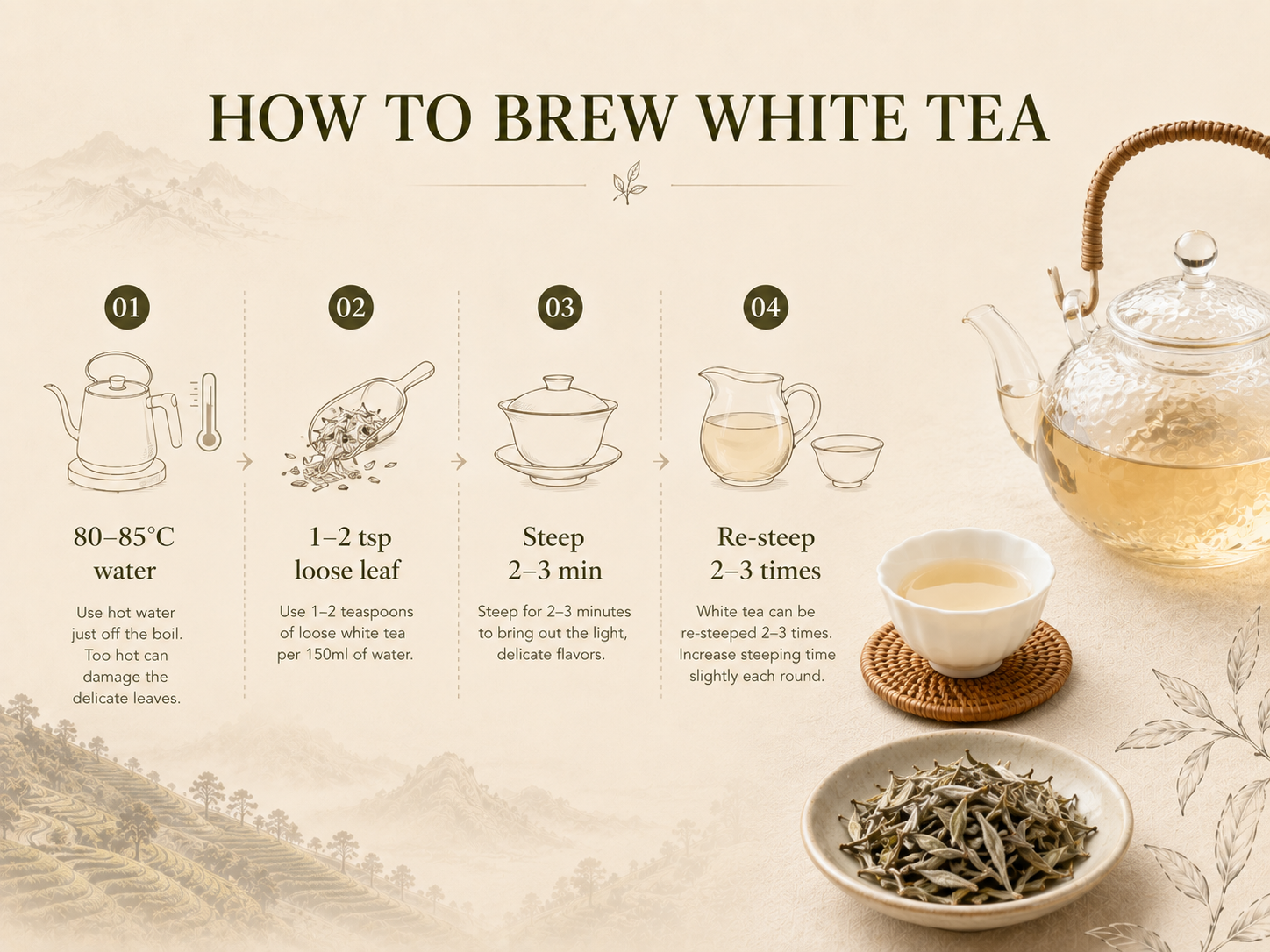
When learning how to brew white tea, using the correct white tea temperature is essential for preserving its delicate aroma and smooth flavour. Most white teas brew best at 80–85°C (175–185°F) for 2–3 minutes using 1–2 teaspoons of loose leaf tea per 250 ml of water.
Don't even think about using boiling water - that just gets the taste all flat and slightly bitter. And here's the thing - many white teas can go through a second and even a third steep, and you know what? The later infusions can be some of the sweetest and fullest too.
If you want a more detailed explanation of brewing methods, teaware, and steeping adjustments, see our full See the full brewing guide.
Why Chinese White Tea Is Different: Fuding and Yunnan Compared
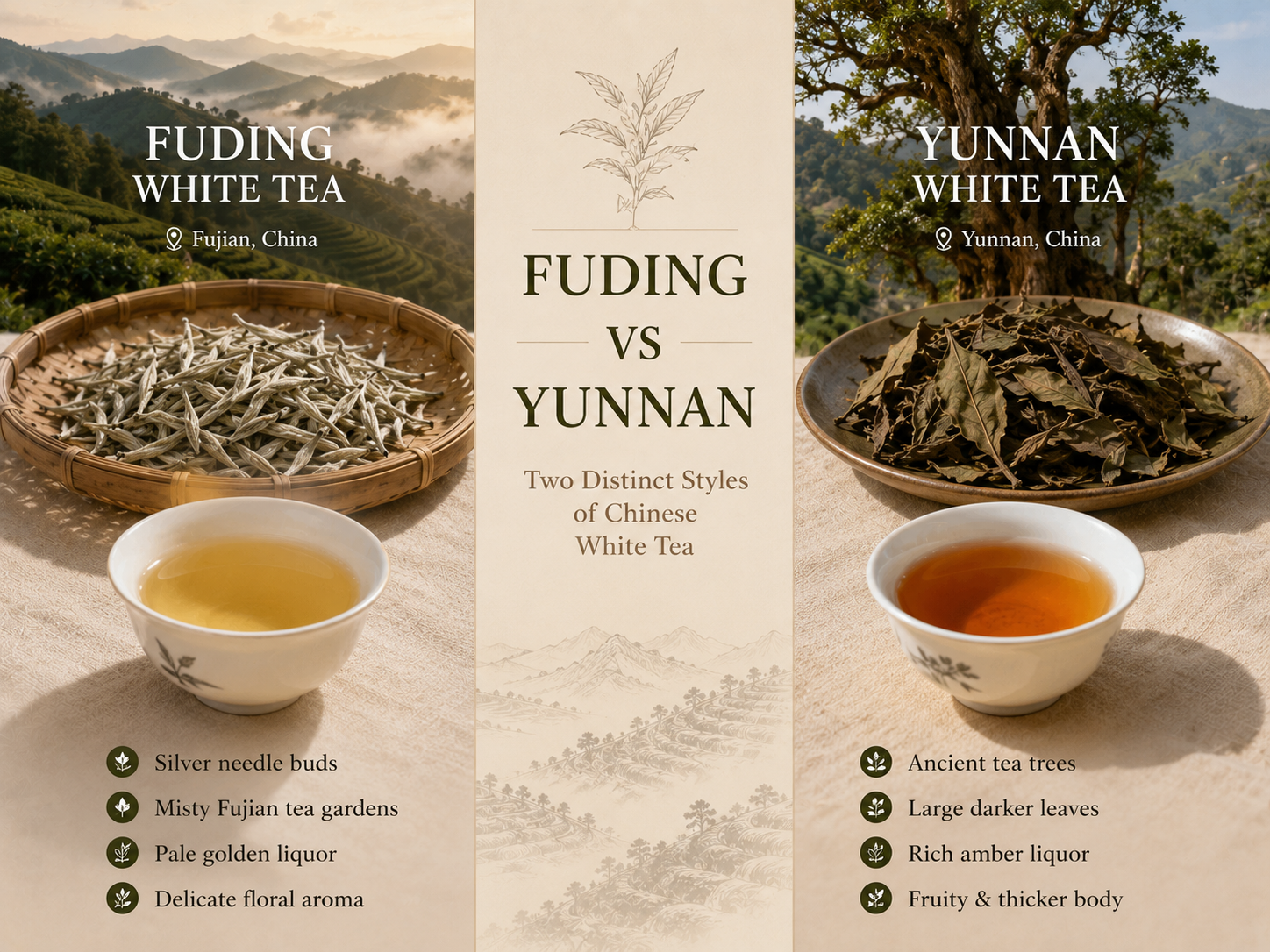
White tea from China is all about where it comes from - the region, the tea plant and how it's been traditionally processed. Fuding in Fujian province is famous for its super delicate Silver Needle and White Peony teas, while Yunnan white tea tends to have a richer body and deeper aroma coming from its ancient tree material.
These regional differences come from climate, elevation, and local tea-making traditions developed over generations. More background on regional standards can be found through Fuding white tea geographical indication.
Looking for the best Chinese white tea to try first? Explore Dofo Tea's Chinese white tea collection — sourced directly from Fuding and Yunnan.
FAQ: White Tea Questions Answered
What is white tea made from?
White tea is made from the young buds and leaves of the Camellia sinensis plant. Unlike black or oolong tea, it undergoes minimal processing — just withering and drying — which preserves its delicate flavour and high antioxidant content.
Does white tea have caffeine?
Yes, white tea contains caffeine, but typically less than green or black tea. A standard 250 ml cup of white tea contains approximately 15–30 mg of caffeine, making it a suitable option for those who are caffeine-sensitive.
What does white tea taste like?
White tea has a light, naturally sweet flavour with subtle floral and honeydew notes. Silver Needle is the most delicate, while Shou Mei has a fuller, earthier body. Unlike green tea, white tea is rarely astringent or grassy.
Where does white tea come from?
Most high-quality white tea comes from Fujian province in China, particularly the Fuding and Zhenghe regions. Yunnan province also produces notable white teas, including the sought-after Moonlight White made from ancient tea trees.
What are the main types of white tea?
The four principal Chinese white teas are Silver Needle (Bai Hao Yin Zhen), White Peony (Bai Mu Dan), Gongmei (Tribute Eyebrow) and Shou Mei (Long Life Eyebrow). Silver Needle is the highest grade; Shou Mei the most robust.
Is white tea good for you?
Research suggests white tea is rich in polyphenols and catechins that act as antioxidants. Studies have linked regular tea consumption with benefits including cardiovascular support, oral health improvements and reduced oxidative stress.
How do you brew white tea correctly?
Brew white tea at 80–85°C (175–185°F) using 1–2 teaspoons of loose leaf per 250 ml. Steep for 2–3 minutes. Avoid boiling water, which can turn the leaves bitter. White tea can be re-steeped 2–3 times.


