

What Is Yellow Tea? China’s Rarest Tea, Explained
Author: Xu Jiahua, Chinese Certified Senior Tea Appraiser
Yellow tea is a lightly oxidized Chinese tea made with a distinctive “sealed yellowing” step known as men huang. This extra stage sets yellow tea apart from green tea and gives the leaves and liquor their characteristic yellow color, mellow flavor, and softer vegetal character. Yellow tea is one of China’s six traditional tea categories, but it remains far less familiar to American tea drinkers than green, black, white, or oolong tea.
If you have ever wondered why yellow tea looks and tastes different from green tea even though the two share much of the same early processing, the answer starts with men huang.
What Is Yellow Tea?
Yellow tea is a lightly oxidized Chinese tea, made by a unique 'sealed yellowing' (men huang) step that sits it between green tea and oolong.
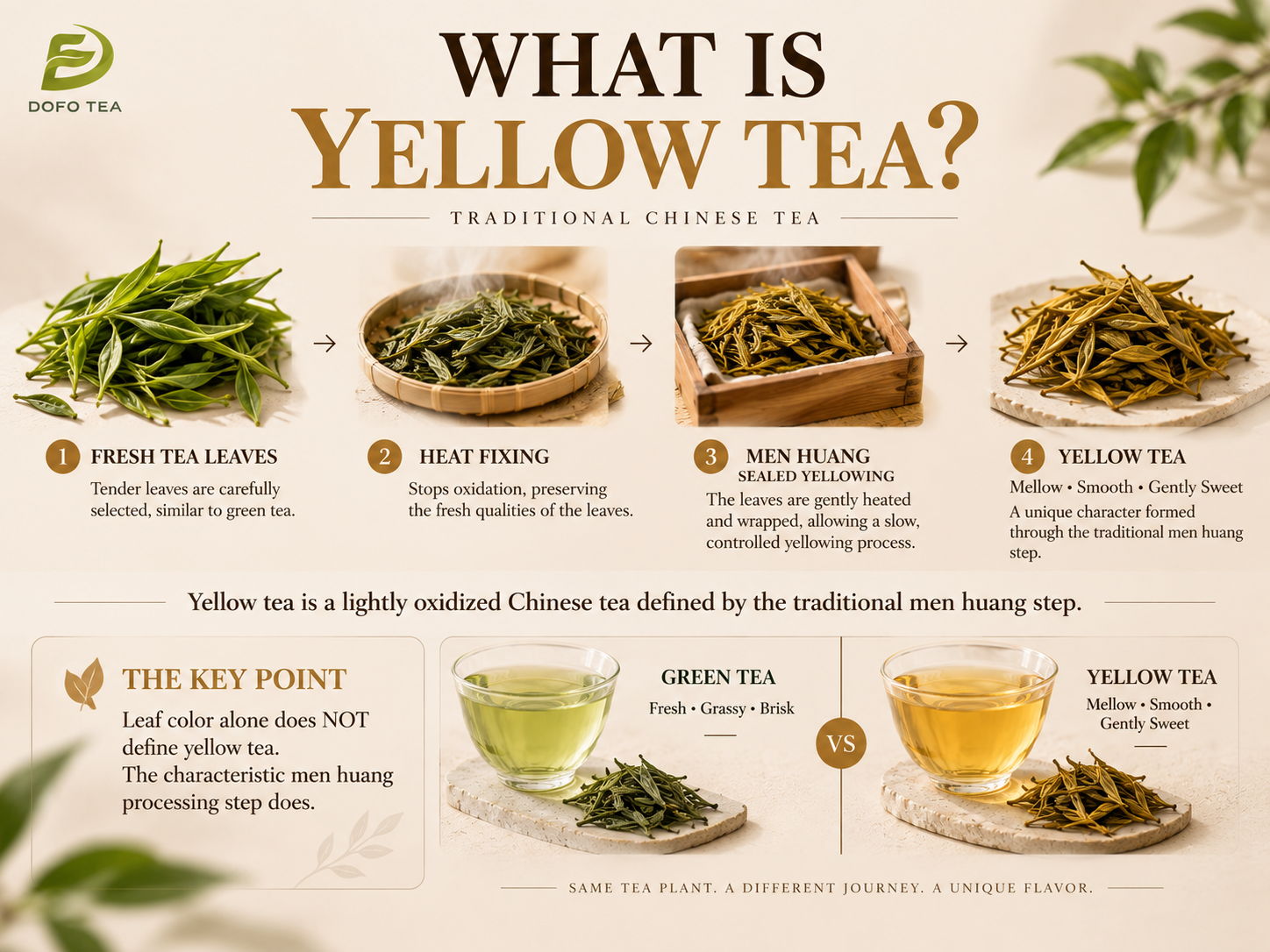
It is one of China’s six traditional tea categories and is much less commonly produced or encountered than green, black, or oolong tea.
Yellow tea begins with processing that is similar to green tea, but the additional men huang stage changes the character of the leaves. This gentle transformation softens some of the fresh grassy notes associated with green tea and helps create a rounder, mellower flavor.
A well-made yellow tea usually produces a clear yellow to light-golden liquor with a mild sweetness and smooth texture. It can retain some of the freshness of green tea while tasting softer and less astringent, which makes it an approachable choice for green tea drinkers who want to explore something different.
Color alone does not make a tea “yellow tea.” Some tea cultivars naturally produce pale or yellowish leaves, but without the characteristic men huang processing step, they are not traditional Chinese yellow tea. In this category, the processing method matters more than the leaf color itself.
How Yellow Tea Is Made — the Men Huang (Sealed Yellowing) Step
How is yellow tea made? Methods vary by region, leaf grade, and tea style, but yellow tea processing generally centers on fixing, men huang, and drying, with some styles also using brief withering, rolling, or repeated heating.
After the leaves are picked, the maker applies heat in a fixing, or “kill-green,” stage to limit enzymatic oxidation, which is why the early process can resemble green tea production. The defining step comes next: men huang, or sealed yellowing.
The leaves are still warm and a bit damp, so the maker covers them up, wraps them or piles them up in a way that traps the heat and humidity. This special environment starts to bring out changes in the pigments, the aroma compounds and its various taste-active substances - smooths out the grassy sharpness and astringency.
Peer-reviewed research on yellow tea processing identifies temperature, moisture, duration, and ventilation as important variables during yellowing and links the process with a decline in astringent substances. Because these conditions interact with the leaf material, skilled makers adjust the process rather than follow one universal timer.
After the desired character develops, the tea is dried to stabilize it. Some traditional styles alternate yellowing with gentle heating, but the number and duration of those cycles vary by tea and belong to the deeper craft of yellow tea making.
Men huang is therefore what most clearly separates yellow tea from green tea. Yellow tea receives an additional warm, humid transformation after fixing, while oolong is defined by partial oxidation during processing. This is why yellow tea can be placed between green tea and oolong as a useful flavor and processing reference, but not as a fixed oxidation percentage.
Where Yellow Tea Sits Among China’s Six Tea Types
Yellow tea is one of China’s six traditional tea categories — and the smallest by production volume.
In the FAO’s 2013 China tea figures, yellow tea recorded the lowest output among the six major categories.
All six tea types come from Camellia sinensis, but processing determines how each category develops after harvest. For beginners, yellow tea is easiest to understand as a close relative of green tea: the leaves are heat-fixed first, then undergo the additional men huang or sealed-yellowing stage, which softens some of green tea’s grassy sharpness and creates a rounder, sweeter character.
This is also the key distinction in a yellow tea vs green tea comparison; read our full comparison for the processing and flavor differences. Oolong differs more substantially because its leaves are intentionally bruised and partially oxidized before finishing.
Yellow tea is also commonly grouped by leaf maturity into Huang Ya (yellow bud tea), Huang Xiao Cha (small-leaf yellow tea), and Huang Da Cha (large-leaf yellow tea). Explore our Types of Yellow Tea guide to understand these three styles in more detail.
For health research, caffeine, or preparation, continue to our Yellow Tea Benefits, Does Yellow Tea Have Caffeine?, and How to Brew Yellow Tea guides.
If you only try one Chinese tea outside the mainstream, yellow tea is the rarest place to start.
What Does Yellow Tea Taste Like?
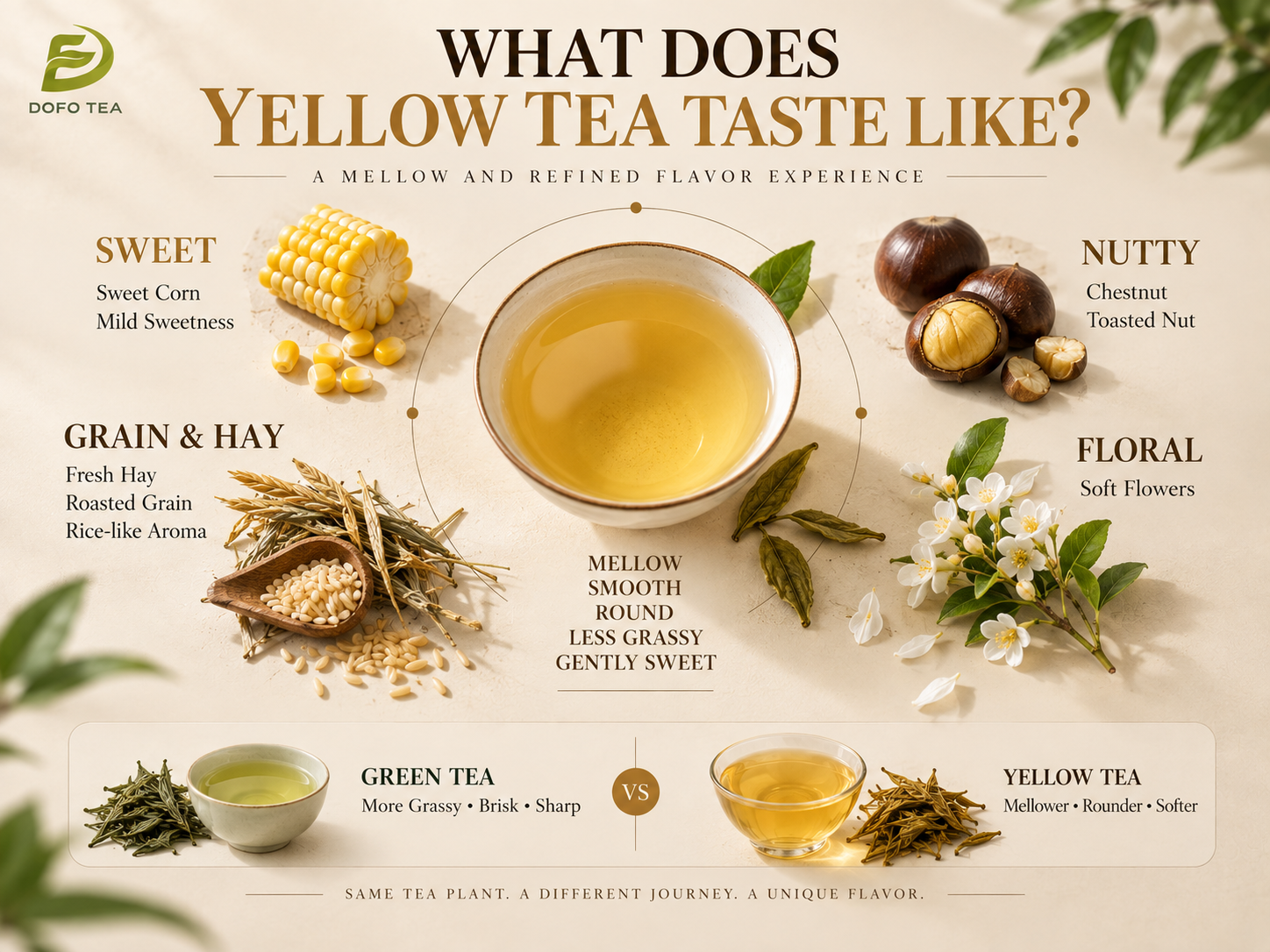
What does yellow tea taste like? Well-made yellow tea is generally mellow, smooth, gently sweet, and less grassy or sharply astringent than many green teas. The liquor is commonly clear yellow to apricot gold, giving yellow tea one of its most recognizable visual characteristics.
Flavor varies with leaf grade, cultivar, growing region, yellowing, and drying methods. Tender bud teas may show notes of sweet corn, chestnut, fresh hay, or soft flowers, while larger-leaf styles can develop roasted grain, toasted nut, or rice-like aromas.
The texture is often round and settled rather than brisk or strongly vegetal. “Mellow and sweet with reduced grassiness” is a useful starting point, but each yellow tea can develop its own character depending on how it is grown, processed, aged, and brewed.
A Short History of Yellow Tea
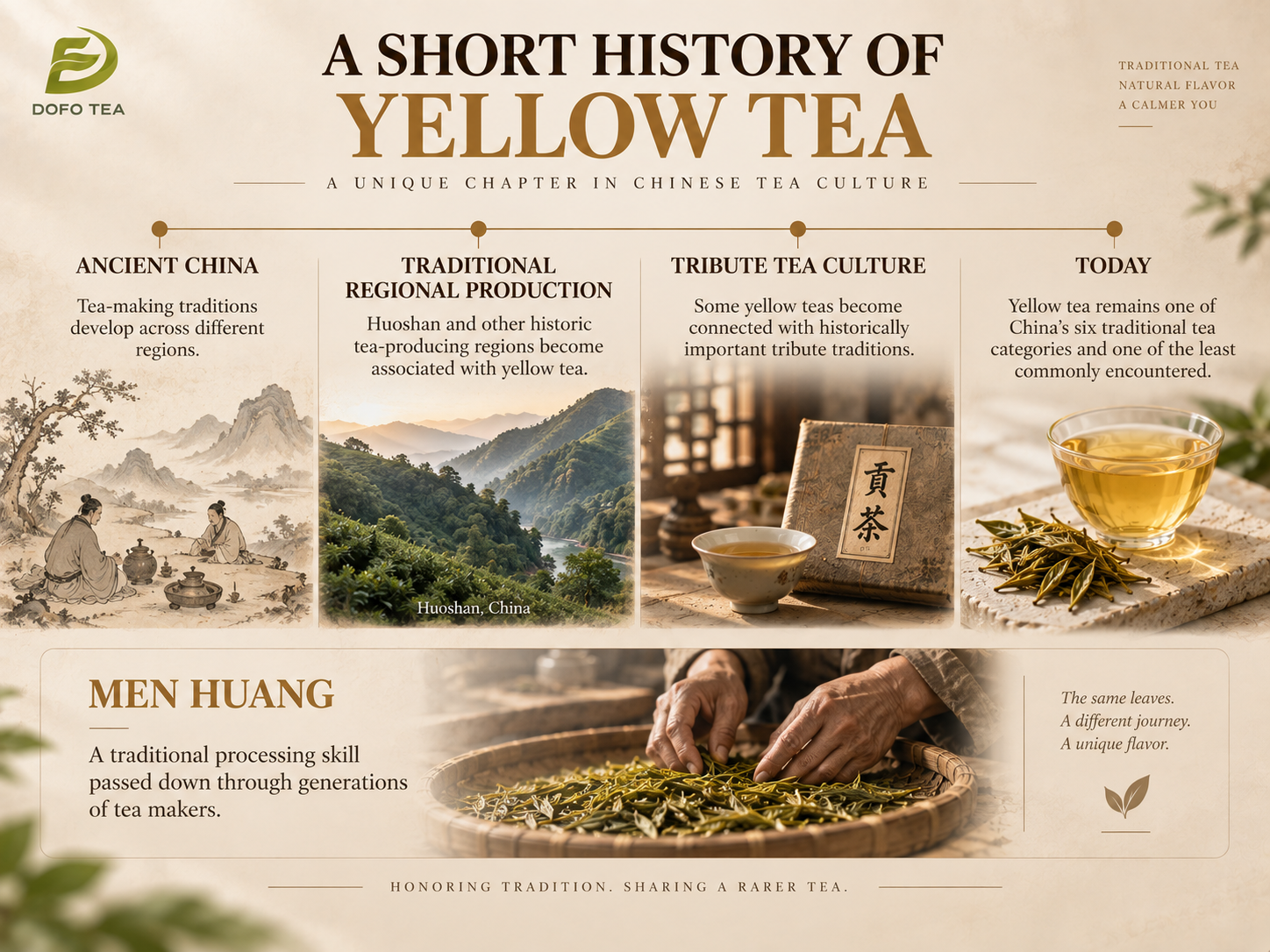
Yellow tea history is closely connected to China’s long tradition of adapting tea-making methods to local leaves, climates, and tastes. Some yellow teas became associated with tribute culture and historically important production areas such as Huoshan in Anhui, although the exact origins and dates vary by tea and should not be reduced to a single invention story.
Yellow tea is now recognized as one of China’s six traditional tea categories, while UNESCO’s recognition of China’s traditional tea-processing techniques highlights the knowledge passed down through generations of tea makers. This tradition is especially relevant to men huang, where tea makers carefully judge changes in leaf moisture, color, aroma, and texture.
You may also encounter hwangcha, the Korean term for yellow tea, but Korean yellow tea does not necessarily follow the same processing traditions as Chinese yellow tea.
Which Yellow Tea Should You Explore First?
Yellow tea rewards curiosity, but the best place to start depends on what you want to learn. Choose the path that matches your question, and let each focused guide take you deeper.
- If you are interested in wellness: Start with Yellow Tea Benefits: What the Research Actually Shows. This guide separates research-supported findings from common claims and explains important cautions.
- If your main concern is caffeine: Read up on Does Yellow Tea Really Have Caffeine? This guide gets into how much caffeine is actually in your cup and why it can vary just depending on how the tea is made.
- If you already drink green tea: Go to Yellow Tea vs Green Tea: What’s Really Different. This comparison explains how the yellowing stage changes the flavor and character of the tea.
- If all those Chinese names are confusing: Read What are the Different Types of Yellow Tea?: Huang Ya, Huang Xiao & Huang Da. This guide explains how much caffeine yellow tea may contain and why the amount varies between teas and brewing methods.
- If you're keen on exploring a classic regional tea: Explore Huo Shan Huang Ya: China's Best - Imperial Yellow Bud Tea. This one focuses on Huoshan origin, yellow-bud teas, history and all the tradition behind that type of tea.
- If you are ready to choose a tea: See Best Yellow Tea: How to Choose and Buy Authentic Chinese Yellow Tea. It covers practical quality signals such as origin, leaf grade, freshness, and authentic yellowing.
- If you already have yellow tea leaves: Follow How to Brew Yellow Tea (Gongfu & Western Methods). This guide provides practical brewing methods for different yellow tea styles.
Why We Stock Full-Category Yellow Tea from Huoshan
At Dofo Tea, we look at Chinese tea as a complete tradition rather than a collection of popular styles. Our founder, Xu Jiahua, is a nationally certified senior tea appraiser who oversees tea selection and quality control. Dofo Tea also received the 2025 AVPA “Médaille Gourmet Or” in France. These credentials matter because yellow tea is easy to misunderstand: a pale liquor or a “yellow” name does not prove that a tea has gone through genuine men huang.
Huoshan is central to our current yellow tea selection. We carry both bud-based and larger-leaf styles because we find that they show two very different sides of yellow tea.
My Brewing Observations from Huoshan Yellow Tea
In my own side-by-side tasting, I have found that Huo Shan Huang Ya and Huo Shan Huang Da Cha respond very differently even when I keep the brewing conditions consistent. In one comparison, I used 4g of tea in 120mL of water and tested each tea at 80°C and 90°C across 3 infusions. Huang Ya remained lighter and more delicate at the lower temperature, while the hotter infusion brought out more bitterness and reduced some of its fresh sweetness. Huang Da Cha was more tolerant of higher temperatures and developed a deeper yellow-brown liquor, fuller body, and a distinct toasted-rice aroma.
I also learned not to judge yellow tea by color alone. Across these tastings, Huang Ya could appear pale yellow or yellow-green, while Huang Da Cha developed a noticeably deeper amber-yellow tone. For me, the more useful signs are whether the liquor stays clean, whether the aroma remains balanced, and whether the character of men huang is present without becoming dull or harsh.
When we evaluate a batch, we pay close attention to the aroma, liquor, and finish. A well-made yellow tea should have a clean, rounded character, with the mellow quality of men huang present without making the tea feel flat or dull.
We also do not expect every yellow tea to taste the same. Bud styles should retain a delicate and fresh character, while larger-leaf styles can show more depth and body. For us, the key is balance: the yellowing process should be noticeable in the cup, but it should never overpower the character of the leaf.
You can shop our Huoshan yellow teas to compare the currently available styles.
FAQ
What is yellow tea?
Yellow tea is one of China’s six traditional tea categories, made from Camellia sinensis leaves and defined by men huang, or sealed yellowing. This added warm, humid stage distinguishes yellow tea from green tea and gives it a character that sits between green tea and oolong. Traditional Chinese yellow tea is a distinct processing category and is closely associated with Chinese tea-making traditions.
How is yellow tea made?
Yellow tea is generally made through heat-fixing, men huang (sealed yellowing), and drying, with some styles also including withering, rolling, or repeated heating. The key stage is men huang, when warm, moisture-bearing leaves are covered or piled to allow controlled chemical changes that soften their grassy and astringent edge. Some styles also include rolling or repeated heating, and the exact process varies by tea and producer.
What does yellow tea taste like?
Yellow tea typically tastes mellow, smooth, and gently sweet, often with chestnut, sweet-corn, grain, hay, or soft floral notes. Its liquor commonly appears clear yellow to apricot gold. Compared with green tea, yellow tea usually has less grassy sharpness and a rounder texture.
Why is yellow tea so rare?
Yellow tea is rare because authentic men huang adds time, risk, and skilled judgment to the production process. Production is concentrated in a limited number of traditional regions, and yellow tea remains less widely produced and less familiar to consumers than green, black, or oolong tea. Its rarity therefore comes from both the complexity of production and its relatively small market.
Where does yellow tea sit among the six Chinese tea types?
For beginners, yellow tea can be placed close to green tea and before oolong on a simplified processing spectrum. It undergoes more post-fixing transformation than green tea because of men huang, while oolong is defined by intentional partial oxidation. For a fuller comparison, see the complete yellow tea vs green tea guide.
Which type of yellow tea should a beginner start with?
A beginner can start with Huang Ya, or yellow bud tea, such as Huo Shan Huang Ya. Its young buds usually produce a delicate, sweet, and approachable cup that makes the category easy to understand. Readers who prefer roasted grain notes and a fuller body may instead enjoy a large-leaf yellow tea; use our guide to yellow tea types to compare them.


