

Aged White Tea Explained: Why White Tea Gets Better the Longer You Keep It
Author: Xu Jiahua, Nationally Certified Senior Tea Appraiser
Most teas are best enjoyed right away, but white tea is the exception.
Store it properly, give it time, and something quietly remarkable happens. The delicate floral sweetness of a young white tea slowly transforms — year by year — into layers of honey, dried fruit, and earthy warmth that no fresh tea can replicate.
This is a guide to all things aged white tea - what it is, how it develops over time, & why it's become the holy grail for tea collectors & curious tea drinkers alike.
What Is Aged White Tea? How It Differs from Fresh White Tea
Aged white tea, known in Chinese as lao baicha (老白茶), undergoes a slow, natural post-fermentation process over years — gradually transforming its initial floral, sweet character into deeper earthy, honey and woody flavour notes that resemble aged pu-erh tea.
Unlike some lower-quality teas that try to artificially speed up the aging process, real aged white tea develops slowly through natural oxidation and careful long-term storage.
Because white tea isn't subjected to a lot of processing or roasting, the leaves can still be changing & evolving even after they're dried. Fresh white tea is all about its light floral aroma & clarity, but as it ages, it develops a fuller body, a smoother texture and a warmer, more medicinal or dried-fruit like character over time.
The most respected aging material traditionally comes from Fuding white tea and Zhenghe white tea production regions in Fujian Province, where climate, cultivar, and processing methods are considered especially suitable for long-term storage. Additional regional background can be found through Fuding white tea traditional storage.
What Happens to White Tea as It Ages: A Year-by-Year Flavour Development
Aged white tea changes gradually over time through slow natural oxidation and post-fermentation, developing deeper sweetness, heavier body, and more complex aroma compounds as the years pass. Research discussed in aged white tea post-fermentation research suggests that long-term aging alters the chemical composition of white tea, including polyphenols, amino acids, and aromatic compounds linked to flavour development.
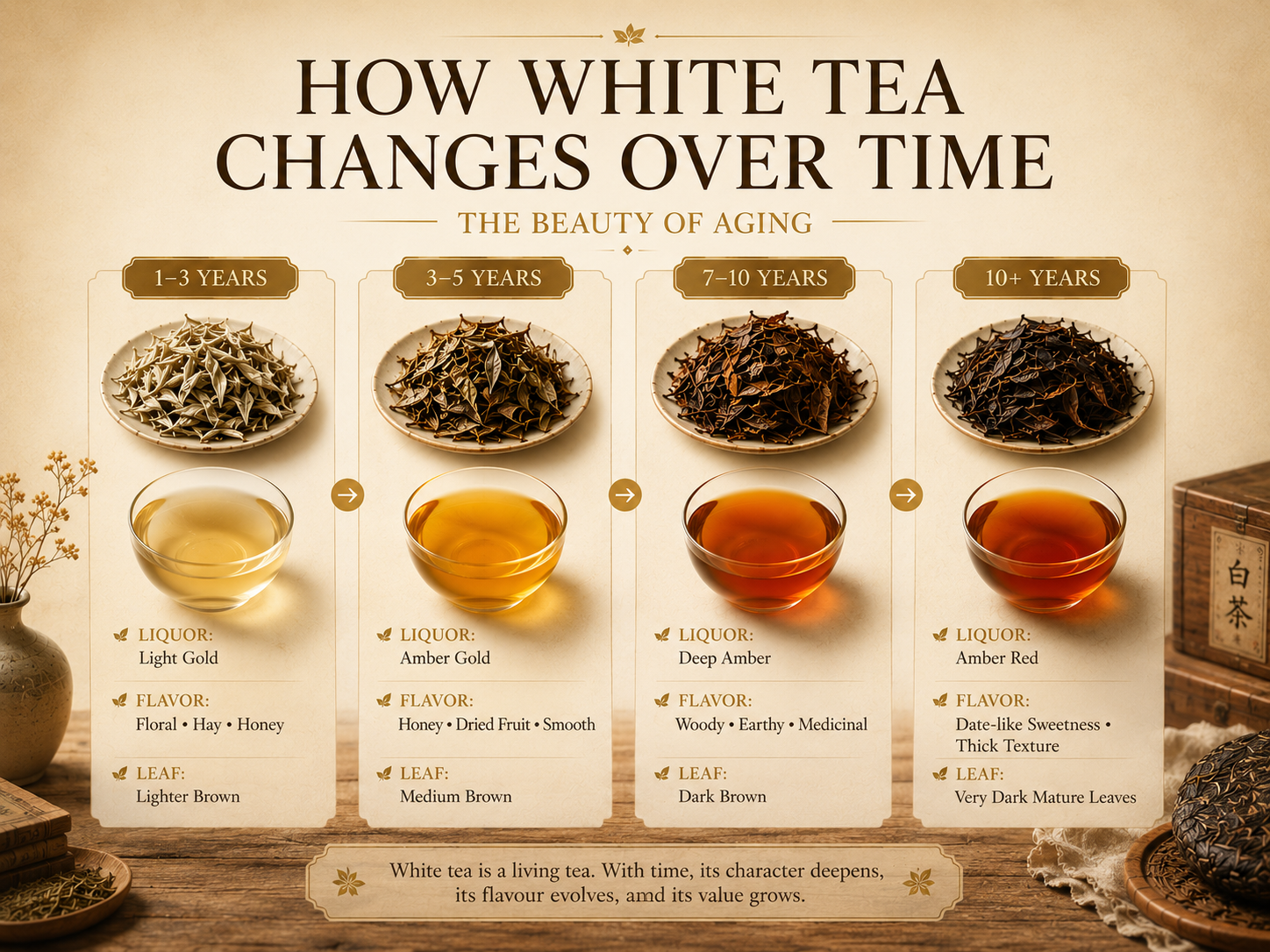
1–3 Years: Fresh Floral to Light Honey
In the first one to three years, aged white tea still retains much of its original fresh character. Floral aromas, light hay notes, and soft sweetness remain dominant, while the liquor stays pale gold and clean in texture. Around the second or third year, the sharp freshness begins to soften and gentle honey notes emerge. The mouthfeel becomes rounder and less astringent, making this stage approachable for drinkers new to aged white tea.
3–5 Years: Honey and Dried Fruit Complexity
Between 3 and 5 years, aged white tea develops the most sought-after balance of complexity — retaining honey sweetness from its youth while gaining dried fruit and light woody notes that fresh tea lacks entirely.
The liquor darkens into a richer amber tone, and the tea develops noticeably smoother texture across multiple infusions. At Dofo Tea, we typically observe that carefully stored Fuding white tea in this range offers the clearest balance between freshness and mature complexity.
7–10 Years: Earthy, Woody and Medicinal Notes
By seven to ten years, the transformation becomes much more pronounced. The tea liquor deepens to a dark amber-red colour, while woody, earthy, and gently medicinal aromas begin to dominate the cup. Many drinkers compare this stage to lightly aged raw pu-erh tea, although aged white tea usually remains cleaner and lighter in texture. At Dofo Tea, aged white teas are stored in stable low-humidity conditions with controlled airflow to help preserve sweetness while preventing excessive damp storage character.
10+ Years: Deep, Aged-Tea Character
Beyond ten years, aged white tea develops a distinctly mature profile with deeper woody notes, thick texture, and concentrated date-like sweetness. The liquor becomes darker and smoother, often showing velvety mouthfeel and long-lasting aftertaste across repeated infusions. Genuine 10–20 year old aged white tea is relatively rare, which makes storage conditions and origin especially important for authenticity and quality evaluation.
Which Types of White Tea Age Best?
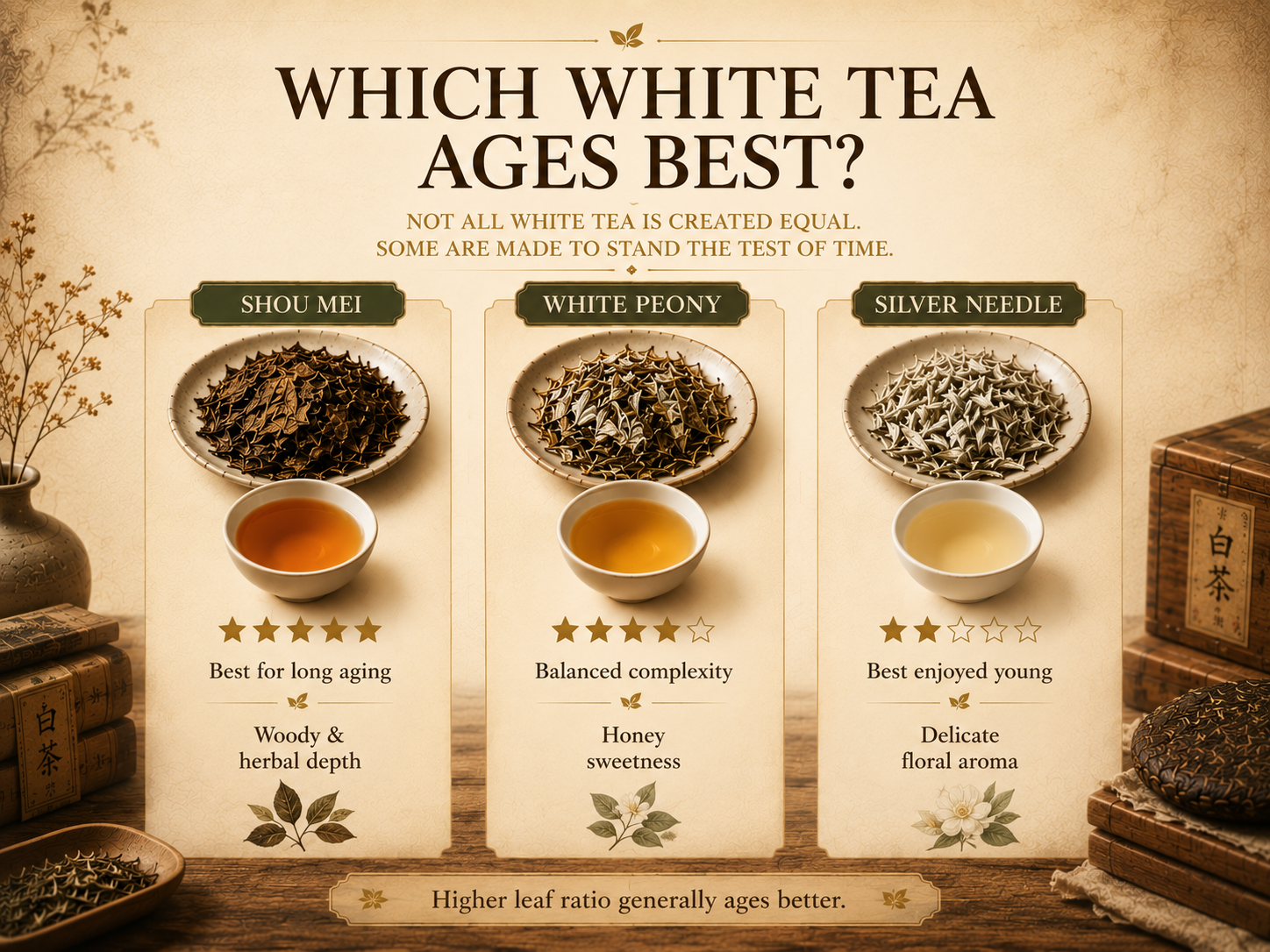
Shou Mei ages most gracefully among white tea grades, as its higher leaf-to-bud ratio provides more fermentable compounds — making it the preferred choice for collectors who age white tea over 5+ years.
As the years pass, Shou Mei typically develops increasingly profound woody, herbal, and dried-fruit aromas, while simultaneously retaining its smooth and mellow mouthfeel.
White Peony (Bai Mu Dan) also ages well, offering a balance between fresh floral sweetness and developing honey-like complexity. Silver Needle, by contrast, is usually best enjoyed young because its delicate floral aroma tends to soften rather than deepen with age.
If you want a broader introduction to these grades, read our guide to Types of White Tea
How to Store White Tea for Intentional Aging
Intentional aging requires different storage conditions than everyday freshness storage. While fresh white tea is usually protected with more airtight storage, aged white tea benefits from stable airflow, moderate humidity, and protection from strong odors, direct sunlight, and temperature fluctuations.
Compressed forms such as tea cakes or bricks are traditionally preferred for aging because they allow slower and more even transformation over time. Want to store white tea at home? Read our guide to how to store white tea first.
Aged White Tea vs Pu-erh Tea: What's the Difference?
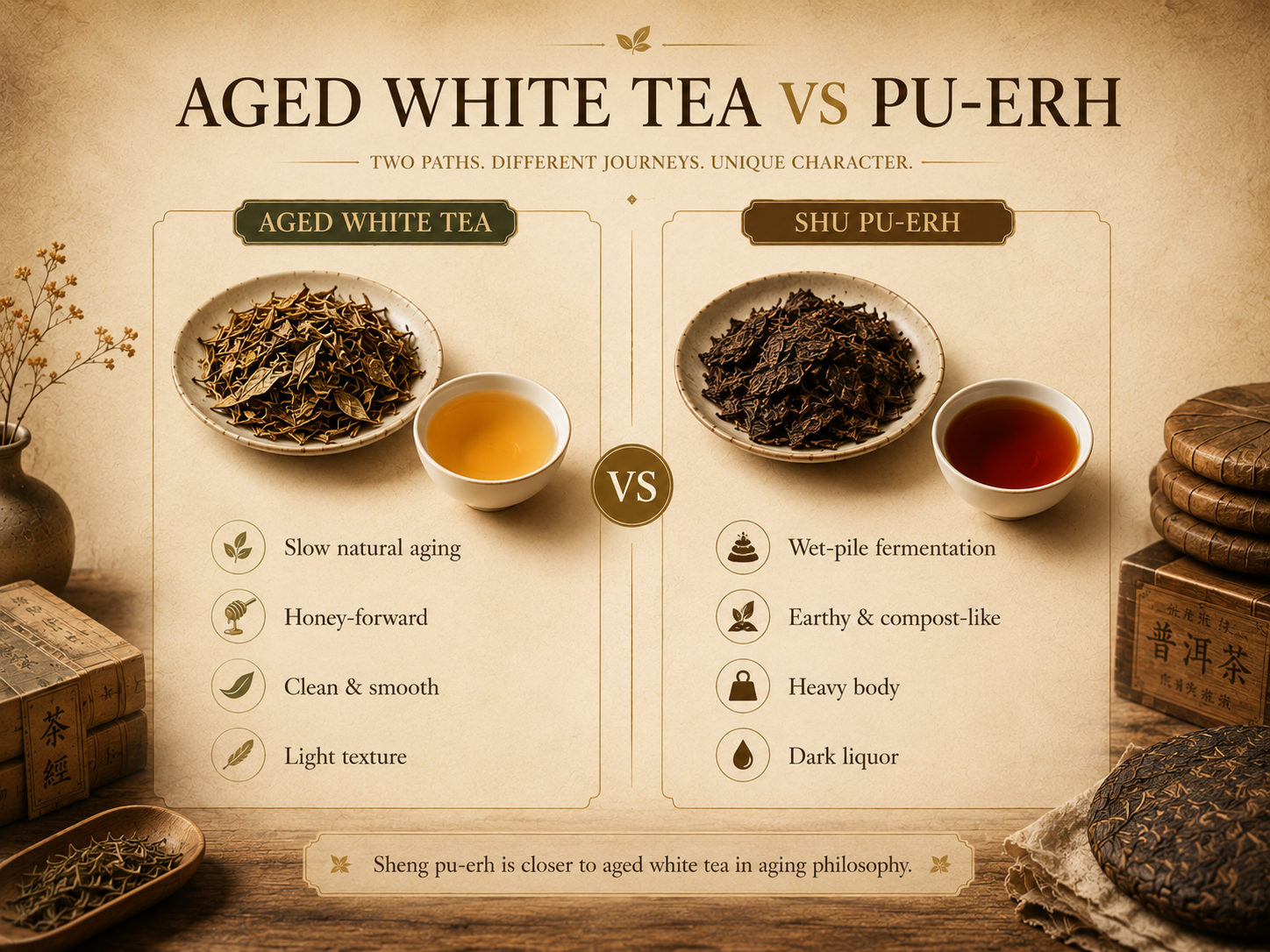
Aged white tea and pu-erh tea are both known for improving with time, but the way they age is fundamentally different. Aged white tea develops gradually through slow natural oxidation and gentle post-fermentation, while ripe shou pu-erh undergoes an accelerated wet-pile fermentation process that creates deeper earthy and compost-like notes much more quickly.
Raw sheng pu-erh is closer to aged white tea in aging philosophy because both transform slowly over many years, although sheng pu-erh usually develops stronger bitterness, mineral character, and heavier body. By comparison, aged white tea tends to produce a cleaner, softer, and more honey-forward profile that many drinkers find easier to approach as an introduction to aged teas.
Where to Find Authentic Aged White Tea
Authentic aged white tea can be difficult to source because storage history, harvest year, and production origin are not always clearly verified in the market. Well-stored tea should show clean dry leaves, a smooth transition from floral to woody aroma, and a liquor that remains clear rather than dull or muddy in the cup.
Dofo Tea carries authentic aged Fuding white tea, stored under controlled conditions. See our aged collection — and read our buying guide first.Ready to buy authentic aged white tea? Here's how to verify quality before purchasing
FAQ: Aged White Tea Questions
What is aged white tea?
Aged white tea (lao baicha) is white tea that has been stored for 3 or more years under controlled conditions. During this time, the tea undergoes a slow, natural transformation — the delicate floral character of fresh white tea gradually deepens into honey, fruit and earthy notes.
Does white tea really get better with age?
Yes — but only when stored correctly. White tea aged under proper conditions (consistent temperature, controlled humidity, away from odour and light) develops flavour complexity over time. Shou Mei and White Peony age most reliably; Silver Needle is typically enjoyed fresh.
How do you know if aged white tea is authentic?
Key signs include consistent dry leaf appearance (no irregular colour patches suggesting moisture damage), an aroma that transitions gradually from floral to earthy rather than smelling musty or mouldy, and a clear, clean liquor. See our full authentication guide for more.
How is aged white tea different from pu-erh?
Both are aged teas, but aged white tea uses unoxidised white tea leaves that ferment very slowly without the microbial intervention used in ripe pu-erh. The result is a more delicate, less earthy profile compared to aged shu pu-erh, closer to raw sheng pu-erh in character.
If you want a complete overview of white tea types, flavor, caffeine, and health benefits, read our pillar guide: The Complete Guide to White Tea


