

Does Matcha Have Caffeine? How Much & How It Compares
Author: Xu Jiahua, Nationally Certified Senior Tea Appraiser
Lots of people wonder if matcha has caffeine, especially when pitted against coffee or regular green tea. So - yes: matcha does indeed contain caffeine, because it's essentially just green tea leaves that have been ground into this fine powder.
A typical serving contains about 38–88 mg of caffeine per 2 grams of matcha powder, depending on the tea variety, growing conditions, harvest period, and serving size. Compared with coffee, matcha usually has less caffeine per serving and naturally contains L-theanine, which helps explain its smoother energy feel. Matcha also contains catechins such as EGCG, a compound discussed in this matcha catechins EGCG study.
For a broader matcha overview, including origin, flavor, preparation, and tea grade basics, read our full Matcha Guide.
Does Matcha Have Caffeine? (Yes — Here’s How Much)
A 2g serving of matcha has roughly 38–88 mg of caffeine.
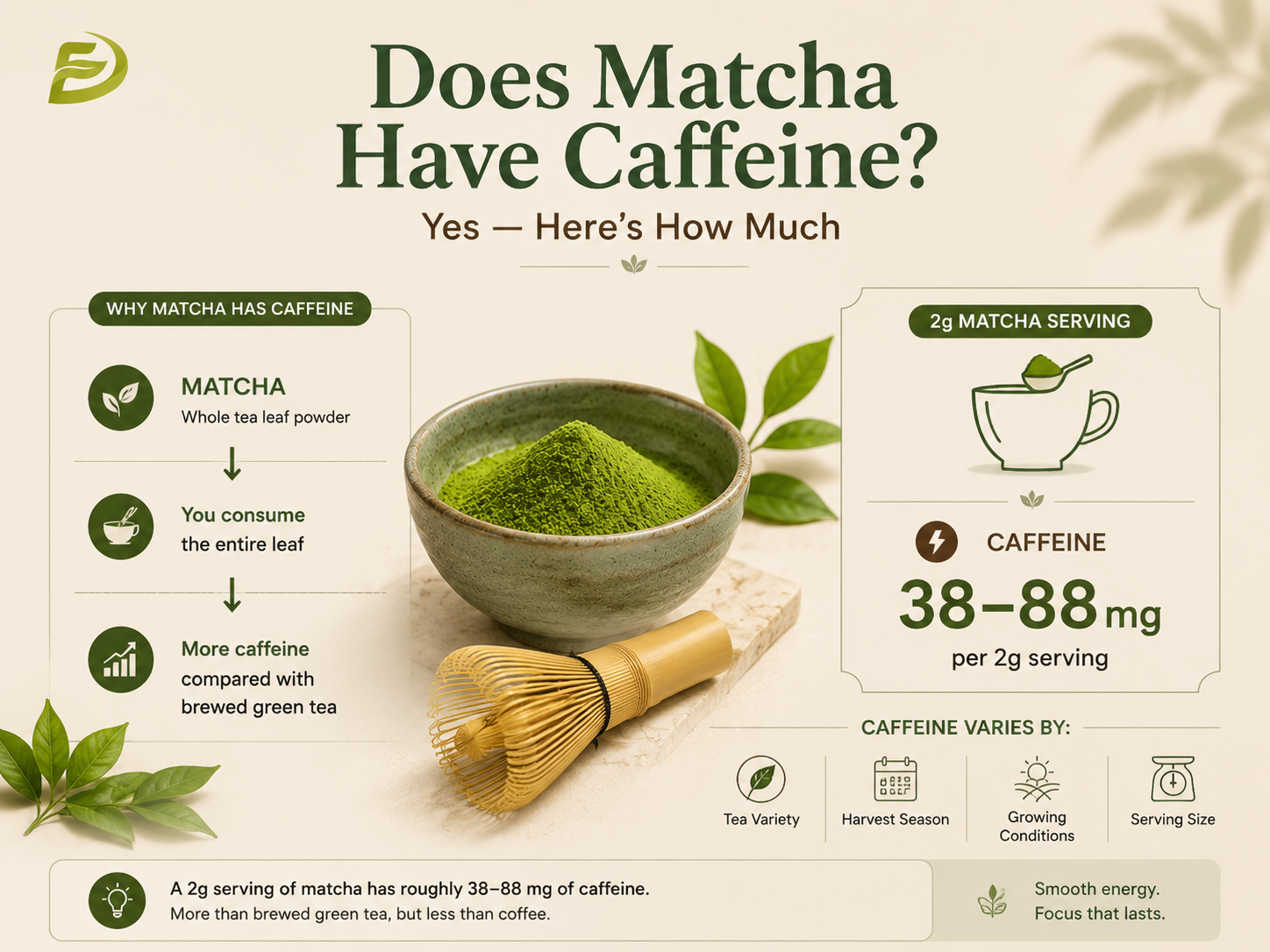
So yeah, matcha does have caffeine - and because you're drinking the whole powdered tea leaf, it tends to have more caffeine than a cup of traditionally-brewed green tea. But just how much caffeine it has depends on a whole bunch of factors - including the grower, the harvest season, the type of matcha you're using, and just how much powder you put in your cup.
A lighter serving may provide around 30–40 mg of caffeine, while a stronger bowl or latte made with more powder can contain significantly more. For general daily intake context, the FDA caffeine guidance states that up to 400 mg of caffeine per day is not generally associated with negative effects for most healthy adults. Individual sensitivity still matters, especially for people who are sensitive to caffeine, pregnant, breastfeeding, or managing sleep issues.
We view matcha as a moderate-caffeine tea that offers steady energy when prepared mindfully. Its caffeine experience may also feel smoother than coffee because matcha naturally contains L-theanine, an amino acid found in tea leaves. To understand this calmer energy effect in more detail, read our guide to matcha health benefits.
How Much Caffeine Is in Matcha
So - just how much caffeine is in matcha? Well, it's really all about how much powder you're using in each serving. Because you're drinking the whole powdered leaf, the caffeine content tends to be a lot higher than with regular green tea.
A light 1-gram serving may contain a moderate amount of caffeine, while a stronger 3–4 gram preparation can feel much more energizing. Caffeine levels can also vary depending on tea grade, leaf age, growing conditions, and preparation style.
For comparison with regular steeped green tea, read our guide to caffeine in green tea. This helps explain the difference between two teas from the same Camellia sinensis plant: matcha is consumed as whole powdered leaf, while green tea is steeped and then removed.
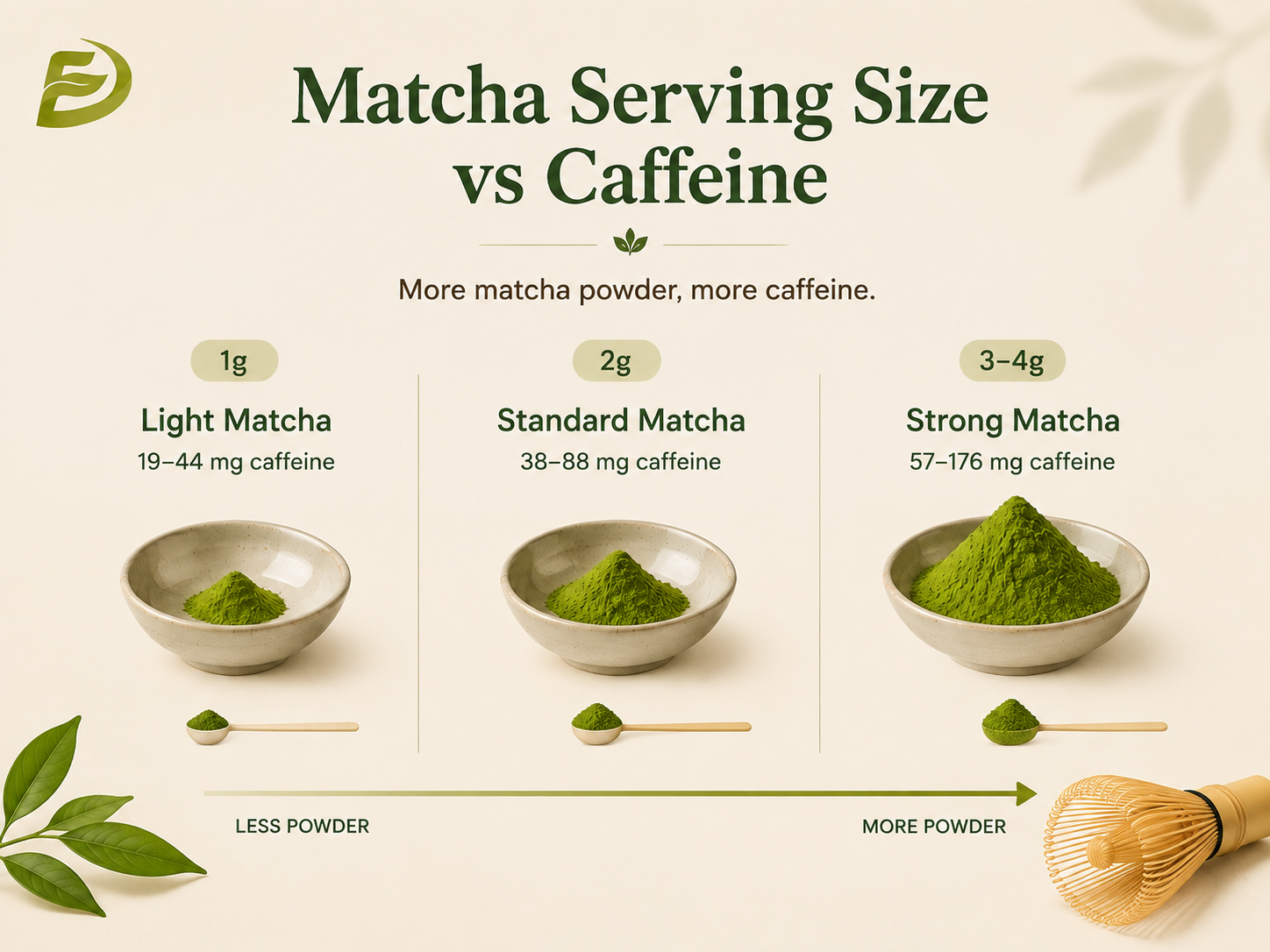
Matcha Caffeine per Gram and per Serving
|
Matcha Amount |
Approximate Caffeine Content |
Common Use |
|
1 gram matcha |
19–44 mg |
Light serving |
|
2 grams matcha |
38–88 mg |
Standard serving |
|
3–4 grams matcha |
57–176 mg |
Stronger preparation |
Matcha vs Coffee: Caffeine & Feel
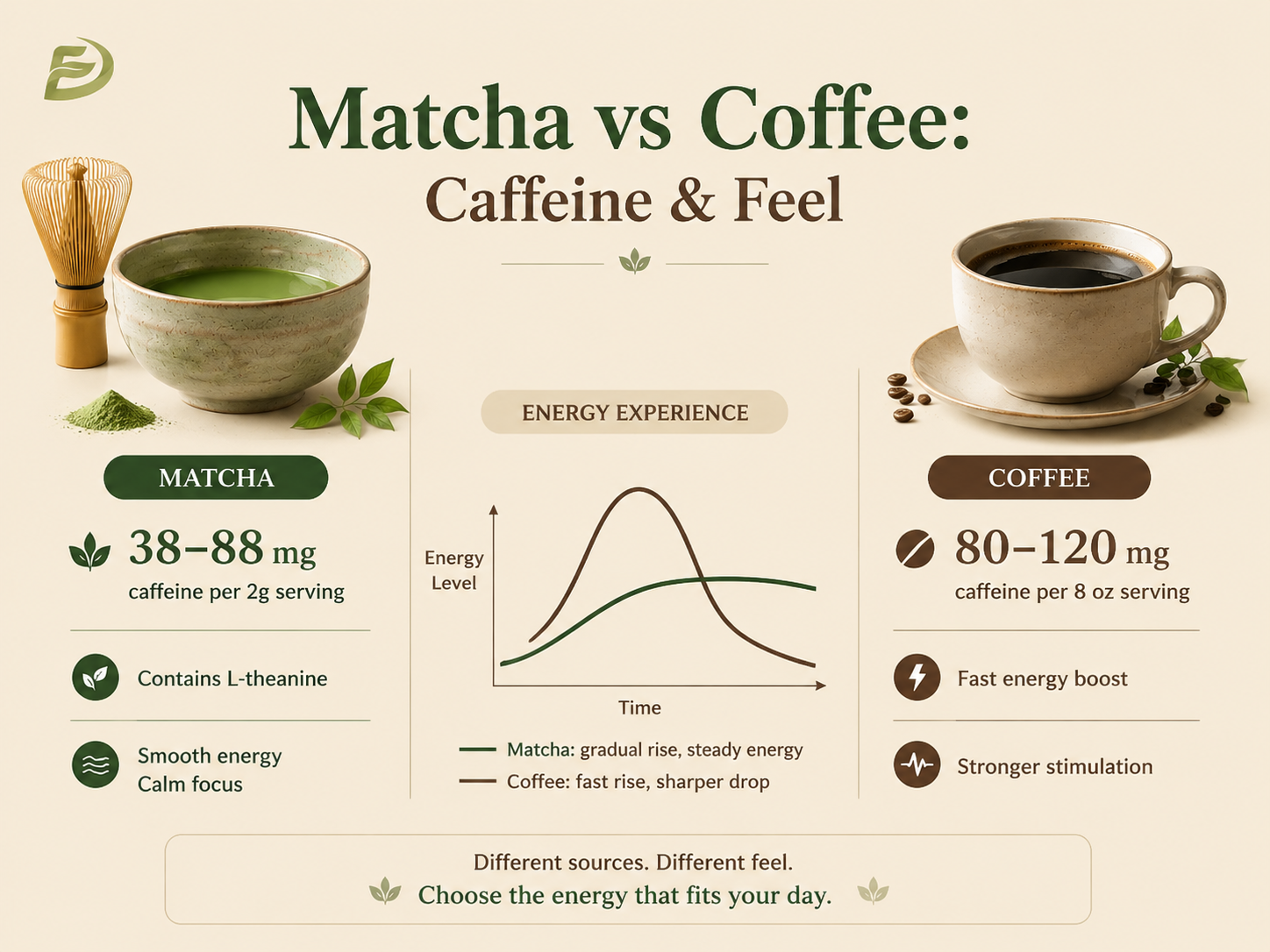
The comparison of matcha vs coffee often comes down to how each drink feels in the body. Coffee usually contains more caffeine per serving and may create a faster, stronger energy lift, while matcha typically provides a gentler and more gradual feeling.
Matcha pairs caffeine with L-theanine, which may help slow the perceived energy curve and create a calmer focus for some drinkers. This does not mean matcha has a different type of caffeine. The difference comes from the natural combination of caffeine, L-theanine, and other tea compounds found in powdered green tea leaves.
Matcha can be a better choice for people who want steady focus without the sharp intensity that coffee can sometimes bring. If you want to compare matcha with regular steeped green tea, read our full guide to matcha vs green tea.
My Experience: Matcha vs Coffee
In my own experience, matcha and coffee are not simple replacements for each other. Coffee feels faster and stronger, which can be useful when I need a quick energy lift. Matcha feels slower, calmer, and more steady, especially when I want to stay focused for a longer period.
The difference is not that matcha has a special kind of caffeine. Both drinks contain caffeine, but matcha also contains L-theanine and other tea compounds that may make the energy feel smoother for some people.
| Drink | How It Feels to Me | Best Time to Drink |
|---|---|---|
| Coffee | Fast, strong, and more intense | When I need quick energy |
| Matcha | Calm, steady, and focused | When I need longer concentration |
For me, coffee is better for a quick start, while matcha is better for steady focus. Matcha is still caffeinated, so I avoid making it too strong or drinking it too late in the day.
What Affects Matcha’s Caffeine
Matcha caffeine content can vary because the whole tea leaf is ground into powder and consumed directly.
- Tea grade and leaf selection: Younger leaves and buds usually contain more caffeine than mature leaves, so higher-grade matcha may have a stronger caffeine profile.
- Amount of matcha powder used: The amount of powder has the biggest impact, because a 1-gram serving and a 3-gram serving can deliver very different caffeine levels.
- Water temperature and preparation style: Hotter water and thicker preparation can make matcha feel stronger, especially when more powder is used in one bowl.
At Dofo Tea, we recommend adjusting powder amount first if you want to manage matcha caffeine in daily drinking. In our brewing experience, using less powder is the simplest and most practical way to make matcha feel lighter without changing its natural flavor too much. For most beginners, starting with a lighter serving is easier than changing every brewing detail at once.
FAQ
How much caffeine is in matcha?
Matcha usually has around 19–44 mg of caffeine per gram of the stuff. A regular serving size is about 2–4 grams, so that's 38–176 mg of caffeine in a cup.
Does matcha have more caffeine than coffee?
Coffee usually has a lot more caffeine per standard cup than matcha – about 80–120 mg a serving. But matcha's got its own thing going - the amount of powder you use can vary, but the L-theanine in there helps slow things down a bit, which might feel more pleasant.
Will matcha keep me awake at night?
Matcha may affect sleep if you drink it too late because caffeine has a half-life of about 4–6 hours. Sensitive drinkers should enjoy matcha in the morning or early afternoon.


