

The Best China Teas: A Guide to Popular Varieties and Their Benefits
Author: Xu Jiahua, Nationally Certified Senior Tea Appraiser
Introduction to Chinese Tea
Chinese tea is an angiosperm plant.
China is the hometown of tea trees, and China is the country where wild tea trees were discovered the earliest and most.and there are various types of Chinese tea.
Tea, which began in the Shennong era, has gone through thousands of years of history with Chinese culture.
What is a traditional Chinese tea?
A traditional Chinese tea is any tea made using time-honored Chinese processing methods, such as green, oolong, black, white, yellow, and pu-erh teas. These teas emphasize natural craftsmanship, minimal additives, and careful control of withering, rolling, and fermenting.
They are known for their rich aromas, distinct regional character, and deep cultural significance in Chinese tea culture.
Understanding Chinese Tea in China:The six types of Chinese tea
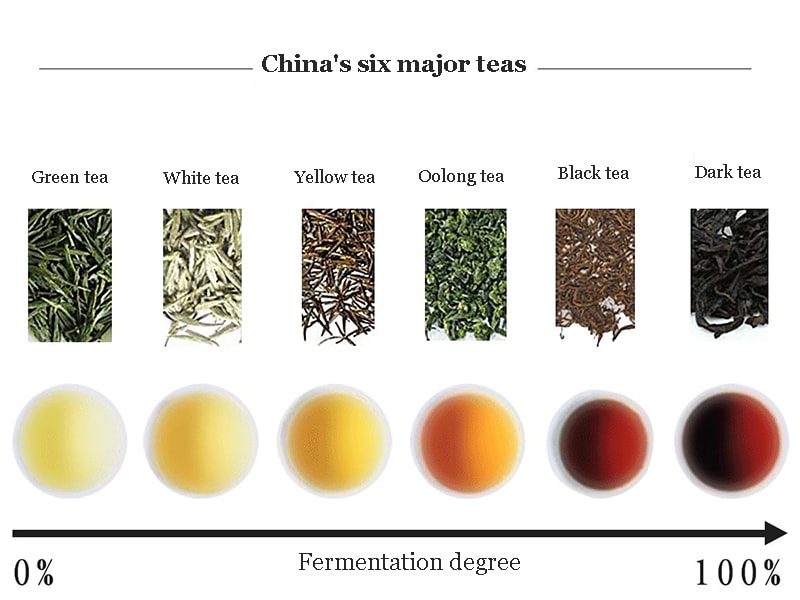
Chinese teas can be classified into six categories: white, green, yellow, oolong, black, and Hei cha(Dark).
In addition, some scholars use the "fermentation degree" to classify tea, including "non-fermented" (such as green tea), "lightly fermented" (such as white tea, yellow tea), "slightly fermented" (this classification is not common), "semi-fermented" (such as oolong tea), "fully fermented" (such as black tea) and "post-fermented" (such as dark tea).
Green tea is the most common type of tea consumed in China.
Chinese Green Tea
Green tea is the most ancient and prominent form of tea, primarily consumed in China for thousands of years.
Almost no oxidation
Chinese green tea is minimally oxidized and typically pan-fired or steamed to lock in freshness, giving it a clean, vibrant taste.
Refreshing flavor
It usually offers notes of grassiness, chestnut, floral sweetness, or seaweed-like freshness, depending on the region and craftsmanship.
Popular Green tea Varieties
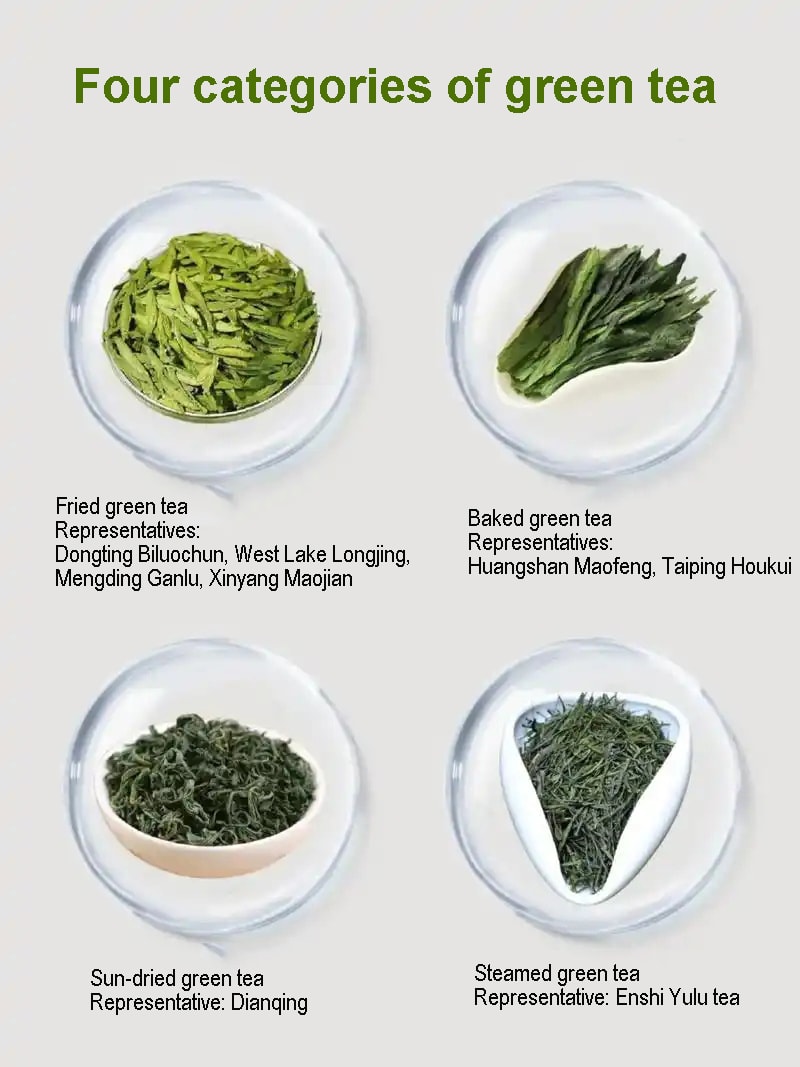
Famous types include Longjing (Dragon Well), Biluochun, Huangshan Maofeng, and Taiping Houkui—each with unique aromas and leaf shapes.
Brewing Characteristics
Best brewed at lower temperatures (around 75–85°C) to maintain its delicate flavor and avoid bitterness.
Chinese White Tea
White tea is one of the least processed Chinese teas, treasured for its natural sweetness, fresh aroma, and gentle flavor.
Lightly Processed
White tea undergoes minimal processing—mainly withering and drying—preserving more nutrients and maintaining a very clean, delicate profile.
Delicate & Sweet Flavor
It often carries notes of honey, light florals, and fresh herbs. Its subtle taste is smooth, refreshing, and easy to enjoy for beginners and connoisseurs alike.
Popular White Tea Varieties
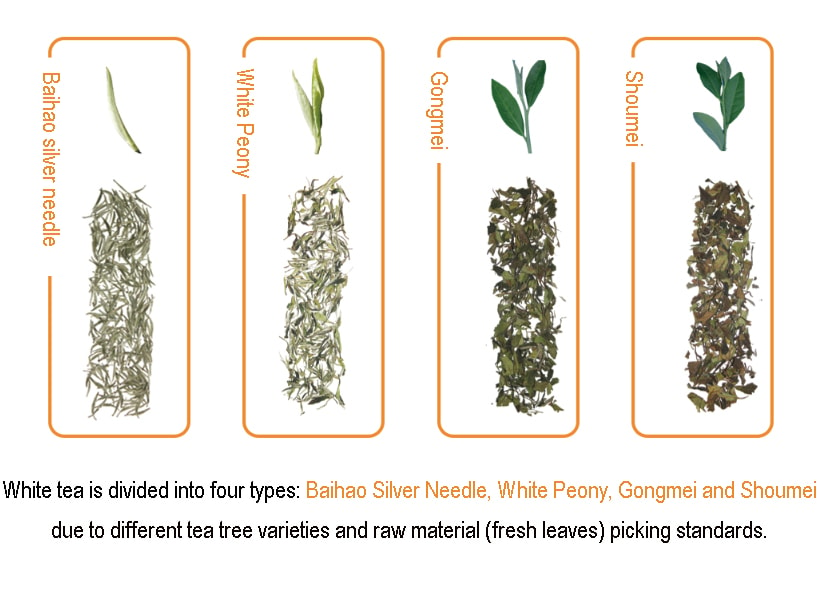
Well-known types include Silver Needle, White Peony (Bai Mudan), Shoumei, and Gongmei—all with different levels of sweetness and aroma.
Brewing Characteristics
Brew at lower temperatures (85–95°C) to protect its delicate flavor. Shorter steeps keep the taste light and refreshing.
Chinese Yellow Tea
Yellow tea is a rare and lightly fermented Chinese tea known for its smooth, mellow taste and gentle sweetness.
Light Fermentation
Yellow tea is lightly fermented through a unique “menhuang” (sealing and yellowing) process, which gives it a soft, rounded flavor without the grassy notes of green tea.
Mellow & Sweet Flavor
It offers a clean, sweet, and slightly fruity taste with a silky smooth texture. The flavor is mild yet layered, making it very easy to drink.
Popular Yellow Tea Varieties
Famous types include Junshan Yinzhen, Huoshan Huangya, and Mengding Huangya—each showcasing delicate aroma and refined craftsmanship.
Brewing Characteristics
Best brewed at moderate temperatures (80–85°C) to highlight its smooth sweetness and avoid any harshness.
Chinese Oolong Tea
Oolong tea is a traditional partially oxidized tea, prized for its rich aroma and complex flavor, widely enjoyed across China for centuries.
Partially Oxidized
Oolong tea undergoes controlled oxidation, usually between 10% and 70%, giving it a balance between green tea’s freshness and black tea’s richness.
Complex Flavor
It often features floral, fruity, or roasted notes, with a smooth, mellow finish. The flavor can vary greatly depending on the region, variety, and processing method.
Popular Oolong Tea Varieties
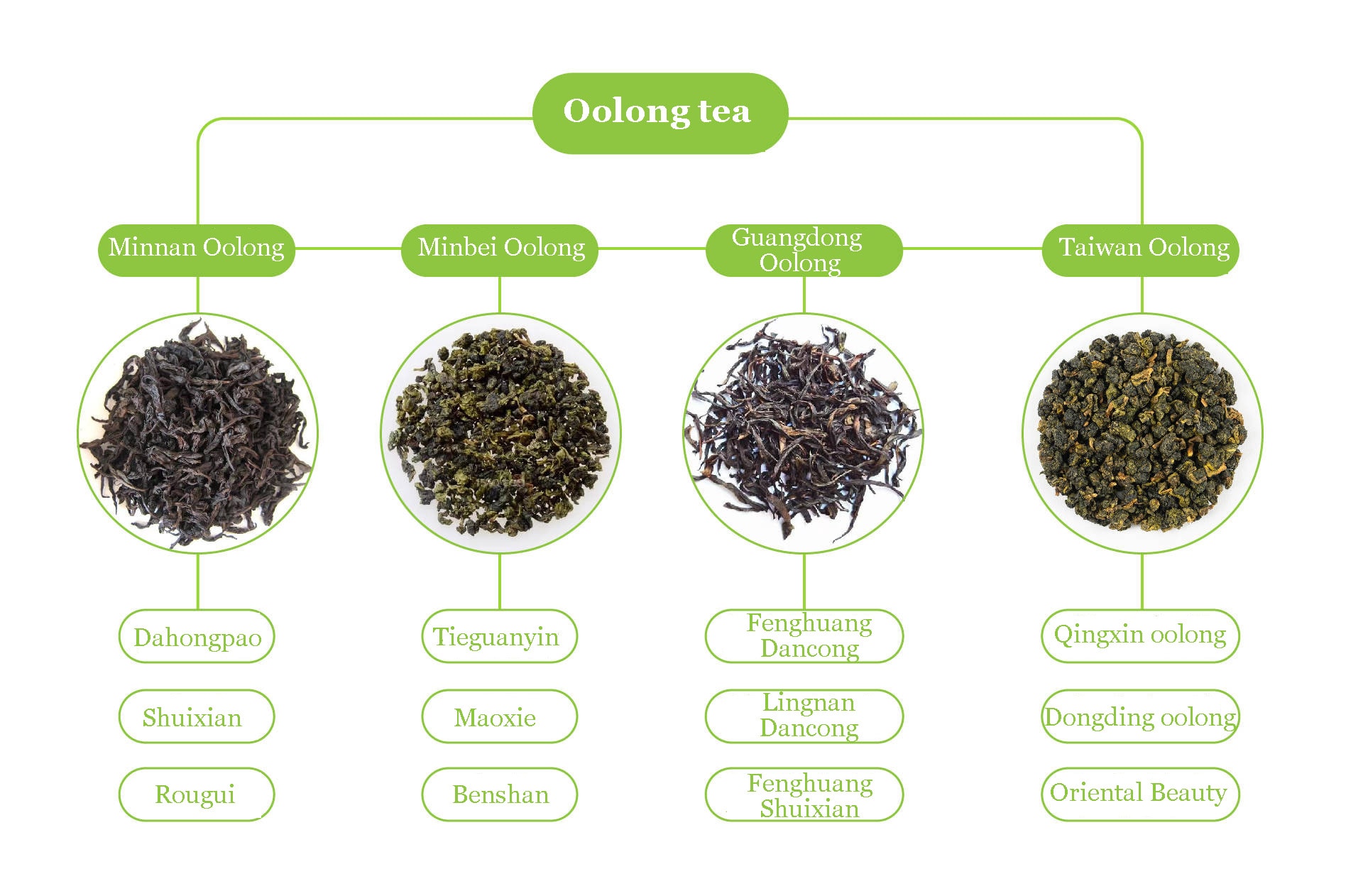
Famous types include Tieguanyin, Da Hong Pao, Wuyi Rock Tea, and Dong Ding—each with distinct aromas, flavors, and leaf appearances.
Brewing Characteristics
Best brewed at medium temperatures (around 90–100°C) with multiple short infusions to fully release its complex flavors without bitterness.
Chinese Black Tea
Black tea is known for its bold flavor, rich aroma, and smooth sweetness. It has been enjoyed across China and worldwide for centuries.
Fully Oxidized
Chinese black tea goes through complete oxidation, giving it a deep color, strong aroma, and naturally sweet aftertaste.
Rich & Smooth Flavor
It often features notes of malt, caramel, honey, or dried fruits. The flavor is full-bodied yet smooth, making it one of the most popular tea types globally.
Popular Black Tea Varieties
Famous types include Keemun, Dianhong, Lapsang Souchong, and Yingde Black Tea—each known for its signature aroma and flavor profile.
Brewing Characteristics
Best brewed with near-boiling water (90–100°C) to bring out its depth and natural sweetness. Steep slightly longer for a stronger taste.
Chinese Dark tea
Chinese Dark tea, known as "hei cha"in China.Dark tea is possibly the least well-known tea.
Fermented & Aged
Pu-erh tea undergoes a unique post-fermentation process rather than traditional oxidation. During aging, microbial activity gradually darkens the tea and deepens its flavor, giving it a rich, mellow character over time.
Earthy & Mellow Flavor
The most famous type of dark tea is Pu-erh, traditionally made in Yunnan, China. It is often pressed into cakes or bricks, and its flavor develops with age, similar to fine wine.
Known for its deep, smooth, and complex taste, Pu-erh can be enjoyed young for a fresh earthy note or aged for a mellow, refined character.
Popular Pu-erh Varieties
The two main categories—Raw Pu-erh and Ripe Pu-erh—offer different aging characteristics and flavor profiles.
Brewing Characteristics
Brew with hot water (95–100°C). Rinse the leaves briefly to awaken the aroma before the first infusion.
What is the most popular Chinese tea?China's top ten famous teas
There are ten famous teas in China.
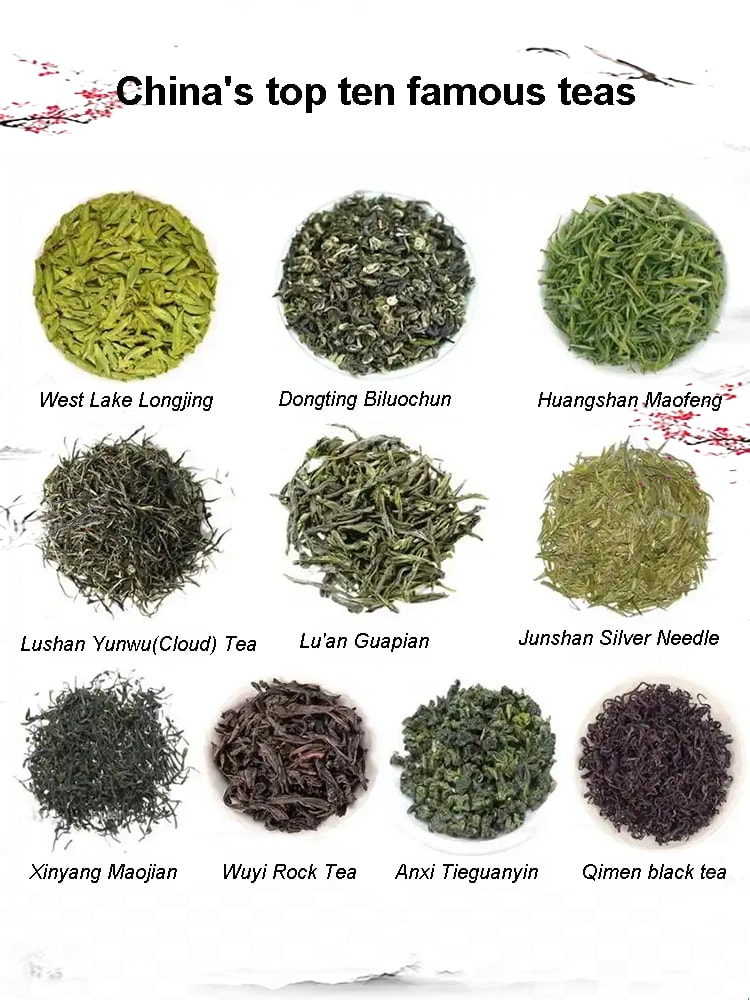
The top ten famous Chinese teas include: West Lake Longjing, Dongting Biluochun, Xinyang Maojian, Junshan Yinzhen, Huangshan Maofeng, Wuyi Rock Tea, Keemun Black Tea, Duyun Maojian, Lu'an Guapian, Anxi Tieguanyin.
These teas play an important role in Chinese tea culture, and each is famous for its unique quality, taste and historical and cultural background.
West Lake Longjing
Produced in the mountains surrounding West Lake in Hangzhou, Zhejiang, it is famous for its "green color, rich aroma, sweet taste and beautiful shape". It is the first of the top ten famous teas in China.
Dongting Biluochun
Produced in Dongting Mountain, Taihu Lake, Suzhou, Jiangsu, the tea leaves are tightly bound and curled like snails, with a strong aroma and a fresh, mellow and sweet taste. It is the best among green teas.
Xinyang Maojian
A famous tea produced in Henan, the tea shape is as its name suggests, and it is fragrant after brewing with boiling water. Its market value ranks second in chinese tea.
Junshan Yinzhen
Produced in Junshan, Dongting Lake, Yueyang, Hunan, it is as thin as a needle, with a strong fragrance, mellow, sweet and smooth taste, and is a fine yellow tea.
Huangshan Maofeng
Produced in the Huangshan area of Anhui Province, it has a slightly curled shape, shaped like a sparrow tongue, with a fresh and elegant aroma, and a mellow and fresh taste. It is a top-grade green tea.
Wuyi Rock Tea
It has a unique rock rhyme and aroma. It is one of the traditional famous Chinese teas and is famous for its unique quality and production process.
Qimen Black Tea
Produced in Qimen County, Anhui Province, it has a high and mellow aroma, a fresh and refreshing tender fragrance, and is a treasure among black teas.
Duyun Maojian
Produced in Duyun City, Guizhou Province, the tea leaves are tender green and uniform, with a clear and high aroma and a fresh and refreshing taste. It is a top-quality green tea.
Lu'an Guapian
Produced in the Dabie Mountains area of Lu'an City, Anhui Province, it is the only tea without buds and stems, with a high and refreshing fragrance and a fresh and mellow taste.
Anxi Tieguanyin
Produced in Anxi County, Fujian Province, the tea leaves are plump and round, with a sandy green color, a long-lasting fragrance, and a mellow and sweet taste. It is the best among oolong teas.
Health Benefits of Chinese Tea
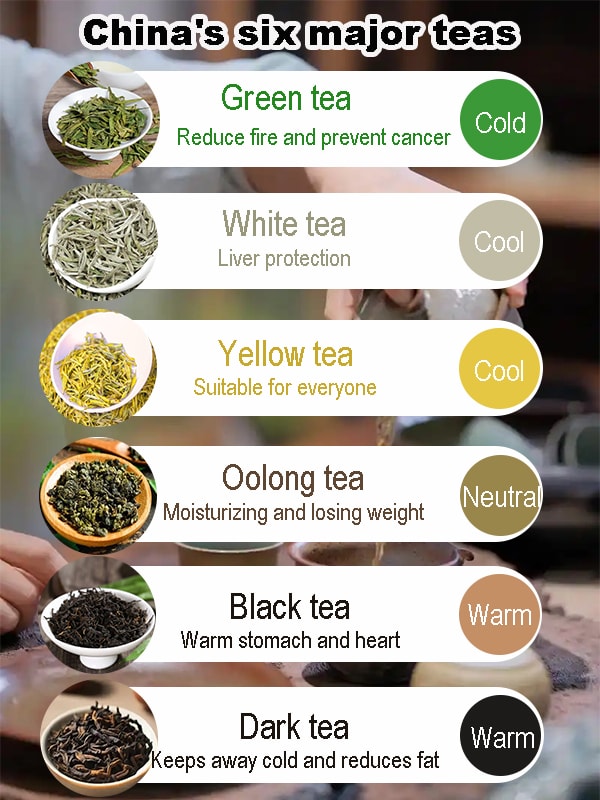
Chinese tea is not only a popular beverage but also brings a lot of health benefits and plays an important part in this country’s rich culture.
- Green tea is cold in nature, reduces internal heat and prevents cancer;
- White tea is cool in nature, protects the liver;
- Yellow tea is cool in nature, suitable for everyone;
- Oolong tea is neutral in nature, moisturizes and reduces weight;
- Black tea is warm in nature, warms the stomach and protects the heart;
- Dark tea is warm in nature, keeps out the cold and reduces fat.
The highest grades of white tea, yellow tea, and green tea are made from tender tea shoots picked early spring.
The more-oxidized tea, such as red or oolong tea, are made from more mature leaves
Enjoying Chinese Tea
In some places in China, customers clean their bowls and utensils at the table by rinsing them with tea from the pot.
Chinese people tend to use a special personal tea bottle, in which water is allowed to infuse with tea leaves for hours, and sipped continuously.
Traditional Chinese tea sets consist of special clay or porcelain teapots, teacups, tea spoons, tea strainers, draining trays, tea forceps, and a large forceps.
Chinese tea houses have a long history, dating back to the Tang dynasty, and are an important part of Chinese culture.
Chinese tea is a diverse and complex world, with many different types and varieties to explore.
Whether you’re looking for a refreshing green tea or a rich and complex oolong tea, there’s a Chinese tea out there for you.


