

Black Tea vs Green Tea: Which One Is Better for You?
Author: Xu Jiahua, Nationally Certified Senior Tea Appraiser
Black tea and green tea are both rich in antioxidants, but they offer different health benefits depending on how they are processed and consumed.
To learn more about black tea varieties and health benefits, you can refer to [Types of Black Tea] and [Is Black Tea Good for You].
Black Tea: Rich, Bold, and Energizing
Black tea is fully oxidized, giving it a deep reddish-brown color and a robust flavor. It’s a classic in Western culture, often served with milk, lemon, or sugar.
Black tea highlights:
- Strong, malty, or slightly bitter flavor
- Higher in caffeine than green tea
- Common varieties: Earl Grey, Darjeeling, Assam
- Often consumed in the morning or with meals
Green Tea: Light, Fresh, and Antioxidant-Rich
Green tea is lightly oxidized and often steamed or pan-fired to preserve its delicate flavor and nutrients. It’s widely enjoyed in East Asia and increasingly popular worldwide for its health benefits.
Green tea highlights:
- Grassy, slightly sweet, or vegetal taste
- Lower caffeine content
- Rich in catechins, especially EGCG
- Types include Sencha, Matcha, Longjing (Dragon Well)
Shared Benefits of Black and Green Tea

Improve Focus and Alertness
Thanks to natural caffeine and L-theanine, tea can help improve mental clarity without the crash associated with coffee.
Support Digestive Health
Polyphenols in tea may promote the growth of healthy gut bacteria and aid in smoother digestion.
Support Heart Health
Regular consumption of either tea may help reduce cardiovascular risk:
Observational data from the National Institutes of Health show that both teas can reduce the risk of stroke and coronary heart disease by about 10-20%.
Black Tea vs Green Tea: What's the Difference between black and green tea?
green tea vs black tea caffeine
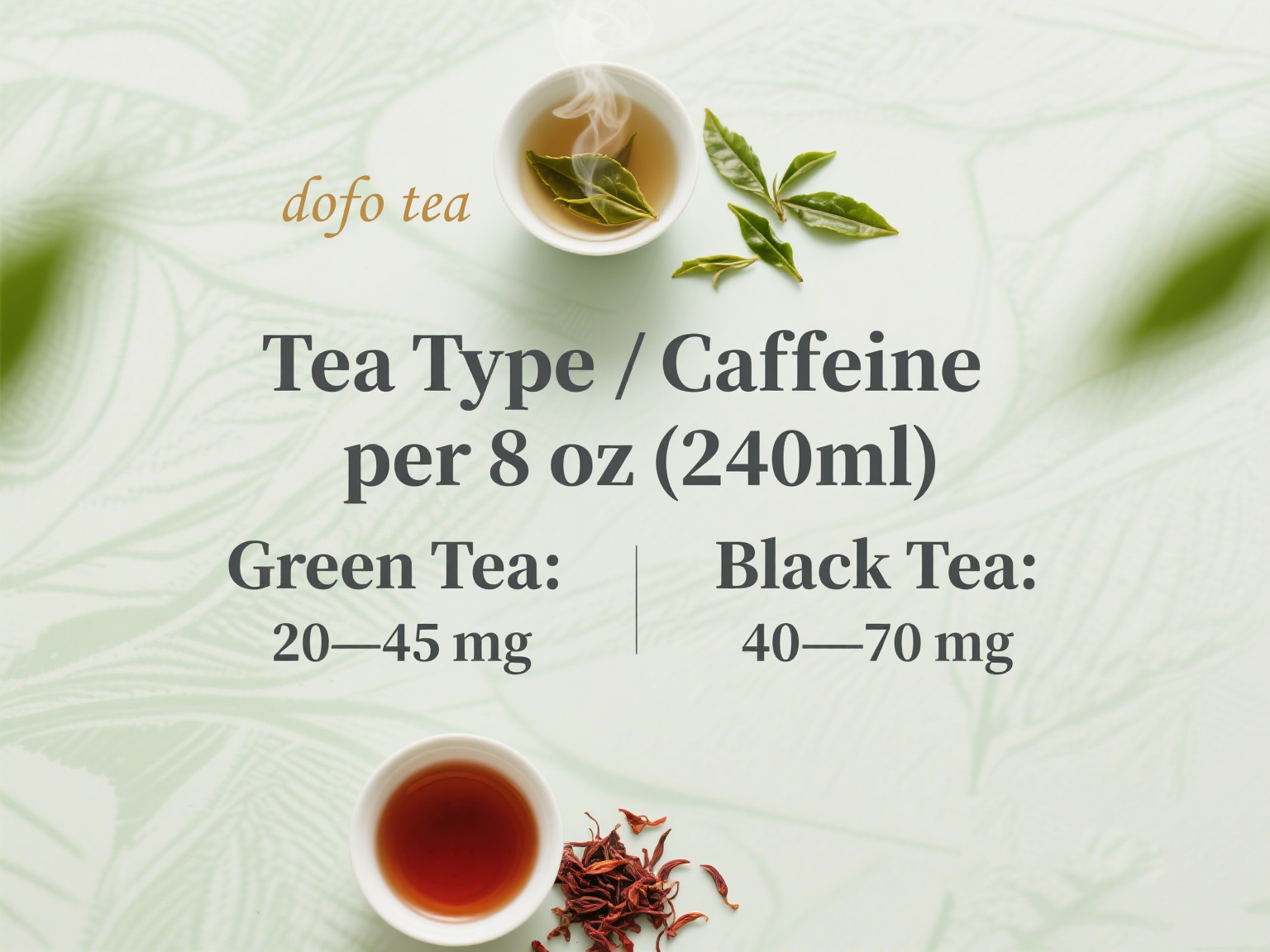
When comparing green tea vs black tea caffeine, it’s clear that black tea generally contains more caffeine:
|
Tea Type |
Caffeine per 8 oz (240ml) |
|
Green Tea |
20–45 mg |
|
Black Tea |
40–70 mg |
If you're looking for a mild caffeine boost without the jitters, green tea is ideal. Black tea, however, is perfect for those who want a stronger energy lift, especially as a morning alternative to coffee.
Want to dive deeper into black tea's caffeine content, factors that affect it, and how to brew a lower-caffeine cup? Check out our complete guide: [Black Tea Caffeine: The Complete Guide].
Antioxidants
- Green tea is rich in catechins, especially EGCG—a peer-reviewed review published on PubMed found that EGCG acts as a powerful antioxidant, helping protect healthy cells from oxidative damage.
- Black tea contains theaflavins and thearubigins, which support heart health and digestion
Both are excellent — but green tea may offer a slight edge in antioxidant potency.
Taste & Pairings
|
Tea Type |
Flavor Profile |
Common Pairings |
|
Black Tea |
Strong, bold, full-bodied |
Milk, lemon, sugar |
|
Green Tea |
Light, vegetal, sometimes grassy |
Usually served plain or with lemon |
Processing
Green tea is steamed or pan-fired to stop oxidation, while black tea is fully oxidized, resulting in a richer flavor and darker color.
A Tale of Two Tea Cultures
Black and green tea come from very different traditions, and that history still shapes how we drink them today.
Black tea built its identity in the West. Think British afternoon tea with milk and sugar, or India's spiced, milky chai—both are social rituals built around sharing a bold, comforting cup.
Green tea belongs to East Asian tea philosophy. In China, it's brewed with care and often drunk plain to savor its light, grassy character. In Japan, it's central to the tea ceremony (chanoyu)—a practice of mindfulness and stillness, not milk and sugar.
One tradition gathers people around a shared table; the other invites you to slow down and taste something pure.
Weight Loss Support
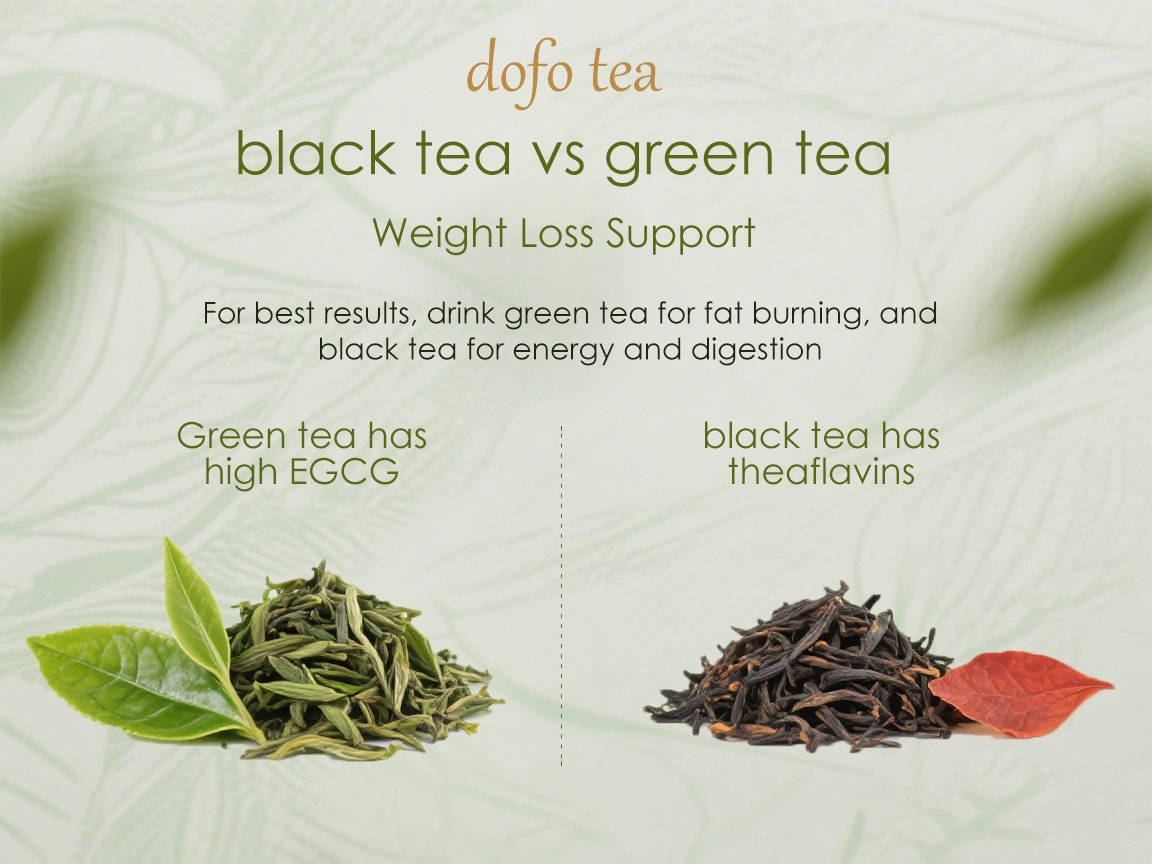
Green tea- helps burn fat and boost metabolism, thanks to high levels of EGCG.
Black tea- may reduce fat absorption and support digestion, with its theaflavins.
Both can aid in weight management when paired with a healthy diet.
For best results, drink green tea for fat burning, and black tea for energy and digestion.
Which Tea Should You Choose: Green Tea vs Black Tea
Choosing between green tea vs black tea? Here's a side-by-side guide to help you decide based on your needs:
Green Tea – Best For:
- A light, fresh flavor
- Lower caffeine intake
- High antioxidant content (especially EGCG)
- Supporting metabolism and fat burning
- Midday focus without jitters
Black Tea – Best For:
- A bold, rich taste
- Higher caffeine for energy
- Supporting digestion and heart health
- Pairing with milk, lemon, or sweeteners
- A morning coffee substitute
Frequently asked questions
Can I drink both black tea and green tea daily?
Yes! You can enjoy both, just keep an eye on your total caffeine intake.
Which tea is better for beginners?
Green tea may be easier to start with for those who prefer lighter flavors. Black tea suits those who enjoy bolder, richer taste profiles.
Can I cold brew green or black tea?
Yes, both teas can be cold brewed. Cold brewing results in a smoother, less bitter flavor and may reduce caffeine extraction slightly.
Find Your Perfect Match-Shop Authentic Black and Green Teas at Dofo Tea!
Discover the best of both worlds with Dofo Tea.
We offer handpicked green and black teas straight from China’s most revered tea regions — rich in flavor, tradition, and health.


